


One Wrong Number, One Wrong Dose: Why Overdose and Underdose Are Hiding in Plain Sight Across Modern Medicine
A few extra milligrams. A spoon instead of a syringe. A weight typed from memory instead of read off a scale. This is how misdosing actually happens — not through carelessness, but through gaps hiding in plain sight.
Field Report / Medication Safety
Misdosing, Overdose & Underdose: More Common Than You Think
Overdose zone — too much drug for the body to clear safely
Correct-dose band — narrower than most people assume
Underdose zone — too little to treat the condition
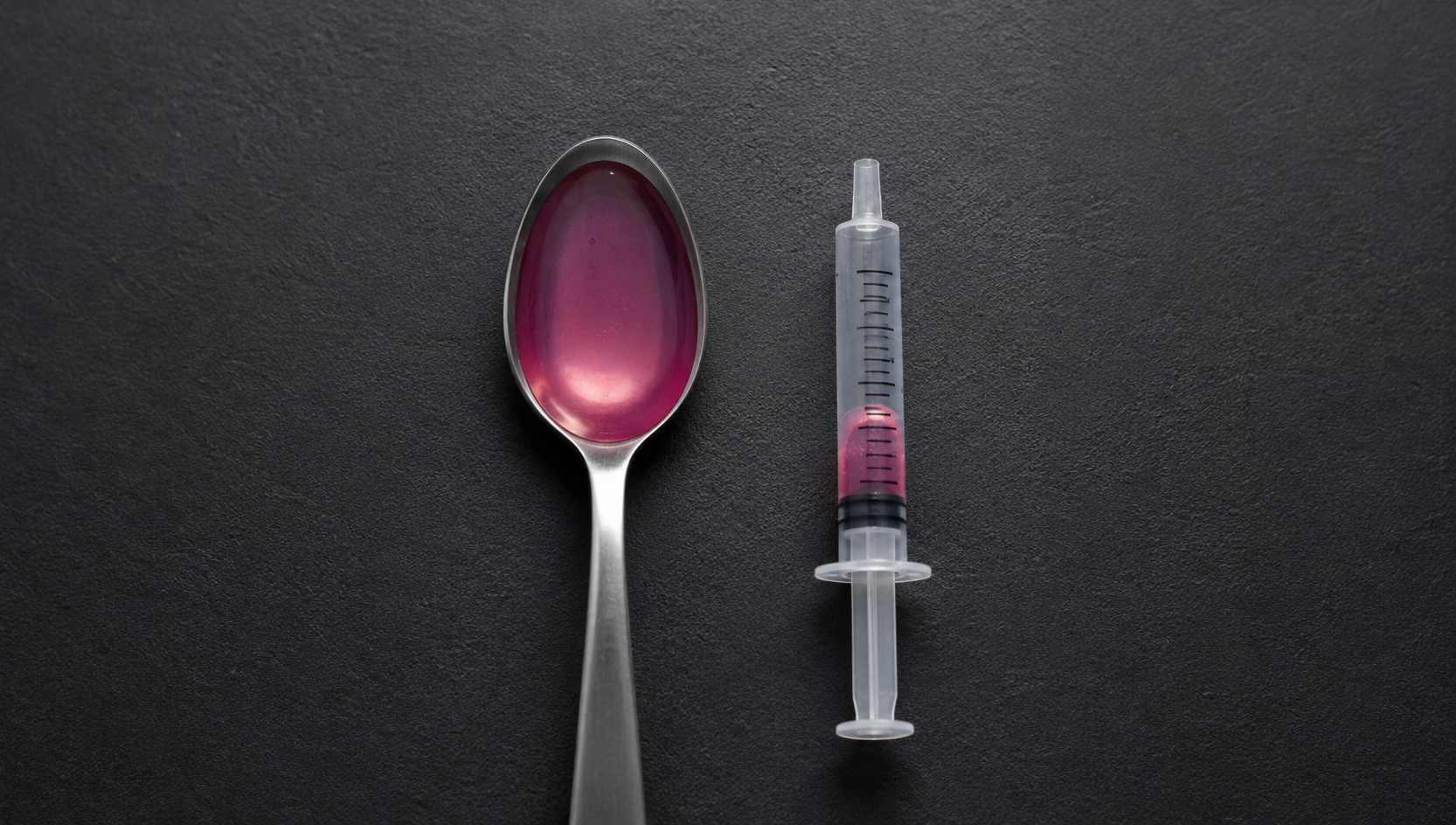
Getting a dose wrong rarely announces itself. It looks like a few extra milligrams calculated from a kidney function that shifted overnight, a child's cough syrup measured with a kitchen spoon instead of the syringe it came with, or a weight typed in from memory instead of read off a scale. Across hospital wards, pharmacy counters, and family kitchens, misdosing — giving too much or too little of a medication — turns out to be far more common than most people assume. This piece traces where these gaps open up, who carries the greatest risk, and what genuinely closes them.
Key Highlights
Five Findings
Kidney function governs how safely most drugs clear the body, yet close to one in seven people worldwide live with chronic kidney disease, and major clinical dosing references frequently disagree on how doses should shift around it.
Self-reported height and weight are often inaccurate enough to distort weight-based dosing; one clinical study found a common blood thinner would have been overdosed in roughly three-quarters of patients relying on self-reported weight instead of a calibrated scale.
At-home pediatric medication errors appear in anywhere from three in ten to four in five households studied, and the risk climbs sharply once a prescription involves more than two medications.
Men are two to three times more likely than women to die of an unintentional drug overdose, a gap researchers partly trace to combining alcohol with opioids, which compounds respiratory depression.
Prescription drug misuse among college students tends to happen alone, at home, on weekdays — the opposite of the weekend, social pattern most campus prevention messaging is built around.

Five Places the Dose Gets Lost in Translation
Detailed Viewpoint

Where These Figures Come From
Citation & Credibility
This article draws on peer-reviewed research and university reporting. Every figure above is attributed to its original study, and none are extrapolated beyond what the underlying research reports. Broader clinical context on the complexity of renal dose adjustment was informed by pharmacy trade literature on kidney-function-based dosing.
Therre M, et al., BMJ Open (2025)
“Determinants of reliability of self-reported height and weight and their impact on medication dosing,” a cross-sectional study of over 700 patients.
Peer-reviewed publicationLopez-Pineda A, et al., Expert Opinion on Drug Safety (2021)
A systematic review on pediatric medication errors made by parents or caregivers at home.
Peer-reviewed publicationArticle Tags
Editorial Note
This article is provided for general educational purposes and does not constitute medical advice. Dosing decisions are individual and should always be made in consultation with a qualified pharmacist, physician, or other licensed healthcare provider who can account for a person's specific health history. If you or someone you know may have taken too much or too little of a medication, contact a poison control center, pharmacist, or emergency services promptly.
Figures cited here reflect the studies referenced in the Citation and Credibility section and were current as of their original publication dates. This piece was compiled from peer-reviewed research and academic institutional reporting; it was not sponsored by any pharmaceutical company or manufacturer.

Written by
MedBary Team
Comments
Log in to join the conversation.
Loading comments…