

📰 Curated from BBC News
📖 Read full article→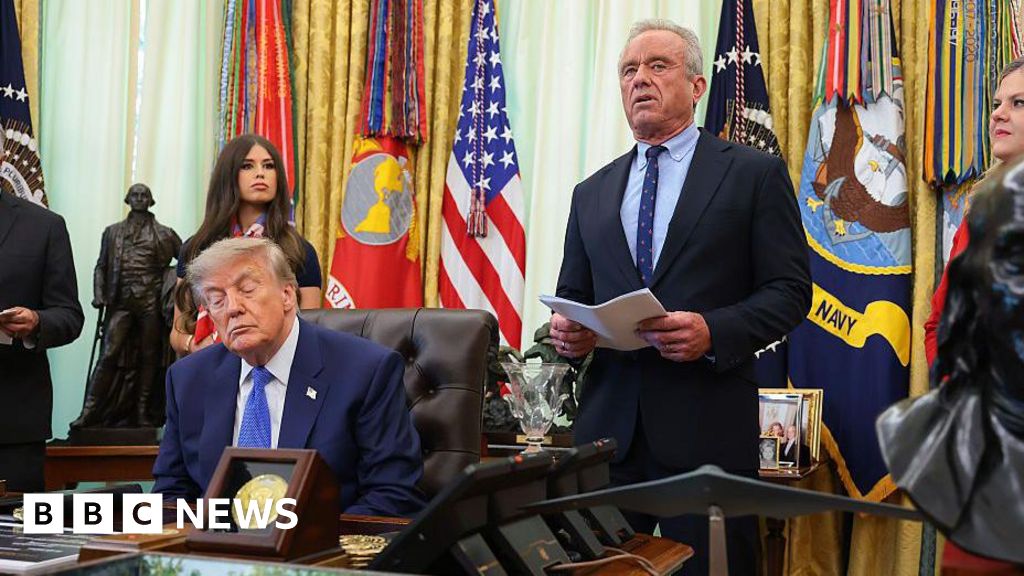
Trump signs order to limit childhood vaccines and split MMR shots - BBC
World8/10/20261 min read
The American Academy of Pediatrics calls the recommendation on measles, mumps and rubella shots "dangerous".
✨ Key Highlights
- President Donald Trump signed an executive order calling for fewer childhood vaccines and recommending that the combined mumps, measles and rubella (MMR) shot be split into separate doses.
- Trump claimed, without evidence, that children previously received far fewer vaccines and were "much healthier," and he linked current autism rates to vaccinations, a connection that multiple studies have found does not exist.
- The order recommends reducing the number of childhood vaccines from the 18 currently advised by the American Academy of Pediatrics to 11, covering measles, mumps, rubella, diphtheria, tetanus, pertussis, polio, Haemophilus influenzae type B, pneumococcal disease, HPV, and varicella.
- Because school vaccination requirements are set by individual states rather than the federal government, the order functions as guidance rather than a mandate.
- Trump described the MMR vaccine as potentially "quite lethal" if given at once, comparing it to pouring soda into a child, though the FDA notes a single dose is just 0.5ml; asked for evidence, he said only that "some people" claim this.
- The CDC states that most people experience no serious problems from the MMR vaccine, that receiving it is far safer than catching the diseases, and that there is no scientific benefit to separating it into three shots; experts including Dr William Schaffner of Vanderbilt University warned that additional visits raise costs, complicate tracking, and increase the risk of missed appointments and disease exposure between doses.
The immunisations recommended for all children under the order are for measles, mumps, rubella, diphtheria, tetanus, pertussis, polio, Haemophilus influenzae type B, pneumococcal disease, human papil