


Ketamine Can Heal a Broken Mind in Hours — Or Wreck a Bladder in Months. Safety Line Nobody's Drawing Clearly Enough
It's an anesthetic, a party drug, and now a psychiatric treatment — all at once. So which version of ketamine is actually walking into your clinic?

Key Highlights
A single low dose can lift treatment-resistant depression within a day; EEG research out of New Zealand ties this to a measurable jump in the brain's ability to rewire itself.
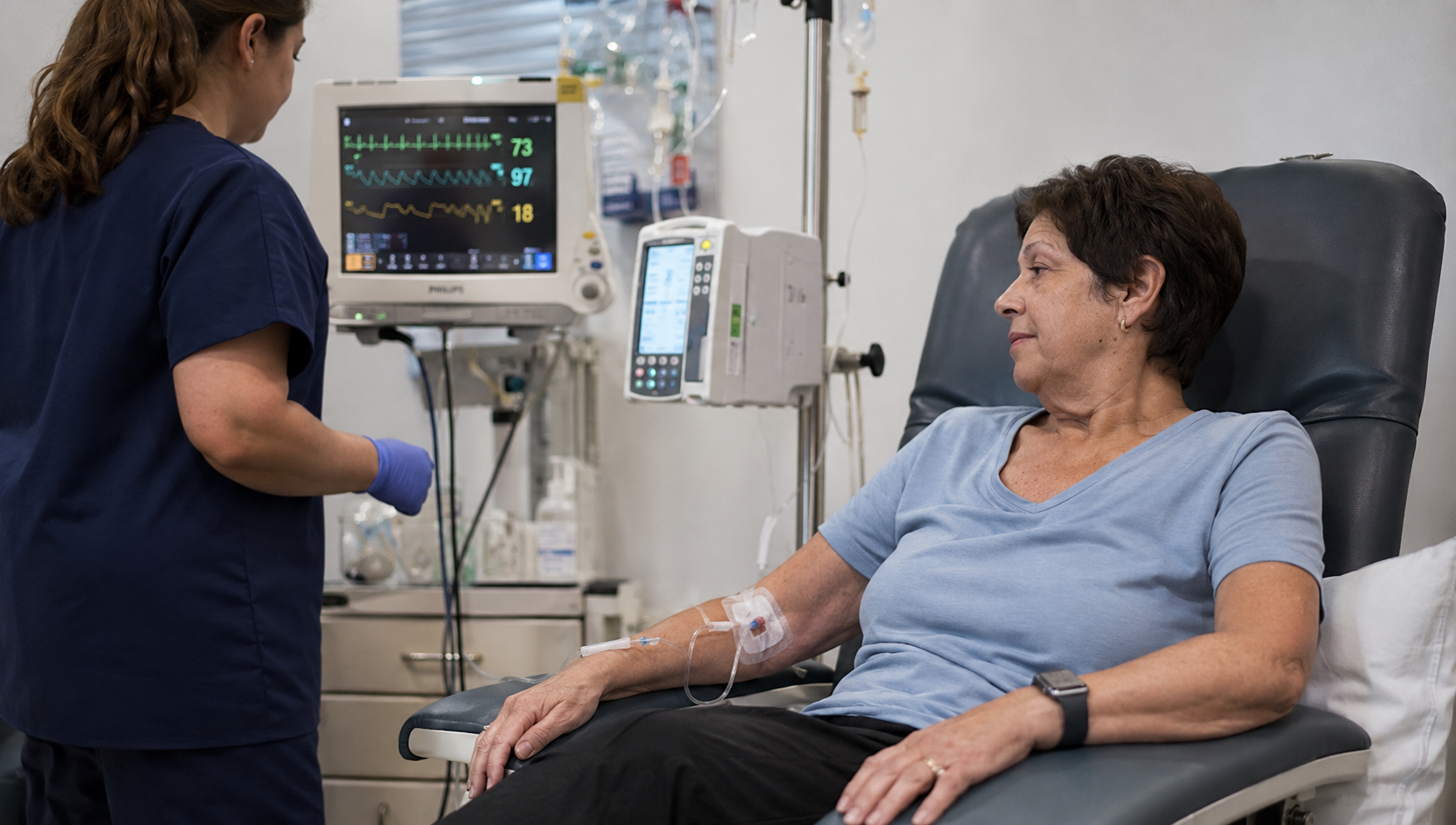
Anesthesiologists and psychiatrists agree on one point: dosing without dedicated, trained monitoring is where things go wrong.
Dissociation, faster heart rate, and higher blood pressure show up in a meaningful share of patients — usually mild, but not universal.
Overdose is possible. At anesthetic-range doses ketamine can slow breathing, and mixing it with alcohol or sedatives raises that risk further.
Recreational use is climbing across parts of Europe, with wastewater testing showing double-digit percentage increases and a documented rise in bladder-related harm.
Long-term effects of repeated dosing — on the kidneys, bladder, and cognition — are still being mapped out in ongoing trials.

Detailed Viewpoint
How Ketamine Eases Depression, According to the Brain
For years, nobody could fully explain why ketamine worked so differently from standard antidepressants. Drugs like SSRIs raise serotonin levels and typically take six to eight weeks to help — a dangerous lag for someone in crisis. Ketamine can shift mood within a day.
A 2019 University of Auckland-led trial offered one of the clearest human explanations yet. Researchers gave thirty people with treatment-resistant depression a low intravenous dose of ketamine, then tracked brain activity with EEG during a task built to measure neural plasticity — the brain's capacity to form new connections. Around three hours after the infusion, right as the antidepressant effect began to emerge, plasticity rose measurably. Symptoms dropped by half or more in roughly seventy percent of participants within a day.
The dissociative "high" peaks and fades within the first hour; the antidepressant effect builds separately and can last about a week. That separation is part of why researchers think ketamine's psychoactive effects and its mood benefits may not share the same mechanism at all.
From Operating Rooms to Psychiatric Trials
Ketamine has been a mainstay anesthetic since the 1960s, especially for children and in veterinary medicine, largely because it works without depressing breathing as heavily as some alternatives. Its psychiatric use is newer. Researchers at the University of Toronto's Department of Psychiatry have built hospital-based programs specifically to study repurposed anesthetics like ketamine for treatment-resistant mood disorders, describing it as rapid-acting and mechanistically distinct from standard antidepressants.
That same research community is careful to separate enthusiasm from evidence. Much of the existing data comes from younger adults, and relapse after stopping treatment is common — meaning a single course rarely functions as a cure. Ongoing studies are now examining long-term safety and effectiveness specifically in older adults, alongside related work on psilocybin-assisted therapy for treatment-resistant conditions. The consistent message: ketamine marks a genuine shift in psychiatric treatment, but questions around durability and long-term safety are still being answered, not assumed.
What Real Medical Oversight Looks Like
A past president of the American Society of Anesthesiologists, interviewed on ketamine safety in early 2025, put it plainly: this is a potent drug, not a home therapy. Anesthesiologists routinely give ketamine at much higher doses in fully monitored surgical settings — which is precisely why they push back on the claim, sometimes repeated in media coverage, that ketamine is impossible to overdose on. At high doses it can suppress breathing, cause sedation-related falls, or in rare cases trigger cardiac arrest. Combining it with alcohol or other sedatives compounds every one of those risks.
For patients evaluating a clinic, the guidance centers on staffing: someone trained should be monitoring continuously, with no other competing duties, particularly for intravenous or intramuscular dosing that delivers the drug into the bloodstream quickly. A provider juggling several patients during an infusion is a warning sign, even at a licensed facility. The same caution applies to any product shipped for unsupervised at-home use — mail-order access to injectable or nasal ketamine, without clinical supervision, sits well outside what any major medical body currently considers safe practice.
The Documented Side Effects
Clinical trial data gives a fairly detailed picture of what to expect. Dissociation — a sense of detachment from one's body or surroundings — is the most frequently reported effect, showing up in the large majority of intravenous ketamine studies for depression, typically peaking within 40 minutes and resolving within one to two hours. It tends to lessen with repeated sessions.
Cardiovascular changes are common too: increases in heart rate and blood pressure appear in roughly ten to fifty percent of patients receiving ketamine for depression, usually within the first hour and resolving on their own, though a meaningful minority need medication to bring blood pressure down during treatment.
The more persistent risk sits in the urinary tract. Between one-fifth and two-fifths of people who use ketamine recreationally on a regular basis report symptoms like urinary urgency, painful urination, or blood in the urine, caused by inflammation and, in advanced cases, scarring of the bladder wall. Symptoms usually improve after stopping, but for a small share of users they persist or worsen. Ketamine is also a controlled substance in the U.S. given its potential for misuse, though current evidence hasn't shown that supervised medical dosing itself raises the risk of a substance use disorder.
A Widening Pattern of Recreational Use
Outside clinical settings, ketamine's footprint is growing. A 2026 analysis from Finland's EHYT substance-abuse prevention association, published through the Nordic Welfare Centre, points to wastewater testing across Europe showing ketamine residues up roughly 41 percent, with no Nordic country showing a decline. Sweden's numbers are climbing fastest, while Finnish seizure data went from about 150 grams in 2020 to nearly 18 kilograms just three years later.
The public health concern isn't limited to nightlife. Ketamine increasingly turns up in broader polysubstance use — among people managing withdrawal, self-treating psychological distress, or intensifying another drug's effects. Health systems haven't always kept pace: clinicians in the UK have reported difficulty initially recognizing ketamine-related bladder damage in patients with chronic pain. What researchers are watching for is dose creep and frequency creep, the same dynamics that turn an occasional recreational habit into dependence and tolerance.
Practical Safety Questions Worth Asking
None of this is a case against ketamine as a treatment — the clinical evidence for treatment-resistant depression and PTSD is real, and for many patients it's been the first thing that's worked. But it is a case for asking questions before starting. Is a trained professional dedicated solely to monitoring during the session? Is the clinic transparent about dosing, staffing, and what happens if blood pressure spikes? Is there a plan for what comes after the first course, given how common relapse can be? Ketamine given the wrong way, in the wrong setting, carries real risk. Given correctly, under real supervision, it remains one of the more closely studied advances in modern psychiatry.

Citation and Credibility
This article draws on clinical interviews, peer-reviewed research, and public-health reporting, including:
Safety guidance and clinical commentary from a past president of the American Society of Anesthesiologists, discussed in a patient-education interview published February 2025.
A 2019 University of Auckland-led clinical trial on ketamine and neural plasticity in treatment-resistant depression, published in Biological Psychiatry: Cognitive Neuroscience and Neuroimaging.
Reporting from the University of Toronto Department of Psychiatry on ongoing ketamine and psychedelic-assisted therapy research programs.
A 2026 analysis of Nordic ketamine trends from EHYT Finnish Association for Substance Abuse Prevention, published via the Nordic Welfare Centre's PopNAD platform.
Peer-reviewed synthesis of ketamine and esketamine safety data in treatment-resistant depression, published in the American Journal of Psychiatry.
Additional pharmacological and dosing-route research on ketamine metabolism, cardiovascular effects, and genitourinary risk.
This piece is a synthesis of published research and expert commentary. It does not replace individualized medical advice.
Tags
Editorial Note
This article is intended for general education about ketamine safety and is not a substitute for personalized medical guidance. Ketamine, including its esketamine derivative, should only be administered under qualified clinical supervision. Anyone considering treatment should discuss their full medical history, current medications, and monitoring protocols with a licensed healthcare provider before proceeding. If you or someone you know is experiencing suicidal thoughts, please reach out to a mental health professional or a crisis line in your region right away.

Written by
MedBary Team
Comments
Log in to join the conversation.
Loading comments…