


When a Child's Stomachache Is Something the Body Is Saying
The gut-brain connection in children — what recurring belly pain reveals about stress, and how parents can respond without making things worse.

Detailed Viewpoint
Reading the Signals — and Responding Without Making Things Worse
Recognising the Pattern
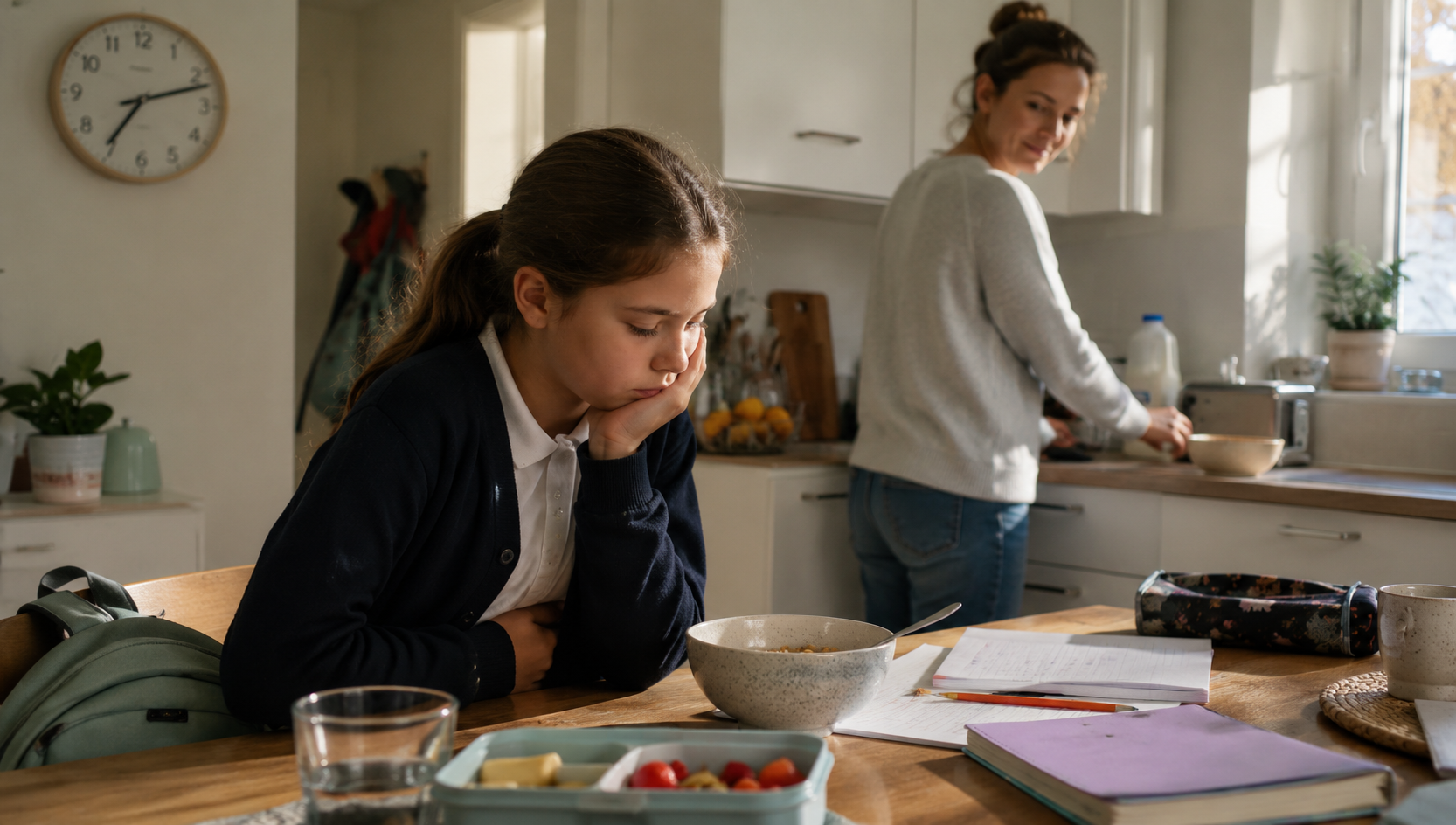
Stress-related abdominal pain leaves a trail of clues if you know where to look. It tends to be periumbilical — centred around the belly button — or diffuse rather than pinpointed. It often follows a schedule: it intensifies on Sunday evenings before the school week, worsens before tests, sports trials, or performances, then eases during weekends, school holidays, or when the child is absorbed in play. It rarely wakes children from sleep, and it doesn't usually come with fever, visible blood, or significant weight loss — those are red-flag signs that warrant prompt medical attention.
The American College of Gastroenterology classifies this under the umbrella of functional abdominal pain — a real, diagnosable condition affecting nearly a quarter of children who see paediatric GI specialists. Recurrent abdominal pain (RAP), first formally defined roughly 50 years ago, describes three or more episodes in three months severe enough to interrupt normal activities. The functional label doesn't mean imaginary; it means the pain exists without a structural cause currently detectable, and the nervous system — not a lesion or infection — is the driver.
The Biology Beneath the Bellyache
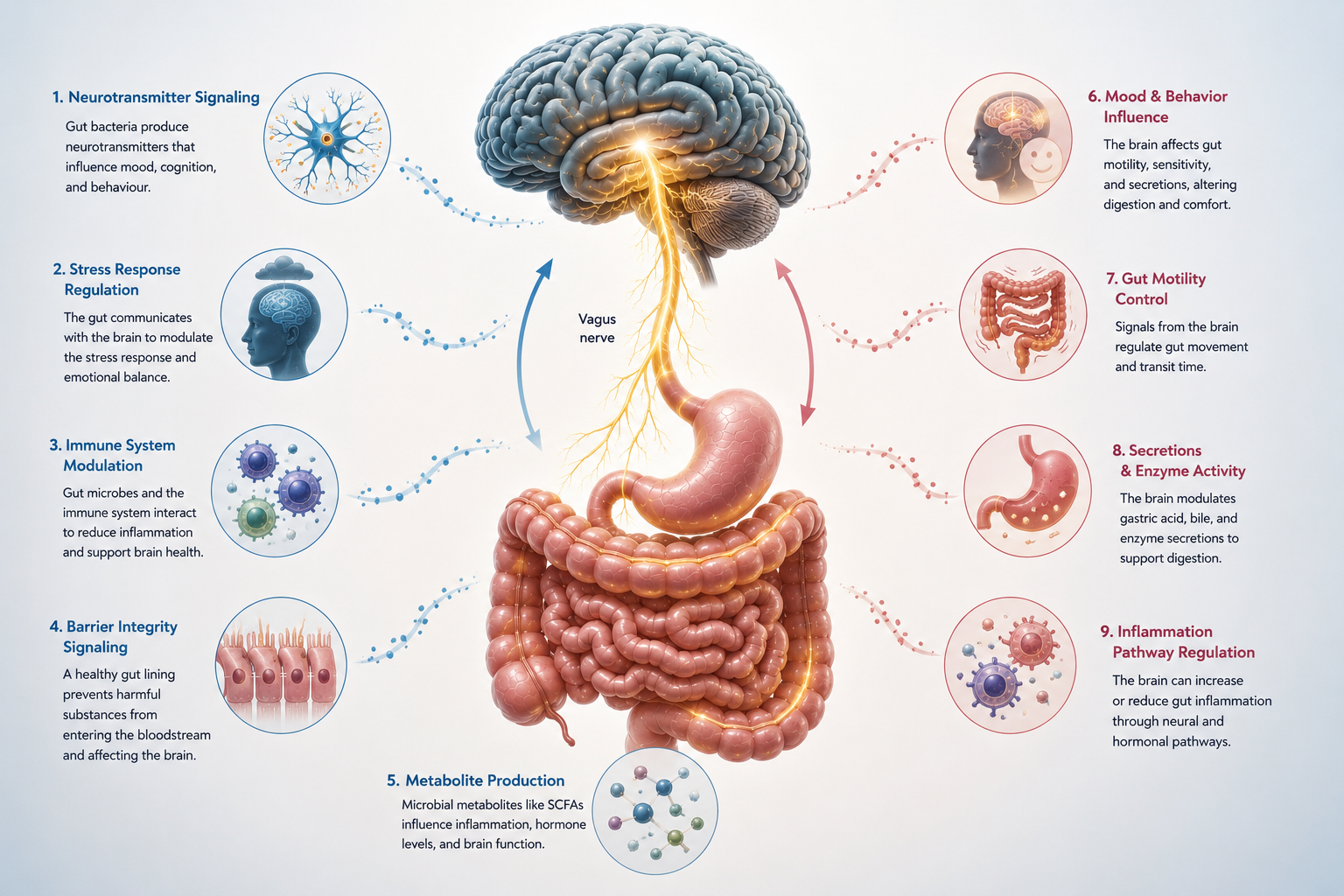
At a biochemical level, prolonged or chronic stress disrupts the autonomic nervous system. The sympathetic branch — responsible for the fight-or-flight response — goes into overdrive. The result is reduced blood flow to the gut wall, decreased mucus production, and elevated gastric acid output. In susceptible individuals, this leads to stress-induced gastritis: an inflammation of the stomach lining that produces pain, bloating, heartburn, and a feeling of fullness after only a few bites. For children with an already-sensitised gut — perhaps following a previous GI infection — even moderate stressors can trigger disproportionately intense pain.
If left unmanaged over months or years, the consequences compound. Gastric acid irritating the oesophagus can develop into reflux disease. Impaired stomach lining function can hinder the absorption of iron and vitamin B12 — nutrients children need in adequate supply for growth, cognitive function, and energy. It is not a condition to simply wait out without some form of intervention.
There is also the psychological reinforcement loop to consider. Children who experience repeated gut pain may develop anxiety about having episodes in social or academic situations, which in turn raises baseline stress levels, which worsens gut sensitivity. Rush University gastroenterologist Dr. Garth Swanson has noted that stress-induced GI symptoms affect between 20% and 40% of people at some point in their lives — and the cycle of symptoms generating further stress is a well-documented clinical pattern.
What Sets It Off
Triggers vary by child, age, and environment, but several cluster reliably. Academic pressure — standardised tests, exam periods, report card deadlines — sits at the top of the list. Social friction, including shifting friendships, group exclusion, or online social dynamics, registers just as forcefully for many children as any academic stressor. Developmental transitions such as moving up to a new school, changing teachers, or adjusting to a sibling's arrival can quietly destabilise a child's sense of control. Physical factors matter too: irregular meal schedules, reduced sleep during busy periods, and a diet heavy in fried, spicy, or carbonated foods can all lower the threshold at which gut symptoms appear.
Dietary aggravators worth particular attention include excessive consumption of caffeine-containing drinks, acidic fruits, processed snacks high in fat, and carbonated beverages. Sorbitol — an artificial sweetener found in many sugar-free products — is poorly digested and can cause cramping, bloating, and diarrhoea even in otherwise healthy children. These dietary components do not cause stress, but they amplify the gut's reaction to it.
What Helps — and What Doesn't
One of the most counterproductive responses is to keep a child home from school repeatedly without addressing the underlying driver. Avoidance reinforces the nervous system's signal that the environment is genuinely threatening, which escalates rather than resolves the cycle. Equally, insisting the pain "isn't real" and pushing through without any acknowledgement leaves the child feeling both physically unwell and emotionally unseen.
The evidence-supported middle ground centres on three things: validation, routine, and graduated coping tools. Validate that the pain is real without catastrophising it. Maintain predictable meal times, sleep schedules, and daily structures — routine reduces baseline cortisol. Introduce simple calming techniques, diaphragmatic breathing being among the most accessible and well-evidenced, as physical regulators of the stress response. Short walks or outdoor movement activate gut motility and ease constipation-related pain; they also shift the nervous system away from sympathetic overdrive.
Diet adjustments are worth pursuing in parallel. Smaller, more frequent meals reduce the volume of food the gut must process at one sitting. Avoiding iced drinks, very fatty foods, and excessive spice helps minimise gastric irritation. Where functional pain is persistent, a paediatric gastroenterologist may also consider low-dose tricyclic antidepressants — not as mood medications, but as nerve-signal modulators that dampen the gut's pain sensitivity at doses far below those used for depression.
When symptoms include blood in stool, unintended weight loss, persistent fever, diarrhoea that disrupts sleep, or pain that doesn't follow any discernible pattern, these are alarm signals that require prompt clinical investigation rather than a stress-management plan.
Beyond the Binary: Medically Unexplained Symptoms
The Royal College of Psychiatrists acknowledges that medically unexplained symptoms — physical complaints without an identifiable organic cause — are among the most common presentations across all of medicine. In children, the gut is one of the primary sites where psychological distress finds physical expression, partly because of the density of the gut-brain neural network and partly because children have fewer verbal and behavioural strategies for communicating internal distress than adults.
This doesn't make the pain psychiatric in a dismissive sense — it makes it the product of a system in which body and mind are genuinely one continuous network. Treatment approaches that incorporate psychological support — cognitive behavioural therapy adapted for children, guided relaxation, hypnotherapy — have shown benefit for functional abdominal pain in randomised trials. When combined with dietary changes and appropriate lifestyle adjustments, nearly half of children with functional abdominal pain improve meaningfully within a few weeks to months.
For parents navigating this, the most useful reframe is this: your child's belly is not lying, and neither is their brain. They are, in the most literal sense, doing exactly the same thing.

Citations & Credibility
The research and clinical claims in this article draw from peer-reviewed guidance and expert commentary provided by licensed medical institutions. Sources are listed below for transparency and further reading.
American College of Gastroenterology (ACG)
Clinical overview: Functional Abdominal Pain in Children. Defines recurrent abdominal pain (RAP), diagnostic criteria, and treatment frameworks. Published in patient education resources at gi.org.
UniCamillus — Saint Camillus International University of Health and Medical Sciences
Expert interview with Professor Giovanni Leonetti, Gastroenterology faculty. Covers the hormonal and biochemical mechanisms of stress-induced gastritis, dietary risk factors, and clinical management strategies. Published 2024.
Rush University Medical Center, Chicago
Clinical commentary by Dr. Garth Swanson, gastroenterologist: GI Symptoms — Is It Stress or Something More? Provides prevalence data (20–40% of population affected), differential diagnosis guidance for red-flag GI symptoms, and lifestyle-based management recommendations.
Royal College of Psychiatrists (UK)
Clinical guidance on medically unexplained symptoms (MUS) — physical symptoms without identifiable organic cause, including somatic presentations of psychological distress in children and adults. Published patient resources at rcpsych.ac.uk.
Institute of Living, Hartford Healthcare (Connecticut)
Health and wellness resources on child stress, anxiety, and the physiological manifestations of emotional distress. Informs the section on anxiety-based functional symptoms and the nervous system's role in paediatric GI complaints.
This article is for informational purposes. It does not constitute medical advice. If your child is experiencing persistent or severe abdominal symptoms, consult a licensed healthcare provider or paediatric gastroenterologist.
Article Tags

Written by
MedBary Team
Comments
Log in to join the conversation.
Loading comments…