

The Quiet Erosion: Inside Vascular Dementia
Unlike Alzheimer's, vascular dementia doesn't need protein deposits to destroy a mind — it just needs to cut off the blood supply. And it's far more common than most people realize.

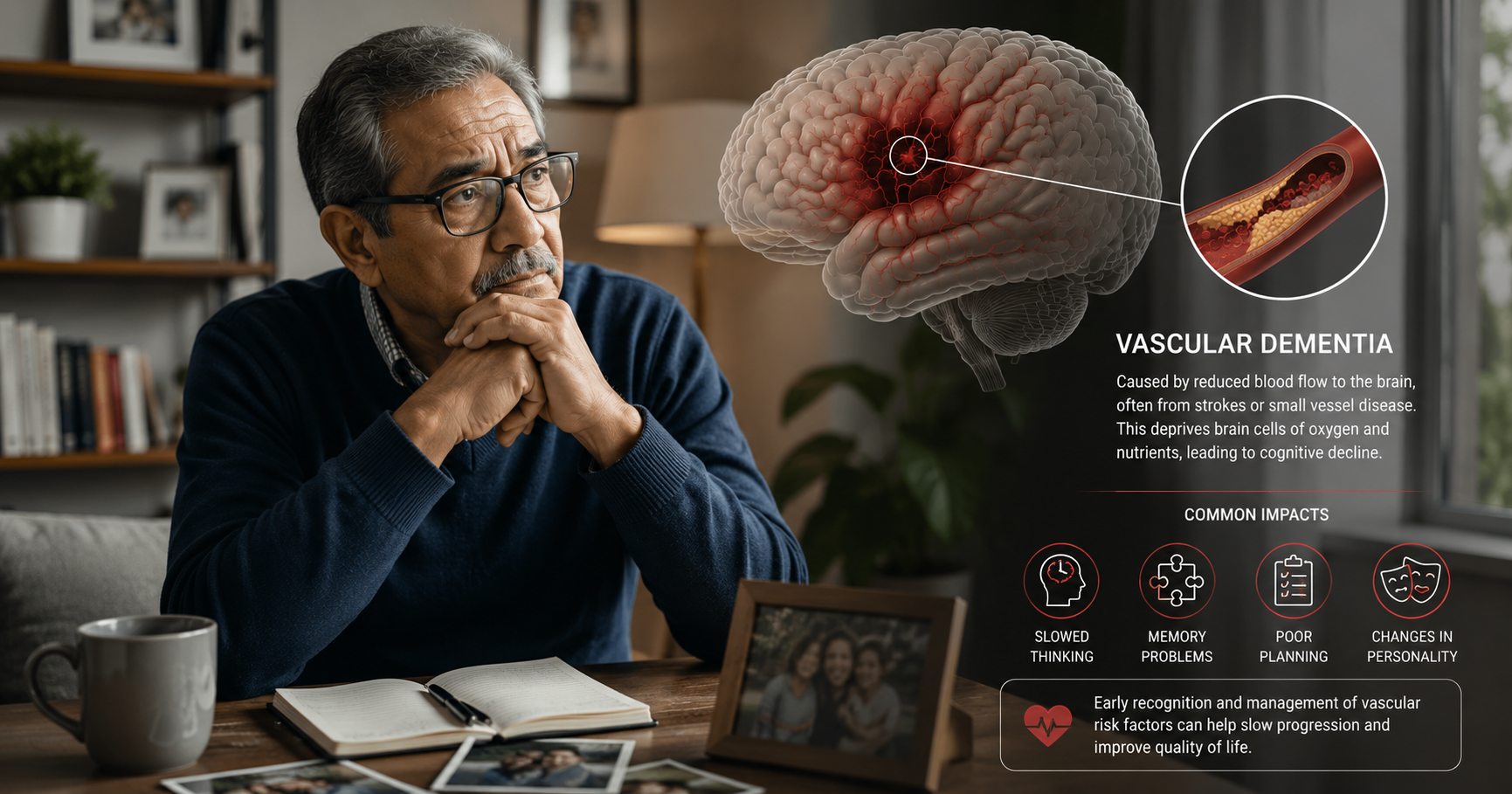
Vascular dementia is the second most common form of dementia worldwide, accounting for roughly 20% of all dementia cases. Unlike Alzheimer's disease — which stems from protein deposits — vascular dementia arises when the brain's blood supply is disrupted, starving neurons of the oxygen and nutrients they need to survive. This disruption can happen suddenly after a stroke, or creep in silently over years through dozens of tiny, undetected blockages. The result is a cascade of cognitive changes — from slowed thinking and poor planning to memory loss and personality shifts — that profoundly affect the lives of patients and those who care for them. Understanding the mechanisms, warning signs, and management strategies of this condition is the first step toward better outcomes.

Why It Matters
A Condition Hidden in Plain Sight
Vascular dementia is often called the "silent" dementia — not because its effects are trivial, but because its origins frequently go undetected. Many patients experience dozens of tiny strokes over months or years, each one imperceptible on its own, yet cumulatively destructive. By the time cognitive decline becomes apparent, significant neurological damage may have already occurred.
What makes this condition particularly important is that many of its underlying causes — high blood pressure, diabetes, smoking, high cholesterol — are modifiable. This positions vascular dementia as one of the most preventable forms of cognitive decline, making public awareness and cardiovascular health management genuinely life-altering.
Vascular Origins
Unlike Alzheimer's, this dementia traces directly back to blood vessel disease — meaning heart health and brain health are inseparable.
Under-Diagnosed
Symptoms often overlap with depression or normal aging, causing many cases to be missed or misattributed for months or years.
Prevention Is Possible
Managing blood pressure, diabetes, and cholesterol can substantially reduce risk — making lifestyle choices a powerful form of neuroprotection.
Caregiver Impact
The unpredictable, stepwise decline of vascular dementia places unique emotional and logistical burdens on families and informal caregivers.
Detailed Viewpoint
Vascular Dementia: When Blood Flow Betrays the Brain
What Is Vascular Dementia?
Vascular dementia is an umbrella term for cognitive impairment caused by conditions that disrupt blood flow and oxygen delivery to the brain. The brain is an extraordinarily oxygen-hungry organ — it consumes roughly 20% of the body's total oxygen supply despite comprising only about 2% of body weight. When blood vessels are damaged, blocked, or hemorrhage, brain cells begin dying within minutes. The location and extent of this damage determine which cognitive functions are affected.
According to research from the University of California San Francisco Memory and Aging Center, vascular dementia differs from Alzheimer's disease in its pattern of progression. While Alzheimer's tends to follow a gradual, linear decline, vascular dementia often progresses in a stepwise fashion — periods of relative stability punctuated by sudden drops in function following a new vascular event.
Types of Vascular Dementia
Post-Stroke Dementia
Develops after a major stroke. Severity depends on which blood vessel was affected and the permanence of the supply interruption. Approximately 1 in 5 stroke survivors develops dementia within six months.
Multi-Infarct Dementia
Results from multiple small strokes (transient ischemic attacks) occurring over weeks or months. Each individual episode may be barely noticeable, but the cumulative brain tissue loss leads to widespread cognitive damage.
Subcortical Vascular Dementia
The most common subtype. Involves disease of small blood vessels deep within the brain, which thicken and narrow over time. This reduces blood flow to white matter — the brain's communication network — producing symptoms that may differ from stroke-related presentations.
Mixed Dementia
Occurs when vascular damage co-exists with Alzheimer's-type pathology. Most common in adults over 75, and research suggests it may be more prevalent than previously understood — with autopsy studies confirming mixed pathology in a significant proportion of dementia cases.
Recognising the Symptoms
Symptoms vary widely depending on which part of the brain is affected, but they typically span two broad stages. Early signs are frequently mistaken for depression, stress, or the natural effects of aging — which is why awareness of the specific cognitive signature of vascular dementia is so important.
Early Stage
Later Stage
How Is It Diagnosed?
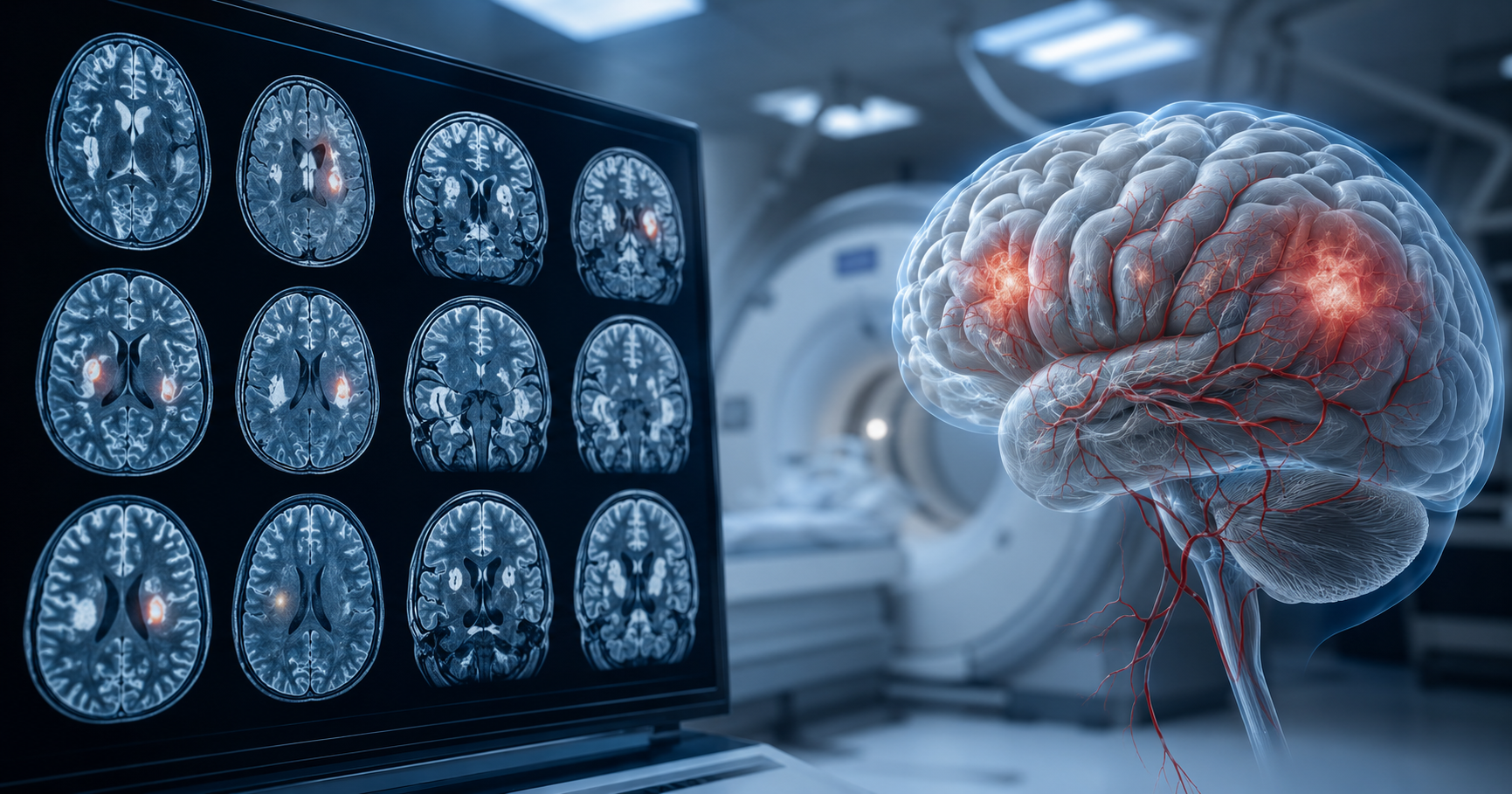
There is no single test that confirms vascular dementia. Diagnosis typically involves a comprehensive clinical assessment combining a patient and family interview, cognitive performance tests, blood panels to rule out other causes (such as thyroid dysfunction or B12 deficiency), and neuroimaging. CT or MRI scanning plays a central role, revealing evidence of prior strokes, white matter changes, or reduced blood flow in affected brain regions.
Clinicians must also carefully exclude conditions that mimic vascular dementia, including depression, normal pressure hydrocephalus, thyroid disease, and the effects of certain medications. The National Institute on Aging (NIA) notes that people with vascular dementia almost always show abnormalities on MRI scans — including evidence of prior strokes, often silent ones — and changes in white matter that affect the brain's internal messaging system.
Important: Caregivers and family members are often essential informants in the diagnostic process. Because patients may lack insight into their own cognitive changes, third-party observations about daily functioning, recent changes in behaviour, and symptom progression are clinically invaluable.
Causes & Risk Factors
The brain depends on an uninterrupted supply of oxygenated blood delivered through a complex vascular network. When this network is compromised — whether through blockage, leakage, or chronic narrowing — neurons in the affected territory begin to die. The nature of that compromise determines the type of vascular dementia that follows.
| Risk Factor | How It Contributes | Modifiable? |
|---|---|---|
| High Blood Pressure | Damages artery walls over time, promoting atherosclerosis and increasing stroke risk | ✓ Yes |
| Type 2 Diabetes | Elevated blood glucose degrades blood vessel walls throughout the body and brain | ✓ Yes |
| High Cholesterol | Promotes plaque build-up in arterial walls, restricting cerebral blood flow | ✓ Yes |
| Smoking | Accelerates vascular disease; increases clot formation and stroke frequency | ✓ Yes |
| Obesity | Compounds hypertension, diabetes, and cholesterol risk simultaneously | ✓ Yes |
| Age (65+) | Risk doubles every five years; vascular health naturally declines with age | ✗ No |
| Family History | Genetic links exist with some forms; family history of stroke or heart disease elevates risk | ✗ No |
Treatment & Management
There is currently no cure for vascular dementia and no treatment proven to reverse existing neurological damage. However, a multi-pronged management strategy can help slow progression, reduce the risk of further vascular events, and significantly improve quality of life.
Medications
Antihypertensives, statins, antiplatelet agents, and diabetes medication to address underlying vascular risk
Diet & Lifestyle
Low-salt, heart-healthy diet; weight management; quitting smoking and limiting alcohol
Physical Activity
Regular moderate exercise improves cardiovascular health and is associated with slower cognitive decline
Cognitive Therapies
Memory exercises, speech and language therapy, occupational therapy aids for daily living
Wellbeing Support
Music therapy, social engagement, relaxation activities, and carer support networks
🧠 The Prevention Opportunity
Research from the Queensland Brain Institute and other centres points to a compelling finding: staying mentally and socially active appears to reduce not only the risk of developing vascular dementia but also the speed of cognitive decline once it begins. This reinforces a broader message — brain health is not simply a matter of genetics, but a dynamic outcome shaped throughout life by the choices we make for our cardiovascular and mental wellbeing.

Citation & Credibility
Sources & Research Foundations
This article draws on peer-reviewed research and guidance from leading neurological, geriatric, and dementia health institutions. All statistics and clinical claims are grounded in the following authoritative sources:
National Institute on Aging (NIA) — NIH
U.S. National Institutes of Health
Alzheimer's Society UK
alzheimers.org.uk
UCSF Memory and Aging Center
memory.ucsf.edu
Queensland Brain Institute (QBI)
University of Queensland — qbi.uq.edu.au
This article is for informational and educational purposes only. It does not constitute medical advice. If you or a loved one are experiencing cognitive symptoms, please consult a qualified healthcare professional for assessment and guidance.
Article Tags
Editorial Note
This article was written to inform readers about the causes, symptoms, types, and management of vascular dementia. The content has been compiled from peer-reviewed research and authoritative health institutions including the National Institute on Aging (NIH), Alzheimer's Society UK, the UCSF Memory and Aging Center, and the Queensland Brain Institute.
This content is for educational and informational purposes only and does not constitute medical or clinical advice. Readers experiencing symptoms consistent with dementia — or caring for someone who may be — are encouraged to consult a qualified physician, neurologist, or geriatric specialist. Early assessment and intervention remain the most effective tools available.

Written by
MedBary Team
Comments
Log in to join the conversation.
Loading comments…