


When the Brain Runs Low on Fuel
The Science Behind Energy Deficit Hyperactivity Disorder

Why It Matters
ADHD affects an estimated 5–7% of children globally and is increasingly diagnosed in adults — yet the mechanisms behind its most disabling feature, unpredictable cognitive performance, have remained poorly understood. Existing models, which largely attribute ADHD to dopamine dysregulation and structural brain differences, struggle to explain why the same person can sustain extraordinary concentration for hours on a task they find compelling, then collapse entirely when faced with a simple but monotonous instruction.
The EDHD model published in Neuroscience & Biobehavioral Reviews in 2026 addresses this gap directly. By positioning cellular energy regulation — not attention per se — as the primary variable, it reframes the entire disorder. The practical stakes are significant: if ADHD is partly a metabolic problem, then interventions targeting sleep architecture, nutrition, and mitochondrial health become not just supportive but potentially central to treatment.
"The model sheds new light on a disorder studied for decades — by viewing executive functions as energetically expensive resources, it explains why performance fluctuates so drastically based on the brain's current metabolic state."
— Mohammad Dawood Rahimi, Freie Universität Berlin
This also matters for destigmatization. When a child is told they are not trying hard enough, that framing becomes entrenched — in school systems, in families, and in the child's own self-perception. A biological model that locates the problem in cellular energy supply rather than character or willpower changes that conversation fundamentally. As ADHD diagnoses continue rising across Europe and North America — not only in children but increasingly in adults and women — the demand for a more precise explanatory framework has never been more pressing.
Detailed Viewpoint
The Brain as an Energy Economy
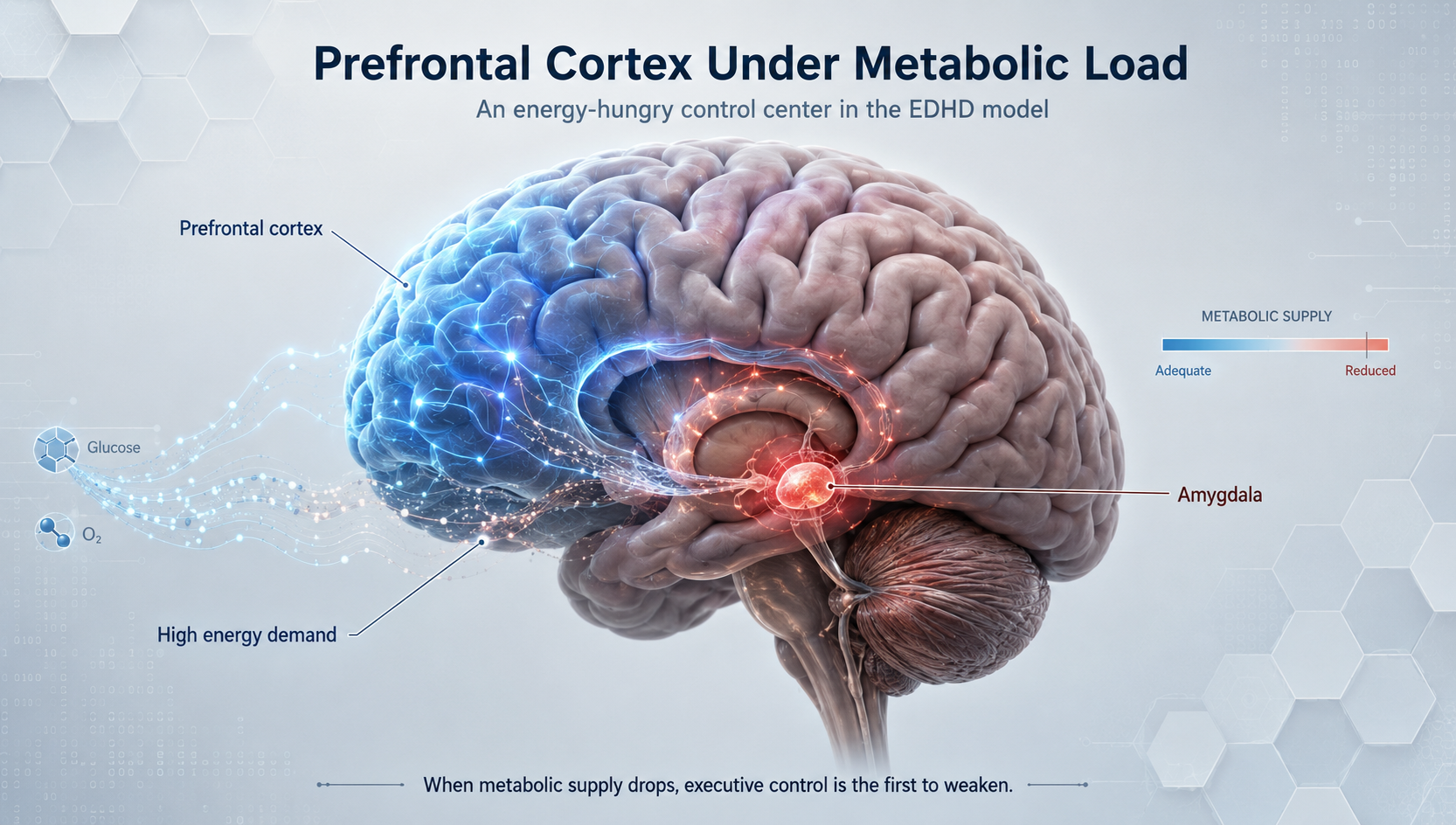
The brain consumes roughly 20% of the body's total energy despite accounting for only about 2% of body weight. Within the brain, the prefrontal cortex — responsible for planning, working memory, impulse control, and goal-directed behaviour — is among the most metabolically expensive regions. The EDHD framework proposes that in individuals with ADHD, this region faces an inconsistent fuel supply, not a permanent deficiency but a dynamically unstable one.
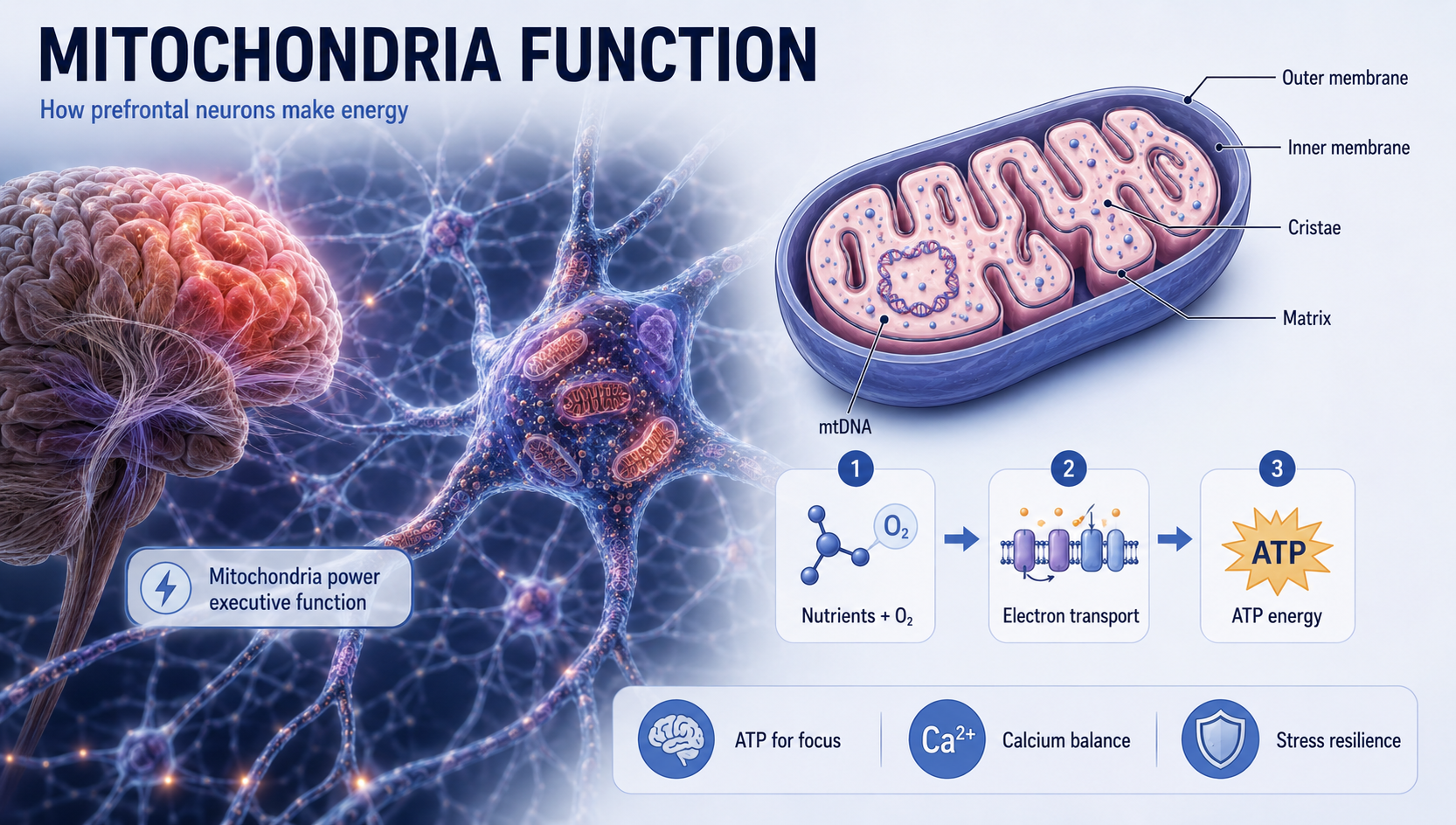
Rahimi's model draws on mitochondrial biology to explain why this happens. Mitochondria — the cellular structures that generate ATP, the brain's primary energy currency — appear to function sub-optimally or erratically in ADHD. When neural demand spikes during a cognitively taxing task and mitochondrial output cannot keep pace, the prefrontal cortex essentially begins rationing its resources. The observable result is what we call executive dysfunction: missed deadlines, incomplete tasks, emotional dysregulation, and difficulty transitioning between activities.
Hyperfocus: Not a Contradiction, a Metabolic Window
One of the most counterintuitive features of ADHD has always been hyperfocus — the capacity to sustain intense, unbroken concentration on a high-interest task for hours, even while struggling to follow a two-step verbal instruction. Traditional attention-deficit models have no clean explanation for this. The EDHD framework does.
Stimulating, high-interest tasks generate arousal — a neurochemical state that optimises energy allocation across neural circuits. When a task is compelling, the brain's arousal system essentially subsidises the prefrontal cortex, providing the energetic headroom needed for sustained engagement. Monotonous tasks, by contrast, provide no such subsidy. The arousal signal is absent, the metabolic allocation is insufficient, and attention collapses — not because the person is unwilling, but because the energy infrastructure simply cannot sustain the load without arousal-driven support.
Restlessness as a Survival Strategy
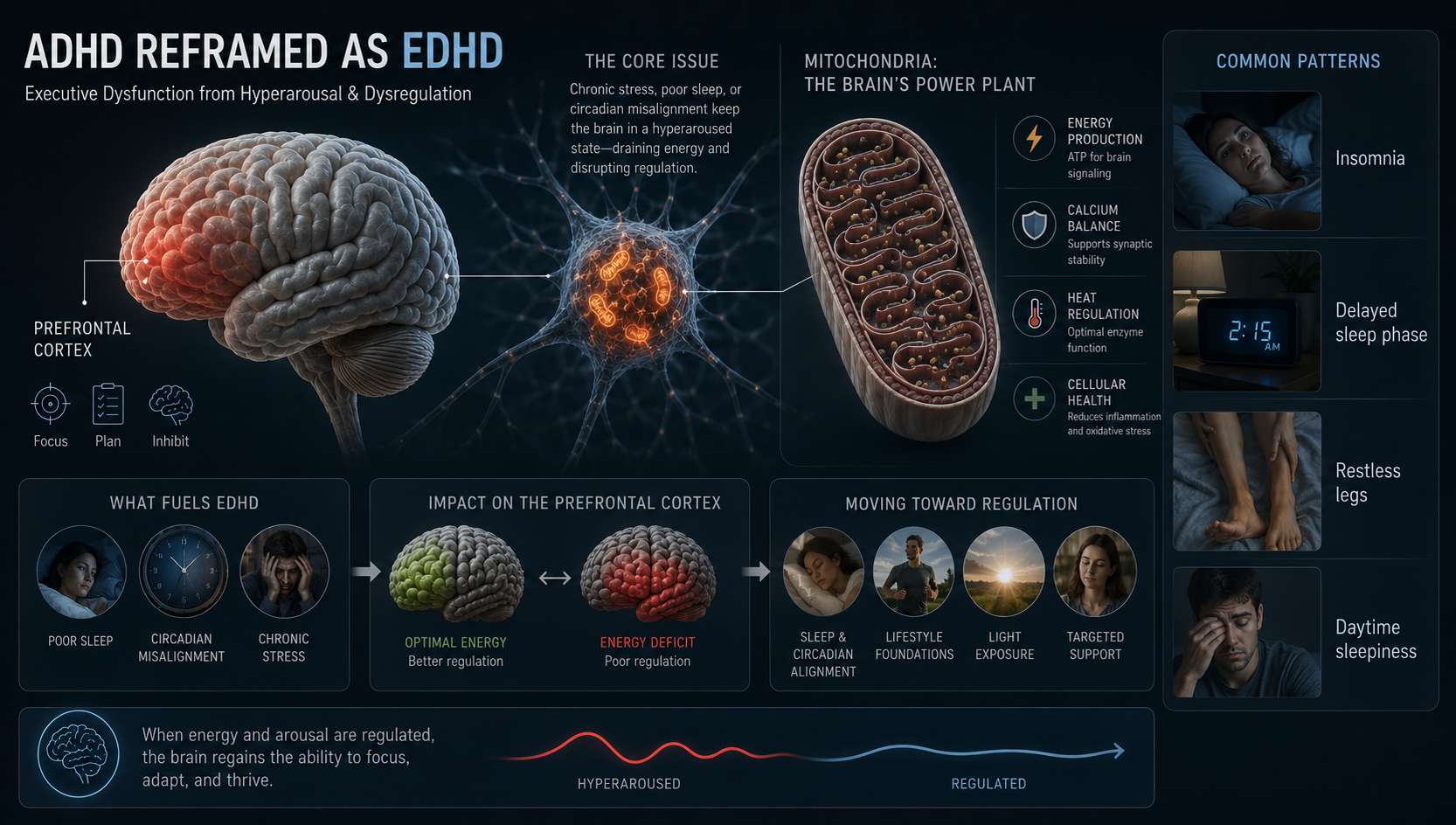
Under the EDHD model, hyperactivity takes on an entirely different meaning. Physical movement, fidgeting, impulsive speech, and environmental scanning are not symptoms of chaos — they are compensatory mechanisms the nervous system deploys to generate arousal and, through it, stabilise energy levels. The child who cannot sit still is not being defiant; their motor system is working to keep the prefrontal cortex adequately fuelled. This reframing has direct implications for classroom management, parenting strategies, and therapeutic environments. Suppressing movement without addressing the underlying energy instability may actually worsen cognitive performance.
Recovery, Sleep, and the Metabolic Reset
The model assigns serious clinical weight to biological recovery processes. Sleep, in particular, is identified as the primary mechanism through which the brain's energy systems are restored. Poor or fragmented sleep — extremely common in ADHD populations — compounds the energy deficit, creating a compounding cycle where cognitive performance degrades not just during a single day but across weeks. The EDHD framework implies that improving sleep quality and architecture should be treated as a front-line clinical priority, alongside (or even before) pharmacological intervention. Nutrition supporting mitochondrial efficiency — adequate B vitamins, coenzyme Q10, iron, omega-3 fatty acids — also enters the picture as a legitimate therapeutic domain rather than a peripheral consideration.
Early Signals: Research in Young Children
Parallel to these theoretical developments, the University of Pittsburgh's Pitt+Me initiative is conducting active research into early childhood brain development in 3–4 year olds displaying elevated inattention and hyperactivity. Using functional near-infrared spectroscopy — a safe, light-based measure of brain activity — the study tracks neurobehavioural patterns and parent-child synchrony over two years. This research pipeline is precisely the kind of longitudinal, biologically grounded early-intervention work that the EDHD framework anticipates as necessary. If the energy instability model holds, identifying it in preschool-age children opens a critical window for targeted support before the trajectory of academic and social difficulty becomes entrenched.
Citations & Credibility
Primary Research
Rahimi, M. D. (2026). Energy Deficit Hyperactivity Disorder (EDHD): A Neurobiological Energy Dysregulation Model for ADHD. Neuroscience & Biobehavioral Reviews, Vol. 184. DOI: 10.1016/j.neubiorev.2026.106616
Institutional Source
Freie Universität Berlin — Press Release No. 051/2026, April 27, 2026. Cognitive Neuroscience Division, Department of Education and Psychology. Researcher: Mohammad Dawood Rahimi (rahim84@zedat.fu-berlin.de)
Supporting Clinical Research
University of Pittsburgh — Pitt+Me Preschool Attention Research Study (IRB: STUDY24060118A). Principal Investigator: Dr. Heather Joseph, DO (Assistant Professor, Child & Adolescent Psychiatry). Study focus: parent-child neurobehavioural synchrony and early ADHD symptom trajectories in 3–4 year olds.
Journal
Neuroscience & Biobehavioral Reviews — peer-reviewed journal (Elsevier), indexed in PubMed/MEDLINE. Impact Factor: high-tier neuroscience. The full paper is available via ScienceDirect (open access).
Article Tags
Editorial Note
This article is produced for informational and educational purposes. The EDHD framework is a theoretical model published in a peer-reviewed journal and is not currently a clinical diagnostic category recognised by the DSM-5 or ICD-11. Readers experiencing symptoms of ADHD or related conditions should consult a qualified healthcare professional. Research findings referenced here reflect the state of published science as of June 2026.

Written by
MedBary Team
Comments
Log in to join the conversation.
Loading comments…