

Logo
Diabetes Explained: Why Blood Sugar Control Matters

Diabetes Explained: Why Blood Sugar Control Matters

LifestyleBy MedBary Team6/10/20265 min read

Diabetes affects how the body uses glucose and insulin, making blood sugar control essential for long-term health. Early testing, consistent daily habits, and appropriate medical care can help reduce risks to the heart, kidneys, eyes, and nerves.

Advertisement
Advertisement

Health Awareness Diabetes Education

Diabetes Explained: Why Blood Sugar Control Matters

Diabetes is often described as a sugar problem, but that simple phrase misses the bigger story. At its core, diabetes is about how the body turns food into glucose, how insulin helps that glucose reach the cells, and what can happen when blood sugar remains too high for too long [1].

As diabetes rises worldwide, the condition has become more than a personal diagnosis. It is now a public health challenge involving prevention, early testing, access to care, daily habits, and long-term protection of the heart, kidneys, eyes, and nerves [2].

RN 1.1

Key Highlights

14%

of adults aged 18 and older were living with diabetes globally in 2022, according to WHO estimates [2].

589M

adults aged 20 to 79 were estimated to be living with diabetes worldwide in 2024 [3].

3

major forms are commonly discussed: type 1 diabetes, type 2 diabetes, and gestational diabetes.

4

major areas of concern include the heart, kidneys, eyes, and nerves when high blood sugar is not managed [1].

Daily

choices around food, movement, monitoring, and treatment can strongly influence long-term diabetes control.

Early

testing and awareness can help detect blood sugar problems sooner and support timely care.

Why It Matters

Diabetes matters because glucose is not just a number printed on a lab report. Glucose is the body’s main fuel, helping the brain think, the muscles move, and the organs function. But when too much glucose remains in the bloodstream, it can begin to damage the body silently over time.

The National Institute of Diabetes and Digestive and Kidney Diseases explains that diabetes raises the risk of damage to the eyes, kidneys, nerves, and heart [1]. These complications do not usually happen overnight. They often build gradually, which is why early awareness and regular checkups are so important.

The issue is also becoming larger at a global level. WHO reported that diabetes prevalence among adults rose from 7% in 1990 to 14% in 2022, showing how quickly the burden has expanded across countries and health systems [2].

For readers, the practical message is simple but powerful: diabetes is serious, but it is not hopeless. Early testing, balanced meals, safe physical activity, medical guidance, and consistent monitoring can help people protect their health and reduce the chance of long-term complications.

RN 3

Detailed Viewpoint

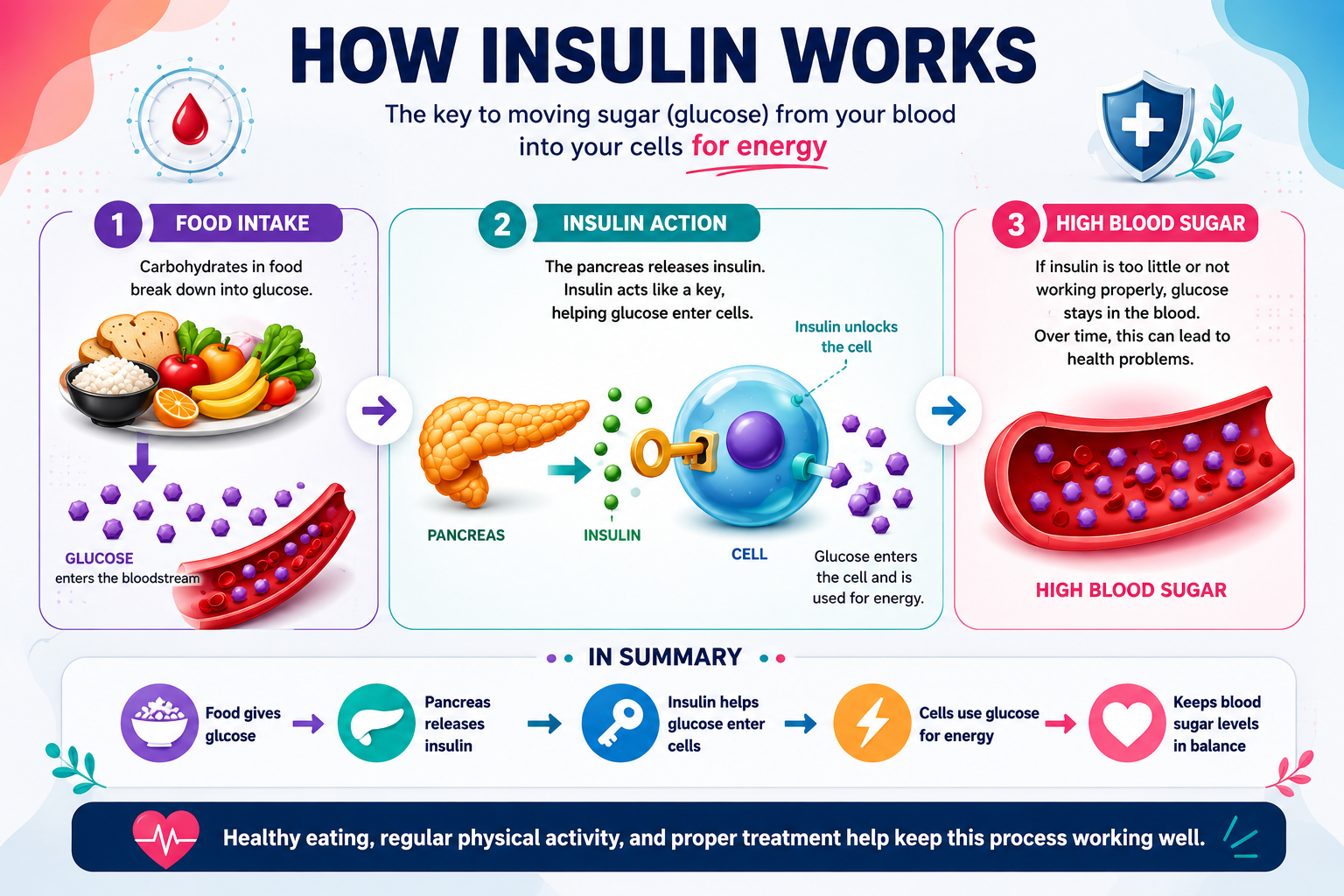
The easiest way to understand diabetes is to begin with an everyday moment: eating a meal. After food enters the body, much of it is broken down into glucose. That glucose moves into the bloodstream, where it becomes available as energy. But glucose cannot do its job properly unless it can move from the blood into the body’s cells.

This is where insulin becomes essential. Insulin is a hormone made by the pancreas. It helps glucose enter cells so the body can use it for energy. A simple comparison is to think of insulin as a key: it helps unlock the cell so glucose can move inside. In diabetes, that key system does not work as it should [1].

Sometimes the body does not make enough insulin. Sometimes it makes little or none. In other cases, the body produces insulin, but the cells do not respond to it properly, a process commonly called insulin resistance. When any of these problems occur, glucose remains in the blood instead of reaching the cells. Over time, this high blood sugar can place stress on blood vessels, nerves, and organs.

This is why diabetes should not be reduced to the idea that a person “ate too much sugar.” Food choices matter, but they are only part of the picture. Genetics, age, pregnancy, body weight, activity level, sleep, stress, access to healthy food, access to healthcare, and family history can all influence risk.

Clinical View

Clinicians focus on diagnosis, blood glucose patterns, treatment plans, complication screening, and follow-up. The American Diabetes Association updates its Standards of Care each year to guide evidence-based diabetes care [4].

Public Health View

Public health experts look beyond individual choices. They also focus on screening access, affordable treatment, safer food environments, education, and support for communities where diabetes is often diagnosed late.

There is also an important human side to diabetes. Many people feel blame or shame when they are diagnosed, especially when diabetes is described only as a lifestyle problem. That framing can be unfair and unhelpful. Diabetes care works best when people receive clear information, practical support, and treatment without stigma.

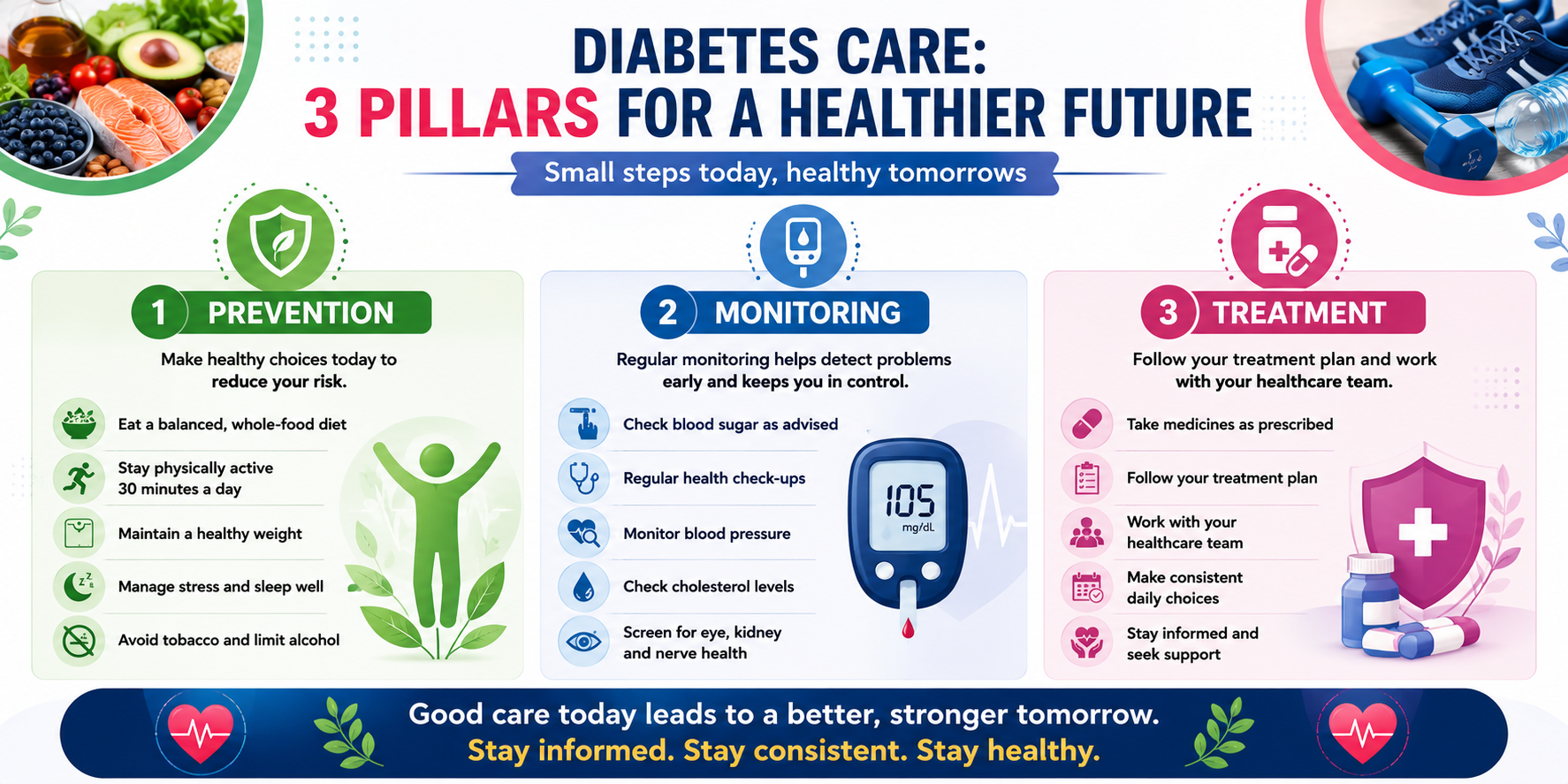
Management can look different from person to person. Some people may improve blood sugar levels with nutrition changes, regular activity, sleep, weight management, and routine monitoring. Others need oral medicines, injectable medicines, or insulin. Needing medication is not a failure. It is part of treating a biological condition that can change over time.

The most effective approach is continuous care. That may include checking blood sugar when advised, keeping medical appointments, protecting the eyes and kidneys, staying active, taking medicine as prescribed, and asking questions when something is unclear.

Food

Balanced meals can help reduce sharp blood sugar changes. The goal is not extreme restriction, but steady, sustainable choices.

Movement

Regular movement can help the body use glucose more effectively and supports heart health, mood, and energy.

Monitoring

Checkups and blood sugar monitoring, when recommended, can help identify problems early and guide treatment decisions.
RN 4

Citations & Credibility

  1. National Institute of Diabetes and Digestive and Kidney Diseases — “What Is Diabetes?”, NIDDK. https://www.niddk.nih.gov/health-information/diabetes/overview/what-is-diabetes
  2. World Health Organization — “Diabetes”, WHO Fact Sheet, November 2024. https://www.who.int/news-room/fact-sheets/detail/diabetes
  3. International Diabetes Federation — “Diabetes Facts & Figures”, IDF Diabetes Atlas, 2024. https://idf.org/about-diabetes/diabetes-facts-figures/
  4. American Diabetes Association Professional Practice Committee — “Standards of Care in Diabetes—2025”, Diabetes Care, 2025. https://professional.diabetes.org/standards-of-care

Tags:DiabetesHeart HealthGlucoseInsulin ResistancePublic HealthPreventionNutrition

Editorial Note: This article is produced for informational and educational purposes. It does not constitute medical advice. Patients should consult a qualified healthcare provider for diagnosis and treatment guidance. All statistics cited are sourced from peer-reviewed literature or named patient advocacy organizations as referenced above.

MedBary Team

Written by

MedBary Team

Comments

Log in to join the conversation.

Loading comments…

Diabetes Explained: Blood Sugar Control & Health Risks — Bloorian