

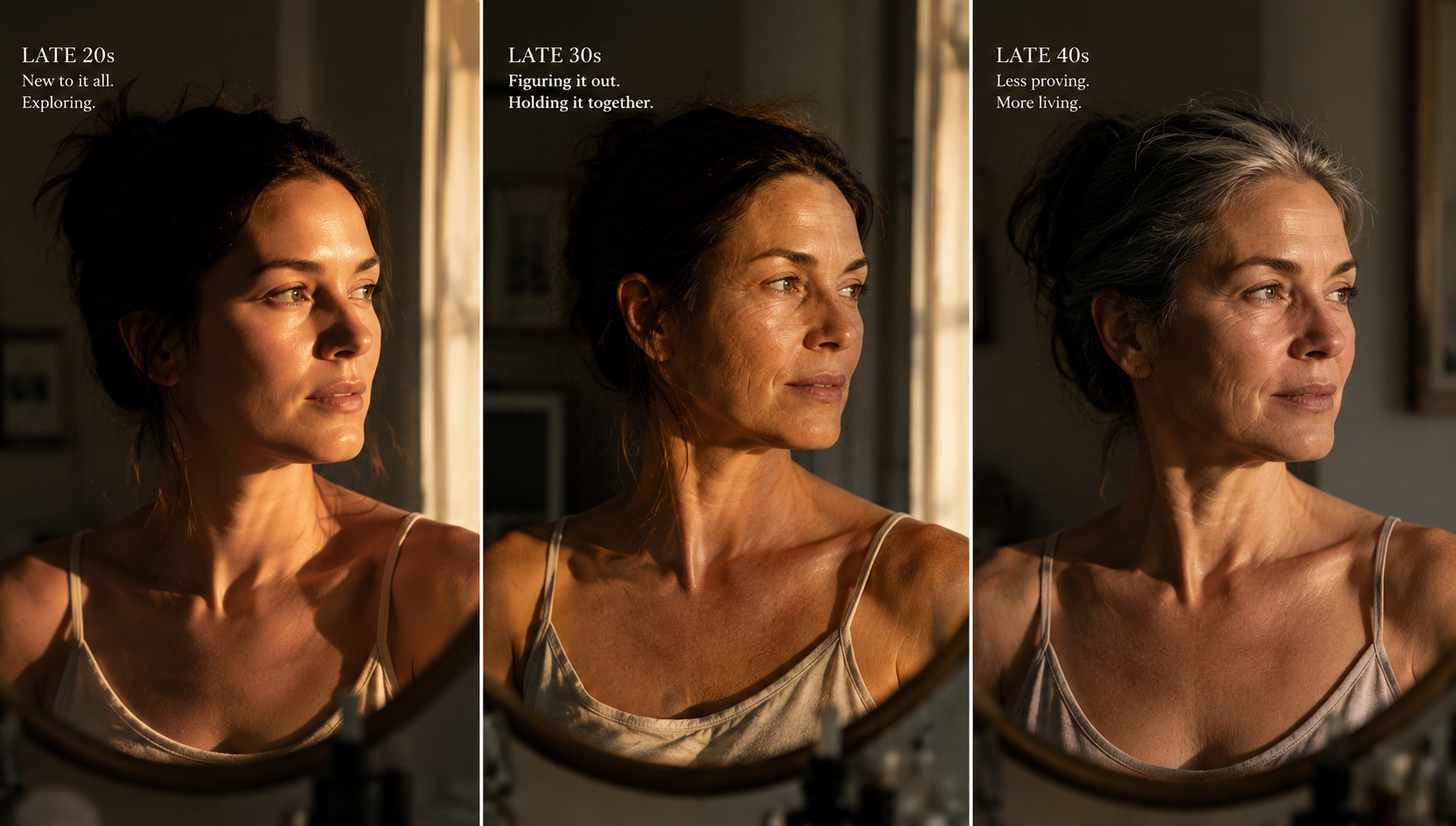
Every Wrinkle Gets Put on Trial — Here's the Verdict Science Actually Reached
Nobody's skin is lying to them. The story told about what it means when skin ages — that's where the real dishonesty lives, and the data finally catches it out.

Every Wrinkle Gets Put on Trial — Here's the Verdict Science Actually Reached
Nobody's skin is lying to them. The story told about what it means when skin ages — that's where the real dishonesty lives, and the data finally catches it out.
Highlights
Why It Matters
None of this is abstract. The same survey data behind the "beauty tax" research found that people who score higher on measures of social dominance demand significantly more grooming investment from women in powerful jobs than from women in junior roles — and demand almost nothing extra from men climbing the same ladder. That's not vanity policing; that's a cost applied unevenly at the exact moment a woman starts to matter more in a room.
There's a cultural cost too. Researchers studying cosmetic surgery among East Asian and immigrant communities describe procedures like eyelid surgery or rhinoplasty as sitting at an uncomfortable crossroads — sometimes read as self-expression, sometimes as quiet erasure of features tied to ethnicity or age. One widely cited thesis on cosmetic surgery in the U.S. goes further, arguing that when only one narrow beauty ideal gets rewarded, differences in ethnicity, age, and body shape get flattened toward a single template, even when the decision to modify them feels entirely personal and voluntary to the woman making it.
And there's a financial cost that rarely gets named out loud. Grooming and appearance maintenance function as an unpaid, unofficial third job for many women. Recognizing that pattern doesn't require rejecting lipstick or Botox. It requires knowing which parts of the pressure are personal preference and which parts are a bill someone else wrote and quietly handed to women to pay.
Detailed Viewpoint
The Biology Behind a Look
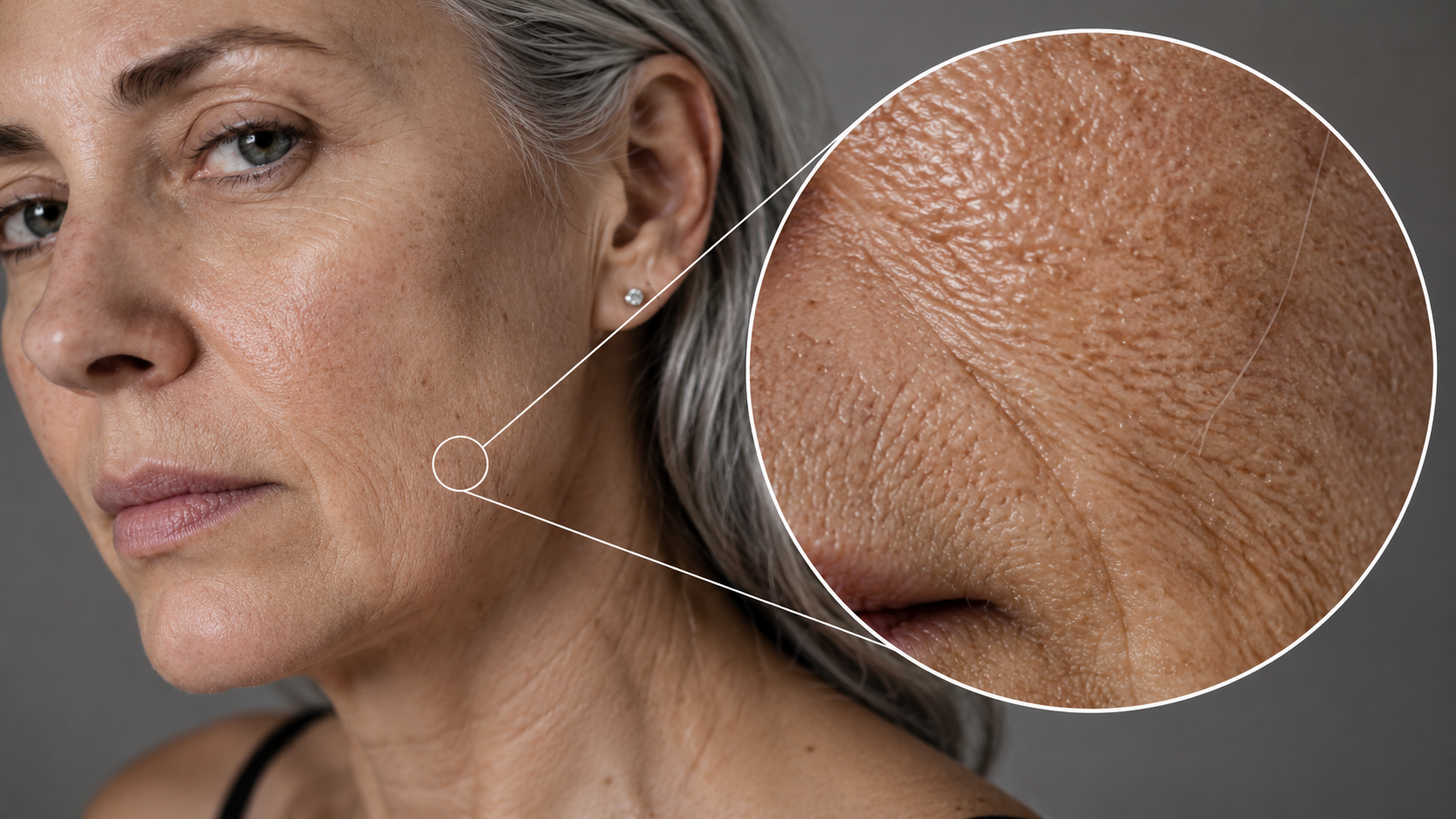
Skin does age on a schedule, but not the one people usually assume. Dermatologists split the process into two tracks: intrinsic aging, the slow genetic clock that thins skin and reduces collagen regardless of lifestyle, and extrinsic aging, the damage layered on top by sun exposure, pollution, and smoking. Because women's skin starts out thinner and lower in collagen than men's, the visible effects of both tracks tend to show up earlier and more sharply on female faces — a biological fact, not a character flaw.
A twin study comparing 102 pairs of Danish women aged 59 to 81, alongside 162 British women aged 45 to 75, tried to isolate exactly which facial features drive how old a woman is perceived to look. Three traits stood out as independent predictors: the extent of skin wrinkling, the degree of hair graying, and lip height. Sun-damage appearance mattered mainly because it overlapped with wrinkling, not as a separate factor on its own. The same research turned up something worth sitting with: perceived age was actually a better predictor of a person's underlying condition than chronological age was. "Looking young for your age" isn't just a compliment — it may reflect something real, shaped by genetics and environment in roughly equal measure.
The Economics of Staying "Presentable"
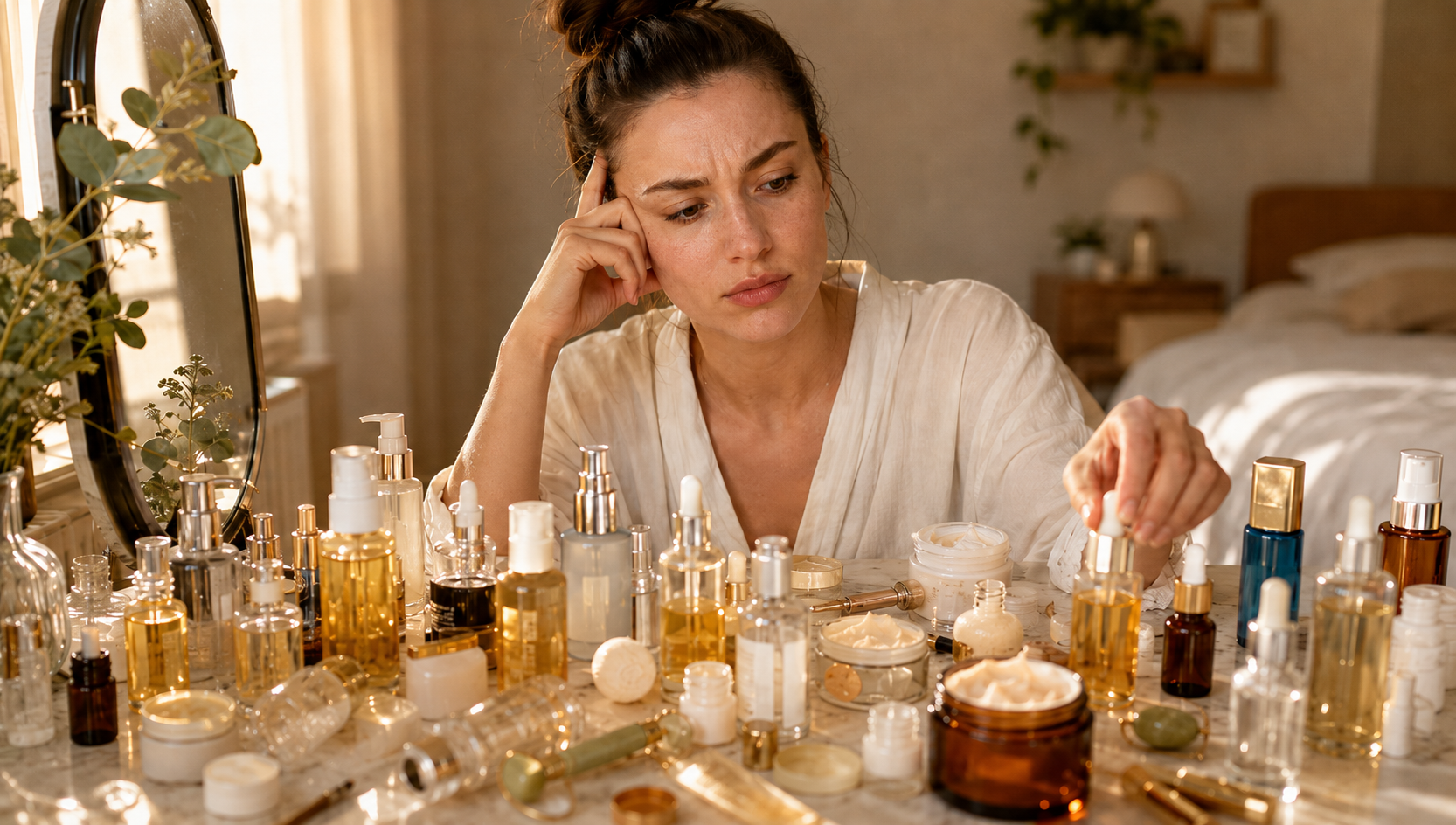
The numbers behind the appearance industry are larger than most people register day to day. Survey-based research on beauty norms estimates that women in the U.S. spend close to 45 minutes a day on grooming, not counting shopping trips or salon visits, and account for the overwhelming majority of a beauty products market worth well over a hundred billion dollars. That spending isn't distributed evenly across a career, either. Experimental studies asking participants to estimate how much time and money employees "should" invest in appearance found that demands spike specifically for women stepping into powerful, traditionally male-coded jobs — a pattern the researchers nicknamed a power penalty.
Procedure data tells a parallel story. A 2022 cross-sectional survey of 324 patients found that while more than three-quarters of respondents said dermatologists or plastic surgeons were the most qualified providers for cosmetic work, close to a third of people who had actually undergone a procedure went to a non-medical aesthetician instead, largely for cost reasons. Complications, when they happened, sent people straight back to a dermatologist's office regardless of who performed the original treatment. Younger respondents in the same survey learned about procedures mostly through social media; people over 55 relied more on television and word of mouth from friends — different pipelines feeding the same pressure.
Whose Face Sets the Standard?
Appearance pressure doesn't land the same way across cultures, and that unevenness is itself part of the research. A review of ethics literature on cosmetic surgery among East Asian populations identified rhinoplasty and eyelid surgery as sitting inside a genuinely contested debate — not a simple story of copying Western features, but something researchers describe as more relational, shaped by family expectation, workplace norms, and a mix of cultural pride and outside influence operating at once.
Separately, historians studying the anti-aging and skin-brightening industries have traced how marketing language around "brightening," "clarity," and eliminating "age spots" borrows directly from centuries-old associations between pale skin and health that predate modern skincare by hundreds of years. That history doesn't mean every shopper buying a brightening serum is thinking about colonial-era medicine — most obviously aren't — but it does help explain why so much anti-aging marketing worldwide converges on the same vocabulary, no matter which population it's aimed at.
What Actually Helps
Not all of the research is grim. A qualitative study interviewing women about aging pressure found that most participants believed media messages about looking young affected them only mildly, even though they could describe those messages in vivid detail — a gap between what people notice and what they think they've absorbed. The same interviews found that a supportive spouse, children, or close friends consistently did more to offset aging-related anxiety than any product did. Cost and ingredient lists, not brand promises, drove most purchasing decisions, and several participants reported sticking with the same anti-aging product for over two decades simply because it worked well enough — hardly the picture of compulsive consumption the marketing assumes.
The consistent thread across all of it is a simple distinction: liking a beauty routine and being required to maintain one aren't the same experience, even when they look identical from the outside. The first is a choice. The second is a tax — and knowing the difference is the part most conversations about aging skip entirely.

Citation and Credibility
This piece draws on peer-reviewed research, academic theses, and cross-sectional survey data rather than brand marketing or influencer claims. Sources referenced include:
- A twin-based facial appearance study examining Danish and British women published via the U.S. National Library of Medicine's PubMed Central archive.
- A 2022 cross-sectional survey on cosmetic procedure perceptions published in Turkderm — Turkish Archives of Dermatology and Venereology.
- A peer-reviewed study on prescriptive beauty norms and workplace discrimination published in the Journal of Personality and Social Psychology.
- A systematic and narrative review on ethics and identity in East Asian facial cosmetic surgery, published in Medicine, Health Care and Philosophy.
- A graduate thesis on cosmetic surgery and women's identity from the University of South Florida's Digital Commons repository.
- An interview-based graduate thesis on women's attitudes toward aging and anti-aging products from the University of Northern Iowa's ScholarWorks repository.
- An academic book examining the history and marketing of skin-whitening and anti-aging biotechnology, published through Routledge and hosted by Carleton University.
Figures and findings are summarized and paraphrased from the original studies for clarity. Readers interested in methodology, sample sizes, or statistical detail are encouraged to consult the original publications directly.
Tagged Under
Editorial Note
NOTE
This article synthesizes findings from academic and clinical research for general informational purposes. It is not medical, dermatological, or psychological advice. Individual skin, aging, and appearance experiences vary widely, and readers considering cosmetic procedures or skincare changes should consult a licensed dermatologist or qualified physician for guidance specific to their circumstances.

Written by
MedBary Team
Comments
Log in to join the conversation.
Loading comments…