

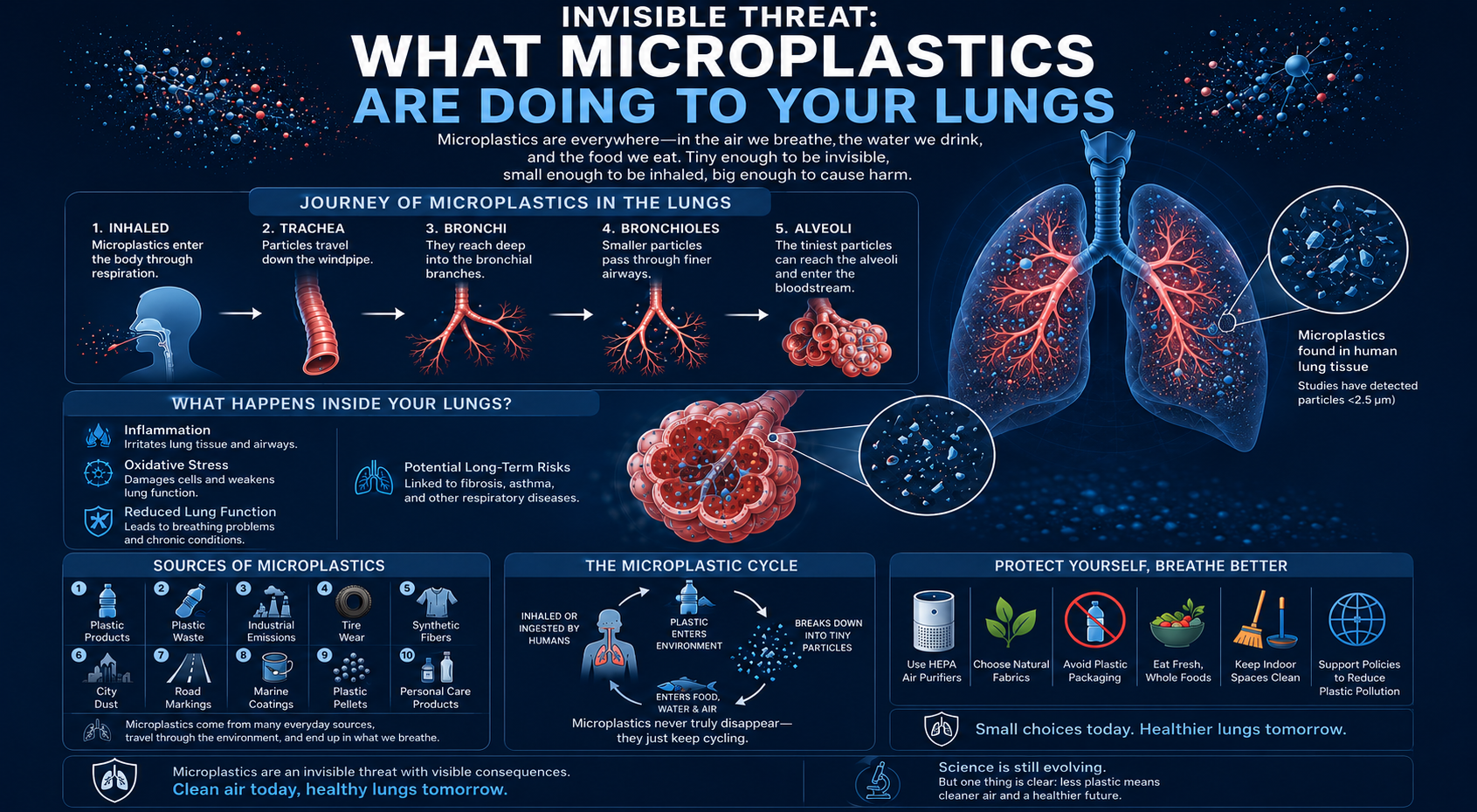
Invisible Threat: What Microplastics Are Doing to Your Lungs
You cannot see them, smell them, or taste them — yet with every breath, you may be inhaling dozens of microscopic plastic fragments. Scientists have now confirmed microplastics inside human lung tissue, and evidence is mounting that these particles trigger inflammation, damage cellular energy systems, and may accelerate the development of serious respiratory diseases. This is the story of a pollutant hiding in plain air.

Microplastics — fragments smaller than 5 mm shed from synthetic clothing, tyres, packaging, and cosmetics — have been confirmed inside human lung tissue, and new research links them directly to inflammation, oxidative stress, and accelerated respiratory disease. [1]
With inhalation now recognised as a primary exposure route and particles detected in every region of the airway — from the trachea down to the alveoli — scientists are calling for urgent research, tighter regulation, and practical steps individuals can take today to reduce their exposure. [2]
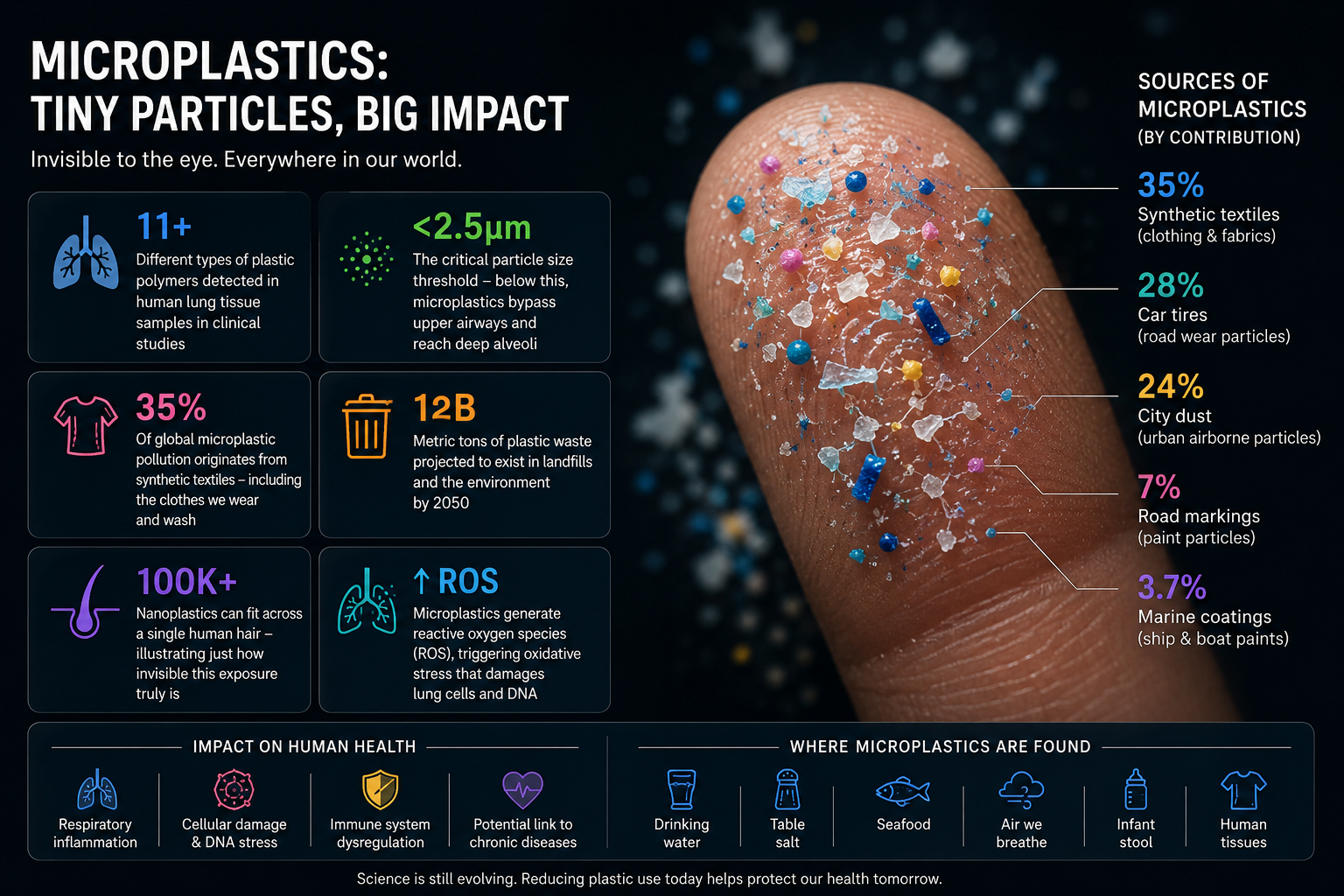
Plastic pollution was once a story told through images of ocean debris and dying seabirds. Today it is a story about what is happening inside the human body with every single breath. Microplastics — defined as plastic particles measuring less than 5 mm — have now been confirmed in human blood, placental tissue, breast milk, heart tissue, and most alarmingly, deep within lung tissue. [1] The American Lung Association identifies inhalation as one of the primary exposure routes, and clinical samples have directly correlated the presence of these particles with measurably reduced lung function and elevated pro-inflammatory markers. [2]
What makes this an urgent public health matter is the physics of the lung itself. The respiratory system's natural defences — nasal hairs, mucus, coughing — intercept particles larger than 10 μm. But particles below 2.5 μm pass through every barrier and settle directly into the alveoli, the tiny air sacs responsible for oxygen transfer into the bloodstream. Once lodged there, they accumulate; the lung has no reliable mechanism to expel them. [1] Research published in Heliyon confirms that sustained deposition increases risk for asthma, pneumoconiosis, and COPD, while lung cancer tumour tissue has been found to contain a significantly higher density of microplastics than surrounding healthy tissue. [3]
The exposure is also invisible and cumulative — it does not arrive as a single dramatic event but through every breath taken indoors near synthetic upholstery, every kilometre driven on synthetic-rubber tyres, every laundry load dried indoors. Dr. Rebecca Florsheim of the American Lung Association notes that airborne microplastics act as chemical carriers, binding to pollen, pesticides, heavy metals, and pathogens already suspended in the air — delivering multiple pollutants simultaneously into the respiratory system. [2] This compounding effect elevates the health stakes well beyond plastic alone and reframes microplastic inhalation as a multiplier of existing environmental health risks.
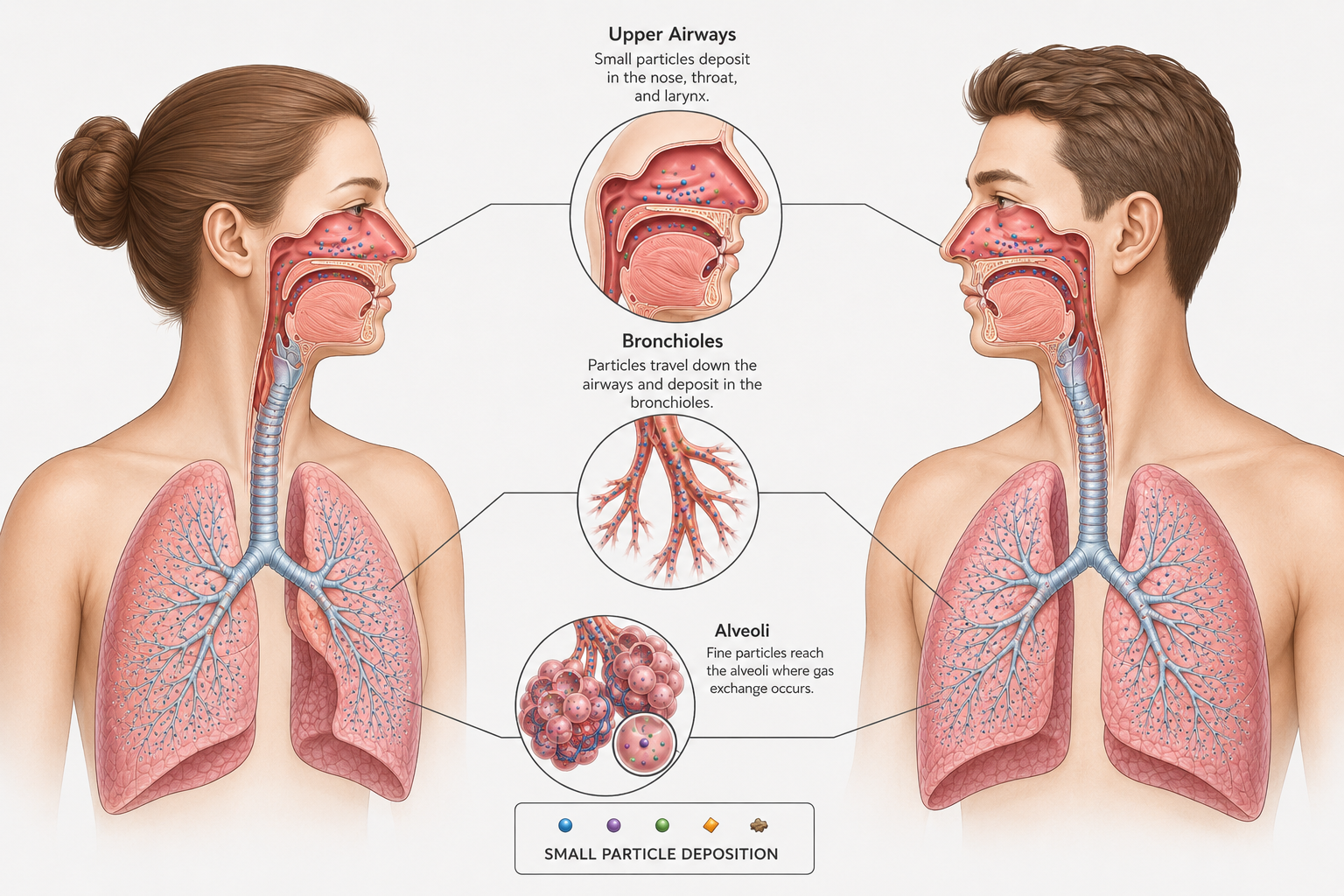
Where Airborne Microplastics Come From
Synthetic textiles dominate the source picture at 35% of all primary microplastic release globally. Every wash cycle sheds approximately 700,000 microfibers; the dryer then aerosolises many of these into indoor air through its ventilation outlet. Indoor environments typically carry higher microplastic concentrations than outdoor air precisely because of limited ventilation combined with dense synthetic textile presence. [1] Tyre wear is the second largest contributor at 28%, generating fine rubber particles each time a vehicle brakes or turns — particles that become airborne and travel considerable distances on wind currents. [1]
Wildfire smoke has emerged as a newly recognised and rapidly growing vector. As homes, vehicles, furniture, and consumer electronics burn, they release synthetic particulates that can travel hundreds of kilometres. Urban construction dust, cosmetic product residues, and the degradation of single-use packaging in landfills complete the exposure picture. Researchers have now identified microplastics at altitude inside clouds — confirming that no geographical zone is truly shielded from atmospheric plastic contamination. [1]
The Cellular Mechanisms: Oxidative Stress and Beyond
Once deposited in the alveolar epithelium, microplastics interact with lung cells through several documented biological pathways. The most significant is oxidative stress: particles stimulate the overproduction of reactive oxygen species (ROS) faster than cellular antioxidant defences can neutralise them. This molecular imbalance damages proteins, cell membranes, and DNA — a process that, if chronic, accelerates tissue ageing and undermines the lung's self-repair capacity. [3] Microplastics also disrupt mitochondrial function, reducing ATP output and compromising the metabolic capacity of respiratory cells — heightening vulnerability to infection, inflammation, and injury. [3]
A particularly alarming interaction involves lung surfactant — the thin liquid film that coats alveolar surfaces and maintains the surface tension required to keep air sacs open. Research by Shi et al. demonstrated that microparticle exposure can impair surfactant activity, physically altering the mechanics of breathing. [1] Polystyrene microplastics specifically adhere to this protective layer and trigger localised chemical reactions that damage surrounding tissue. Of the plastic types identified in clinical lung samples, 23% were polypropylene, 18% polyethylene terephthalate, and 15% resin — all common in everyday packaging and synthetic fibre products. [1]
"The lungs are particularly vulnerable to microplastic damage due to their large surface area and limited ability to clear particles. Lung cancer tumours have been found to contain more microplastics than healthy tissue."
Dr. Keshav Raj Paudel
Senior Researcher, University of Technology Sydney — Food Bioscience, 2026 [3]
"We breathe in plastics in much larger amounts than what we would expect based on previous toxicology studies of airborne particles. Their presence has been correlated with reduced lung function and elevated pro-inflammatory cytokines."
Dr. Rebecca Florsheim
Research Physician, American Lung Association, 2026 [2]
Who Is Most at Risk
While microplastic inhalation is universal, certain populations face elevated biological vulnerability. Workers in textile manufacturing, construction, and plastics fabrication experience sustained high-concentration occupational exposure. [2] People with existing asthma or COPD are more susceptible to the inflammatory responses these particles trigger, potentially experiencing accelerated disease progression. Children breathe more air relative to body weight and have developing respiratory systems — making cumulative early-life exposure particularly concerning. Smokers face compounded risk: tobacco use impairs mucociliary clearance — the lung's first line of defence against inhaled particles — and clinical data from Baeza-Martínez et al. found measurably higher microplastic concentrations in the lower airways of smokers compared with non-smokers. [4]
Practical Steps to Reduce Exposure
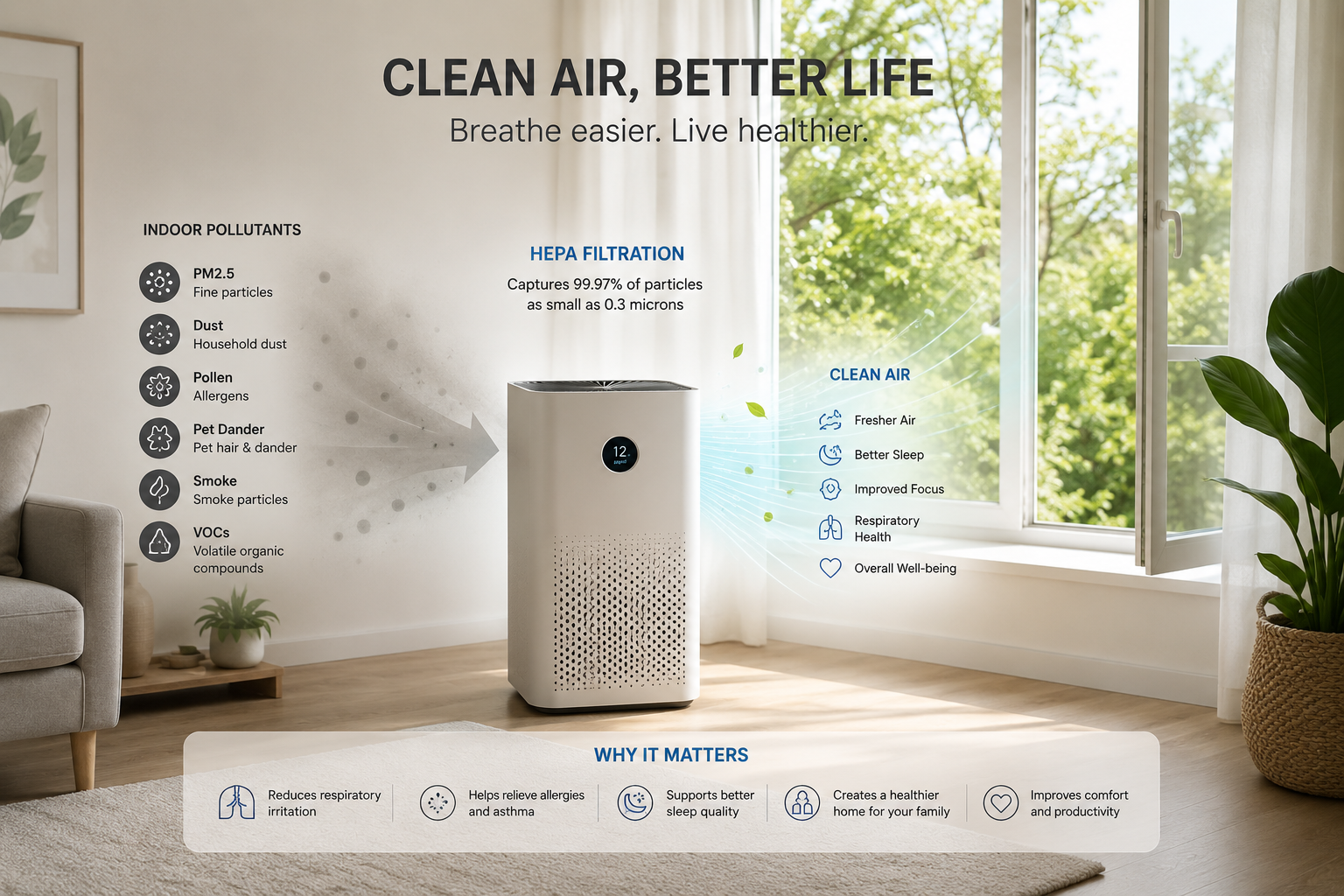
Complete elimination is currently impossible — but meaningful reduction is achievable today. The American Lung Association, drawing on Dr. Florsheim's research, recommends HEPA-grade air purifiers and vacuum cleaners to trap airborne fibres before inhalation. [2] Regular wet mopping removes settled plastic fragments from surfaces without re-suspending them, unlike dry dusting. Improving ventilation by opening windows when outdoor air quality permits dilutes indoor concentrations. Replacing synthetic textiles with natural-fibre alternatives — cotton, linen, wool — reduces domestic shedding at source.
At the food and product level: avoid reheating food in plastic containers, replace plastic wrap with foil or beeswax wraps, and choose glass over plastic packaging wherever possible. Never burn plastics indoors — including via nonstick cookware heated above recommended temperatures — which directly generates fine airborne particles. [2] While biodegradable alternatives are emerging, Dr. Florsheim advises caution: the laboratory methods to assess their safety are still evolving, and no blanket safety assurance should yet be assumed.
Saha SC & Saha G — "Effect of microplastics deposition on human lung airways: A review with computational benefits and challenges", Heliyon, January 2024.
Peer-reviewed open-access (Elsevier). University of Technology Sydney & University of Dhaka. PMC10826726.
https://pmc.ncbi.nlm.nih.gov/articles/PMC10826726/American Lung Association / Dr. Rebecca Florsheim — "Five Critical Things to Know About Microplastics and Your Lungs", Each Breath Blog, March 2026.
Dr. Florsheim is a research physician specialising in internal and preventive medicine. Published by the American Lung Association.
https://www.lung.org/blog/microplastics-lung-dangersPaudel KR et al. — Review of microplastic–lung cell interactions, oxidative stress and surfactant disruption, Food Bioscience, February 2026.
Lead investigator: Dr. Keshav Raj Paudel, Senior Researcher, University of Technology Sydney. Reported via EurekAlert / Springer Nature, February 2026.
Baeza-Martínez et al. — Detection of microplastics in the lower airway of European citizens.
Clinical study finding elevated microplastic concentrations in smokers vs non-smokers. Referenced and cited in Saha & Saha (2024), PMC10826726.
European Respiratory Society — Microplastics and respiratory health review, European Respiratory Review, 33(172), 2024.
Peer-reviewed clinical review covering microplastic detection in lower airway tissue and correlations with respiratory disease endpoints.
https://publications.ersnet.org/content/errev/33/172/230226Editorial Note: This article is produced for informational and educational purposes. It does not constitute medical advice. Patients should consult a qualified healthcare provider for diagnosis and treatment guidance. All statistics cited are sourced from peer-reviewed literature or named patient advocacy organizations as referenced above.

Written by
MedBary Team
Comments
Log in to join the conversation.
Loading comments…