

The Hidden Link Between Sleep and Women's Hormonal Health
LifestyleBy MedBary Team6/6/20267 min read
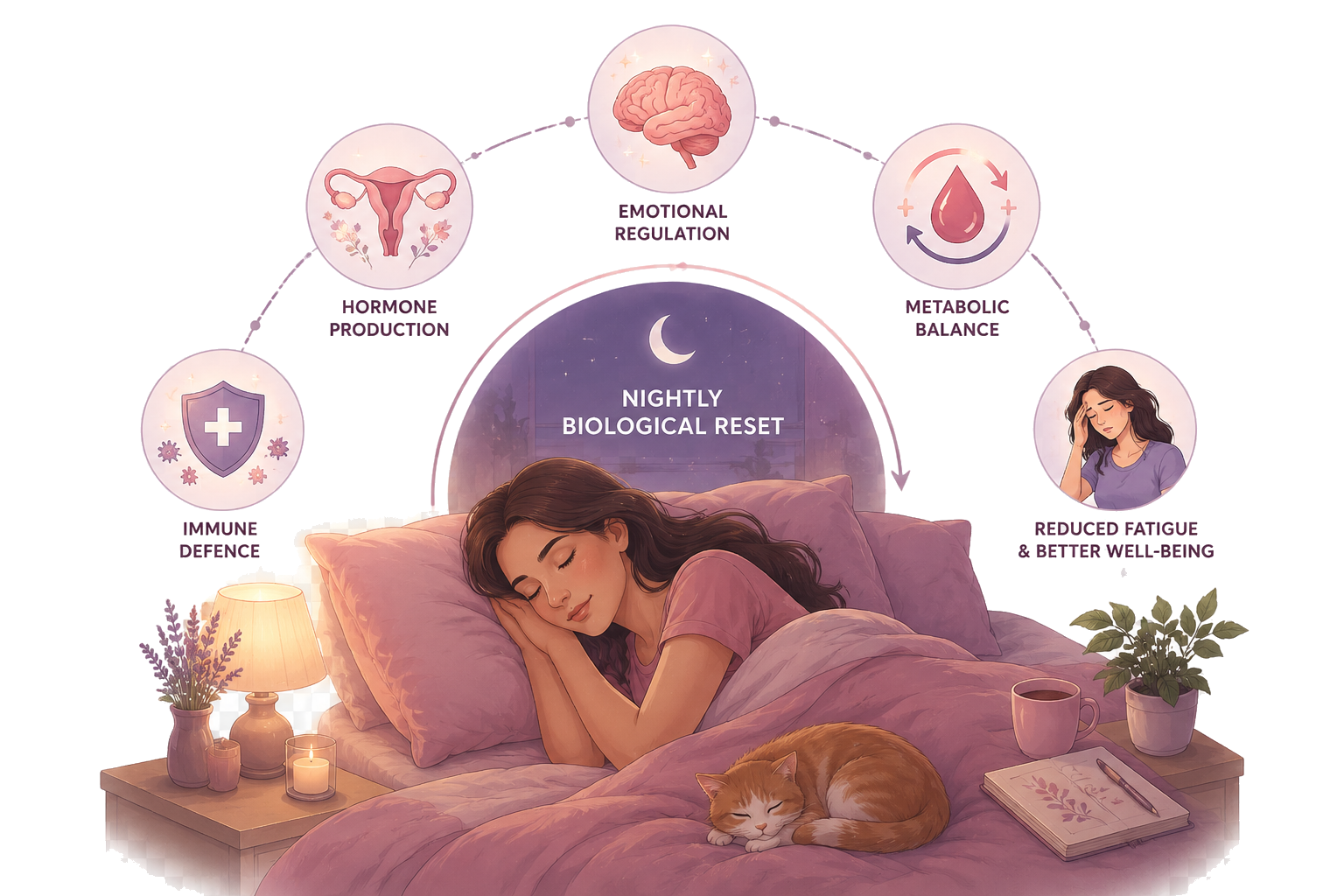
Sleep is not simply rest. For women, it is a nightly biological reset — the period when the body orchestrates hormone production, emotional regulation, metabolic balance, and immune defence. When that reset is interrupted night after night, the ripple effects reach far beyond fatigue. Understanding the science behind sleep and female hormones is one of the most powerful steps a woman can take for her long-term health.
Advertisement
Key Highlights
Why It Matters
Sleep deprivation is not a personal failing or a lifestyle inconvenience — it is a genuine public health concern, and women carry a heavier burden of its consequences. According to the Centers for Disease Control and Prevention (CDC), sufficient sleep supports healthy weight maintenance, improves cardiovascular health, reduces chronic stress, and lowers the risk of type 2 diabetes, high blood pressure, and stroke — while sharpening memory and daily cognitive performance.
For women specifically, the stakes are compounded. A landmark peer-reviewed study published in Sleep Medicine Research (Nowakowski, Meers & Heimbach, 2013) established that sex differences in sleep begin early in life, and women face a significantly higher lifetime prevalence of insomnia, restless leg syndrome, and general sleep dissatisfaction compared to men — driven by biology, not behaviour.
30%
of pregnant women rarely get a good night's sleep (NSF Poll)
42%
of postpartum women report rarely sleeping well
38–60%
of peri- & postmenopausal women experience insomnia
2×
perimenopausal women more likely to be dissatisfied with sleep
These numbers represent real women waking exhausted, struggling with mood, weight, focus, and cycle irregularities — often without recognising that disrupted sleep is a root cause. Prioritising sleep is not self-indulgence; it is medicine.
Detailed Viewpoint
The Hormone–Sleep Relationship: A Bidirectional Loop
The connection between sleep and hormones runs in both directions. Sleep regulates hormone secretion, and hormones modulate sleep architecture — disruption in one system almost inevitably destabilises the other. The CDC confirms that poor sleep is linked to elevated stress hormones, impaired metabolic function, and increased chronic disease risk. For women, these effects are compounded by reproductive hormone fluctuations that span multiple decades of life.
When sleep is insufficient, cortisol — the primary stress hormone — remains elevated, keeping the nervous system in physiological alert. Insulin sensitivity declines, raising metabolic disorder risk. Meanwhile, ghrelin (appetite stimulant) surges and leptin (satiety signal) drops — driving hunger upward independent of actual caloric need.
The Menstrual Cycle: A Monthly Sleep Disruption Pattern
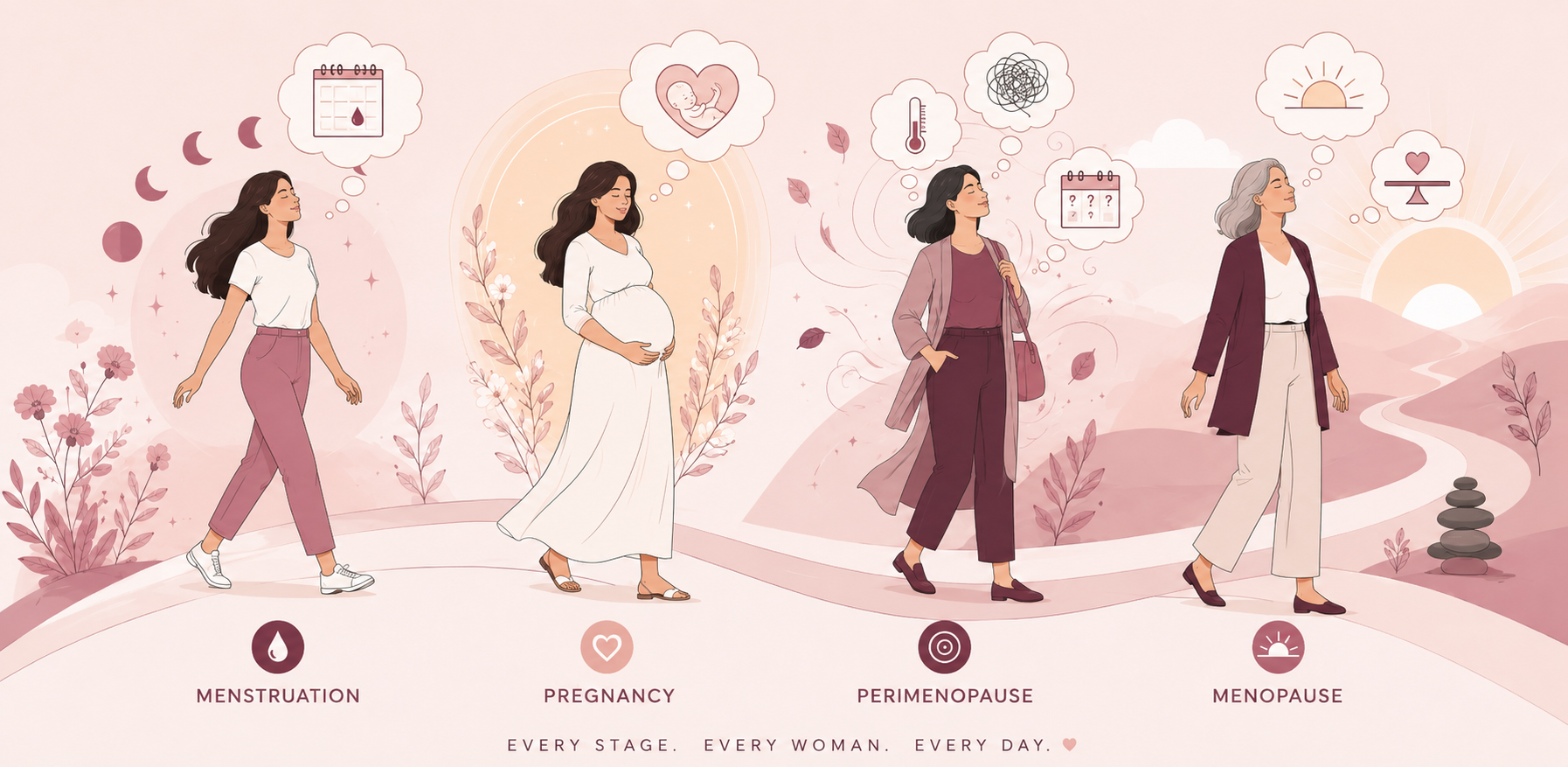
Research published in Sleep Medicine Research demonstrates that the menstrual cycle doesn't merely influence mood — it actively reshapes sleep architecture. Reproductive hormones including estradiol, progesterone, LH, and FSH cycle throughout the month, each fluctuation carrying sleep consequences. In the premenstrual (late luteal) phase, as progesterone and estrogen decline, women with PMS or PMDD are especially vulnerable — with sleep efficiency dropping most steeply in the final week of the cycle.
"Negative menstrual symptoms are most commonly experienced during the last few days of the cycle, as progesterone and estrogen levels decline. These hormonal shifts don't just affect energy — they alter the very quality of sleep itself."
— Nowakowski, Meers & Heimbach, Sleep Medicine Research, 2013
Pregnancy and Postpartum: When Sleep Deprivation Peaks
The third trimester typically brings fragmented rest — studies show roughly three to five awakenings per night, diminished slow-wave sleep, and reduced REM. Research cited in Sleep Medicine Research links insufficient late-pregnancy sleep to elevated inflammatory markers, increased preterm birth risk, and higher caesarean rates. Physical discomforts — urinary frequency, foetal movement, heartburn, leg cramps — compound the hormonal disruption.
The postpartum period introduces its own crisis: the abrupt drop in oestrogen and progesterone after birth, combined with a newborn's unpredictable schedule, creates conditions where nearly 30% of new mothers report significantly disturbed sleep. Fragmented postpartum sleep directly correlates with higher rates of postpartum depression — making maternal sleep a clinical priority, not a personal preference.
Perimenopause and Menopause: The Sleep Crisis at Midlife
The 2005 NIH State-of-the-Science Conference on menopause formally identified sleep disturbance as a core symptom of the menopausal transition — not a side effect, but a defining feature. As oestrogen declines, vasomotor symptoms — hot flashes and night sweats — emerge in 60–80% of women and persist for four to five years on average. Night-time events frequently cause full arousal from sleep, and the resulting insomnia can persist even on nights without a vasomotor episode.
The Study of Women's Health Across the Nation (SWAN) found sleep difficulty reported by 38% of women aged 40–55, climbing to 48% following surgical menopause. The Wisconsin Sleep Cohort confirmed perimenopausal and postmenopausal women are twice as likely to be dissatisfied with sleep as their premenopausal peers.

What Women Can Do: Evidence-Backed Strategies
The CDC outlines a clear behavioural foundation for better sleep: maintain a consistent sleep-wake schedule every day including weekends, keep the bedroom cool and dark, avoid caffeine after mid-afternoon, limit alcohol, exercise regularly, and switch off electronic devices at least 30 minutes before bed. Blue light from screens suppresses melatonin production — the hormone that signals the body it is time to sleep.
🕙
Consistent Schedule
Go to bed and wake at the same time daily — including weekends. Your circadian rhythm responds to consistency above all else.
📵
Screen-Free Wind-Down
Phones and tablets emit blue light that suppresses melatonin. Put screens down 30–60 minutes before bed each night.
🌿
Mindfulness & Relaxation
Deep breathing, progressive muscle relaxation, and mindfulness-based practices have demonstrated efficacy in reducing sleep onset latency.
🏃♀️
Regular Exercise
Physical activity improves sleep depth and duration. For menopausal women, aerobic exercise reduces both vasomotor symptoms and sleep disruption.
🧠
CBT for Insomnia (CBT-I)
Recognised by the NIH as a first-line treatment — CBT-I produces durable improvements without dependency risk, matching or exceeding sleep medication.
🩺
Seek Clinical Support
Persistent sleep disruption tied to hormonal transitions warrants professional evaluation. Sleep diaries and formal studies can identify underlying disorders.
Women should know they do not have to normalise chronic poor sleep. Whether disruption is linked to PMS, postpartum demands, or menopausal night sweats, effective support exists — and seeking it is not weakness. Improving sleep delivers cascading benefits for hormone balance, mental health, metabolic function, and quality of life.
Citations & Credibility
This article draws on peer-reviewed research, government public health data, and academic clinical review. All sources are publicly accessible:
1. Centers for Disease Control and Prevention (CDC)
"About Sleep." National Center for Chronic Disease Prevention and Health Promotion. Updated May 2024.
https://www.cdc.gov/sleep/about/index.html
"About Sleep." National Center for Chronic Disease Prevention and Health Promotion. Updated May 2024.
https://www.cdc.gov/sleep/about/index.html
2. Nowakowski, S., Meers, J., & Heimbach, E.
"Sleep and Women's Health." Sleep Medicine Research, 2013; 4(1):1–22. doi: 10.17241/smr.2013.4.1.1
https://pmc.ncbi.nlm.nih.gov/articles/PMC4327930/
Peer-reviewed — University of Texas Medical Branch, Dept. of Obstetrics & Gynecology.
"Sleep and Women's Health." Sleep Medicine Research, 2013; 4(1):1–22. doi: 10.17241/smr.2013.4.1.1
https://pmc.ncbi.nlm.nih.gov/articles/PMC4327930/
Peer-reviewed — University of Texas Medical Branch, Dept. of Obstetrics & Gynecology.
3. Society for Women's Health Research (SWHR)
"Women and Sleep: A Guide to Better Sleep Health." SWHR White Paper, 2017.
https://swhr.org/wp-content/uploads/2017/11/SWHR_Women-Sleep-Guide.pdf
Leading non-profit dedicated to women's health science.
"Women and Sleep: A Guide to Better Sleep Health." SWHR White Paper, 2017.
https://swhr.org/wp-content/uploads/2017/11/SWHR_Women-Sleep-Guide.pdf
Leading non-profit dedicated to women's health science.
4. National Institutes of Health (NIH)
State-of-the-Science Conference Statement on Manifestations and Management of Chronic Insomnia in Adults, 2005.
Referenced for CBT-I as first-line insomnia treatment.
State-of-the-Science Conference Statement on Manifestations and Management of Chronic Insomnia in Adults, 2005.
Referenced for CBT-I as first-line insomnia treatment.
5. Study of Women's Health Across the Nation (SWAN)
Multi-site longitudinal cohort, women aged 40–55. Perimenopausal sleep dissatisfaction findings cited in Nowakowski et al. (2013).
Multi-site longitudinal cohort, women aged 40–55. Perimenopausal sleep dissatisfaction findings cited in Nowakowski et al. (2013).
6. Wisconsin Sleep Cohort Study
Population-based longitudinal study. Perimenopausal vs postmenopausal sleep satisfaction data cited in Nowakowski et al. (2013).
Population-based longitudinal study. Perimenopausal vs postmenopausal sleep satisfaction data cited in Nowakowski et al. (2013).
Tags
Women's Health
Sleep Science
Hormone Health
Menopause
Pregnancy
Insomnia
Cortisol
Circadian Rhythm
Postpartum Health
CBT-I
Wellness
PMS
Editorial Note
This article is intended for general health information and educational purposes only. It does not constitute medical advice, diagnosis, or treatment. The statistics and research findings cited reflect published academic and government sources as noted. Women experiencing persistent sleep difficulties, hormonal symptoms, irregular cycles, or suspected sleep disorders are encouraged to consult a qualified healthcare provider for personalised evaluation and guidance. Individual health circumstances vary, and professional medical advice should always be sought for personal health decisions.

Written by
MedBary Team
Comments
Log in to join the conversation.
Loading comments…