


One Breath, One Diagnosis: Why Infection Control Is Betting Big on the Air You Exhale
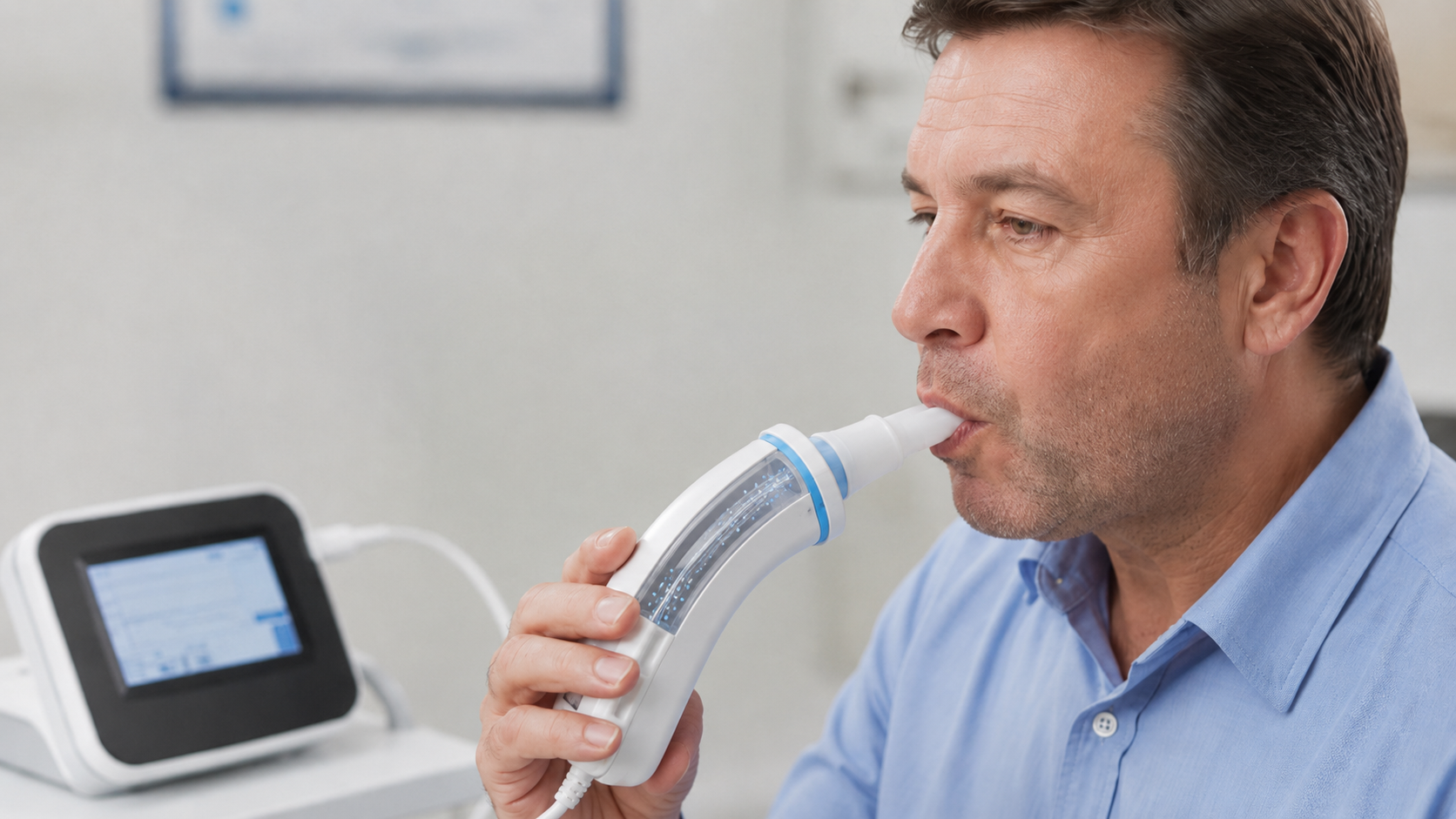
Every breath you take carries a hidden readout of what's happening inside your body. The question isn't whether breath can catch an infection, it's whether the technology can catch up to the promise.

Why It Matters
Roughly half the world's population still lacks access to centralized laboratory testing, leaving diagnosis of common infections dependent on clinical judgment alone. Respiratory infections killed more than 7 million people in a single recent year, and tuberculosis remains one of the deadliest among them, claiming close to 1.4 million lives annually, a quarter of a million of them children. In settings without reliable lab infrastructure, the biggest barrier to treatment often isn't medicine, it's knowing who needs it.
Antimicrobial resistance raises the stakes further. Confirming an infection is only half the job; knowing whether a chosen antibiotic is actually working matters just as much, especially as drug-resistant strains become more common. A test that can be repeated cheaply and painlessly, tracking bacterial load over days rather than requiring a single invasive snapshot, could change how quickly clinicians pivot to a different treatment when the first one fails.

Detailed Viewpoint
What Exhaled Breath Actually Carries
Breath analysis is far from a new idea. Physicians have leaned on the smell and character of a patient's exhaled air as a diagnostic clue since antiquity, and 20th-century researchers went on to map the sheer chemical complexity of that vapor: a shifting mixture of water, soluble and insoluble compounds, and trace cellular material drawn from inside and outside the body.
Most modern breath diagnostics don't look for the pathogen itself. They look for volatile organic compounds, carbon-based molecules produced as microbes go about their metabolism. To make those signals traceable, clinicians can administer a labeled isotope, usually carbon-13, that ordinary human cells can't break down but certain microbes can. As the microbe metabolizes it, the tagged carbon turns up as detectable carbon dioxide in the next exhaled breath. Bacteria, which largely run their own independent metabolism, are typically easier to isolate this way than viruses, whose chemical signatures often reflect disrupted host processes rather than a distinct signal of their own.
This distinction matters more than it might first appear. A test built around a bacterial metabolic by-product can be tuned to a specific organism with reasonable confidence, since the chemistry is happening independently of the host. A viral infection, by contrast, tends to show up in breath as a shift in the body's own oxidative stress pathways rather than a unique fingerprint left by the virus itself, which makes isolating one illness from another a much messier signal-processing problem. That gap in the science is a large part of why bacterial breath diagnostics have progressed further, faster, than their viral counterparts.
Where Breath Testing Already Works
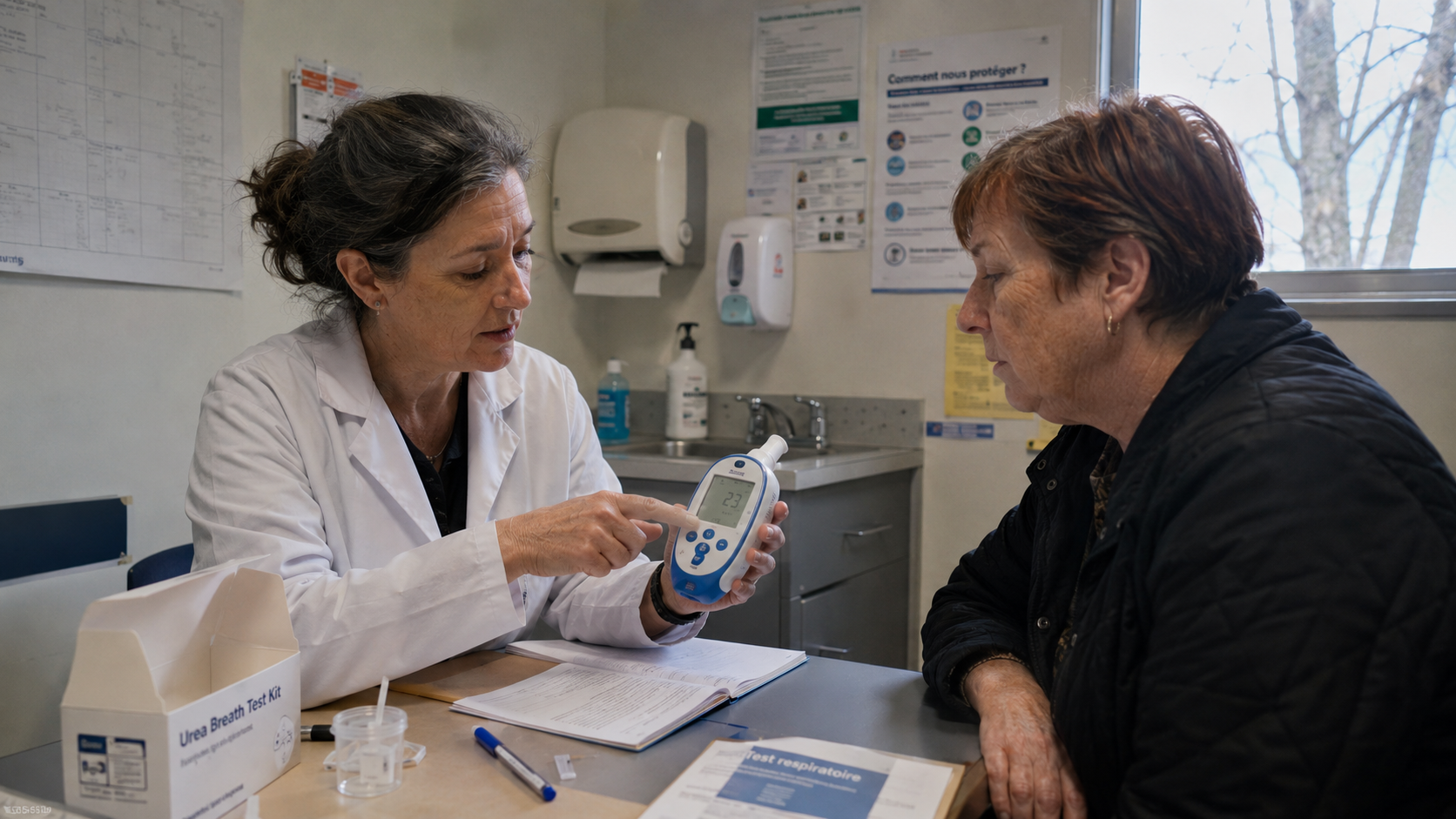
The clearest clinical success story is the urea breath test for Helicobacter pylori, the stomach bacterium linked to ulcers and gastric cancer. A patient swallows carbon-13-labeled urea; if H. pylori is present, its urease enzyme breaks the compound down, releasing labeled carbon dioxide that shows up in the next exhaled breath. It's noninvasive, fast, and already embedded in point-of-care workflows around the world.
That same gut-to-breath connection is proving useful well beyond stomach infections. Researchers at Washington University School of Medicine and Children's Hospital of Philadelphia recently confirmed that the compounds gut microbes release can be reliably detected in exhaled breath, and that breath composition mirrors the bacterial makeup of the intestines closely enough to identify specific organisms. In children with asthma, breath analysis alone was able to flag elevated levels of a bacterium already associated with the condition, hinting at a future where a single breath sample screens for microbiome-linked disease risk in infants and young children long before symptoms escalate.
Chasing Infections Beyond the Gut
Extending this approach to infections outside the digestive tract has been harder, largely because orally administered tracers get broken down by ordinary gut bacteria before they reach a distal infection site. Recent research exploring injectable, stable isotope-labeled tracers, conceptually related to compounds used in PET imaging, has shown that several clinically relevant bacteria will metabolize these compounds into detectable carbon dioxide regardless of where in the body the infection sits.
The early results, produced in animal infection models, were able to do something notable: not just detect bacterial presence, but track how bacterial burden changed over the course of antibiotic treatment. That's a meaningfully different capability from a single positive-or-negative test. Still, the samples in these studies were captured using specialized metabolic chambers, a long way from a handheld device a clinician could use during a routine visit, and the tracers involved would need substantial regulatory and manufacturing review before any clinical rollout.
Watching Antibiotics Work in Real Time
The ability to monitor bacterial burden over time, rather than confirm infection once, may end up being the more consequential half of this research. If a patient starts an antibiotic and a follow-up breath sample shows bacterial load hasn't dropped, that's an early, objective signal that the drug may not be working, well before symptoms would otherwise reveal it. In an era of rising multidrug resistance, that kind of fast feedback loop could support quicker treatment changes without waiting on slower lab-based cultures.
It's worth being precise about what this can and can't do today. Current tracer methods can show that bacterial numbers are falling or holding steady, but they cannot yet tell a clinician whether a specific strain has become resistant to a specific drug. What they offer instead is a proxy: a rough, repeatable read on treatment response that's fast enough to catch a failing regimen early, even without pinpointing the exact resistance mechanism at play. Paired with existing culture and susceptibility testing rather than replacing it, that kind of monitoring could shorten the window during which a patient is on medication that isn't working.
The Hurdles That Remain
None of this is close to replacing blood culture or PET imaging yet. Regulatory approval, unclear reimbursement pathways, and the cost of new tracers and devices are the most immediate obstacles to clinical rollout. Breath collection itself carries practical complications too: during a respiratory outbreak, sample collection needs careful precautions such as dedicated mouthpieces or masks to avoid turning a diagnostic device into a transmission risk.
There's also a specificity problem. Current tracer-based methods confirm that bacteria are present and roughly how many, but they generally can't identify the exact species or strain, let alone whether it's drug-resistant, on their own. And injectable tracers, while more anatomically versatile than oral ones, give up some of the noninvasiveness that made breath testing appealing in the first place. Breath analysis looks increasingly likely to become a companion to existing diagnostics rather than a wholesale replacement for any of them.
Citation & Credibility
This article draws on peer-reviewed research and institutional reporting from the following sources.
Washington University School of Medicine & Children's Hospital of Philadelphia
Hernandez-Leyva et al., "The gut microbiota shapes the human and murine breath volatilome," Cell Metabolism, January 2026.
St. Jude Children's Research Hospital & UC San Francisco
Research on injectable stable-isotope carbon tracers for bacterial metabolism, published in Chemical & Biomedical Imaging and ACS Central Science, 2026.
Heidelberg University Hospital
The "BreathForDx" consortium, coordinated by Prof. Claudia Denkinger, developing breath-based tuberculosis diagnostics under Horizon Europe funding.
Kirby Institute, UNSW Sydney
RAPID 2.0 Centre for Research Excellence, scaling point-of-care infectious disease testing across Australia and the Asia-Pacific.
All figures and study findings are cited from the original publishing institutions. No content is reproduced verbatim; all information has been independently summarized.
Article Tags
Editorial Note
This article was compiled from published research findings, institutional announcements, and peer-reviewed studies available at the time of writing. Breath-based diagnostics remain an active area of clinical research, and findings referenced here, particularly those from early-stage animal studies, may evolve as trials progress toward human clinical validation. Readers working in clinical or laboratory settings should consult primary literature and regulatory guidance before applying any diagnostic method described here.

Written by
MedBary Team
Comments
Log in to join the conversation.
Loading comments…