Logo
The Vaccine That Took a Decade to Build Just Passed Its First Human Test — and It's a Two-for-One

The Vaccine That Took a Decade to Build Just Passed Its First Human Test — and It's a Two-for-One

Technology and ScienceBy MedBary Team6/30/20268 min read

For a thousand years, Lassa fever has moved quietly through West Africa, killing without a vaccine to stop it. In June 2026, a dual-action shot cleared its first human trial with a perfect immune response — and a second virus, rabies, came along for the ride.

Advertisement
Advertisement

Medical Breakthrough

For decades, Lassa fever killed silently across West Africa — an ancient threat with no vaccine, no reliable treatment, and little global attention. That changed in June 2026, when a team at the University of Maryland published results showing that a new dual vaccine had passed its first human test with a perfect antibody response rate. After years of laboratory groundwork and field research, the science of Lassa prevention has finally crossed into human territory.

Lassa fever e03e5e06 40ef 4718 b4d8 2657aab7c62d 1

Key Highlights

100%
of two-dose recipients achieved a fourfold or greater antibody rise against both Lassa virus and rabies glycoproteins
54
healthy adult volunteers enrolled in the first-in-human Phase 1 randomized controlled trial — all without serious adverse events
700M
people estimated at risk globally as Lassa fever's ecological range expands well beyond West Africa due to climate shifts
Dual Shield
LASSARAB protects against two deadly viruses in one freeze-dried formulation — critical for cold-chain-limited endemic regions

Phase 1 interim data published in Nature Medicine, June 2026. Follow-up through Day 394 ongoing.

Why It Matters

Lassa fever is not a rare footnote in global health. It is an annual epidemic hiding in plain sight.

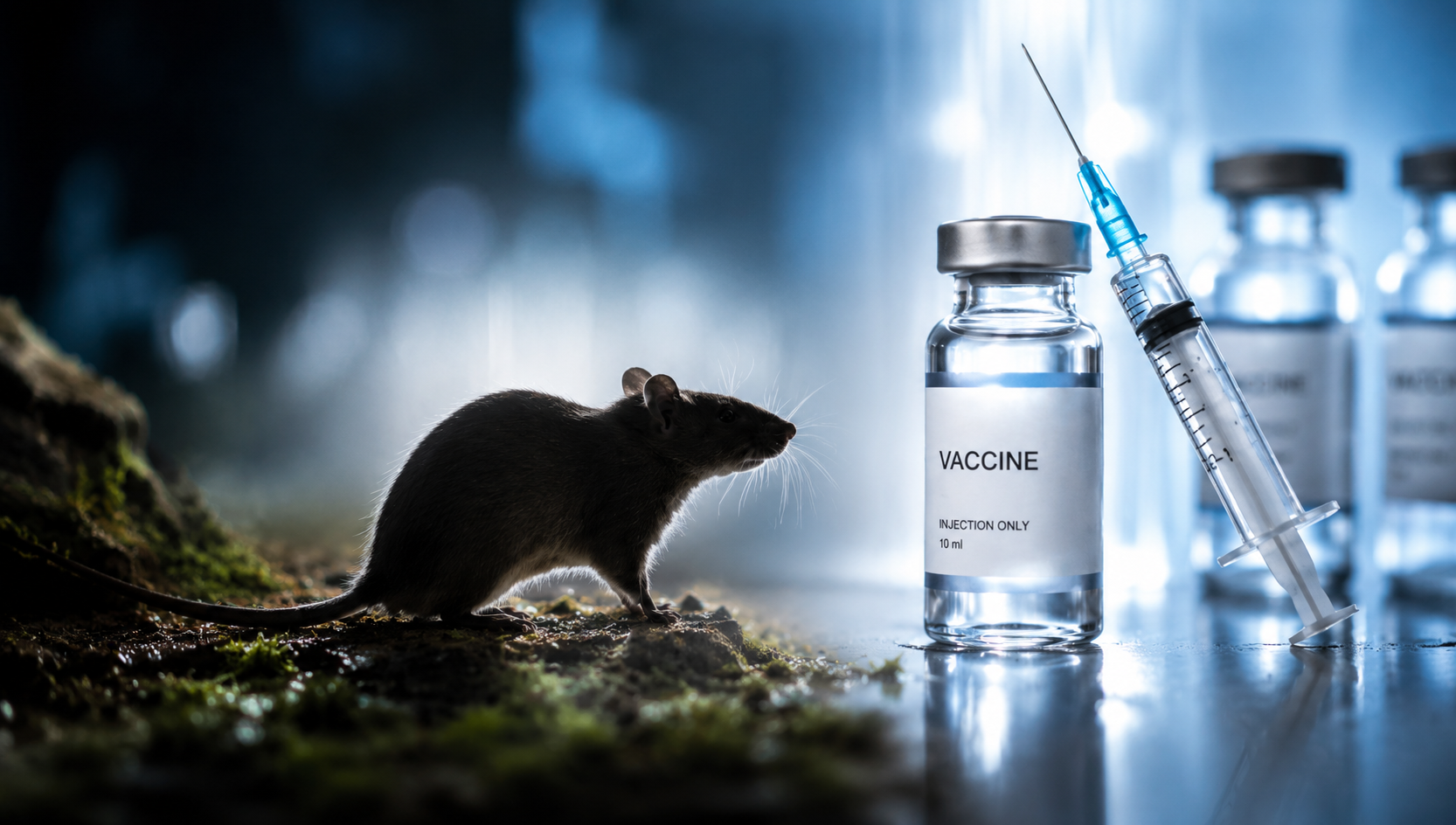
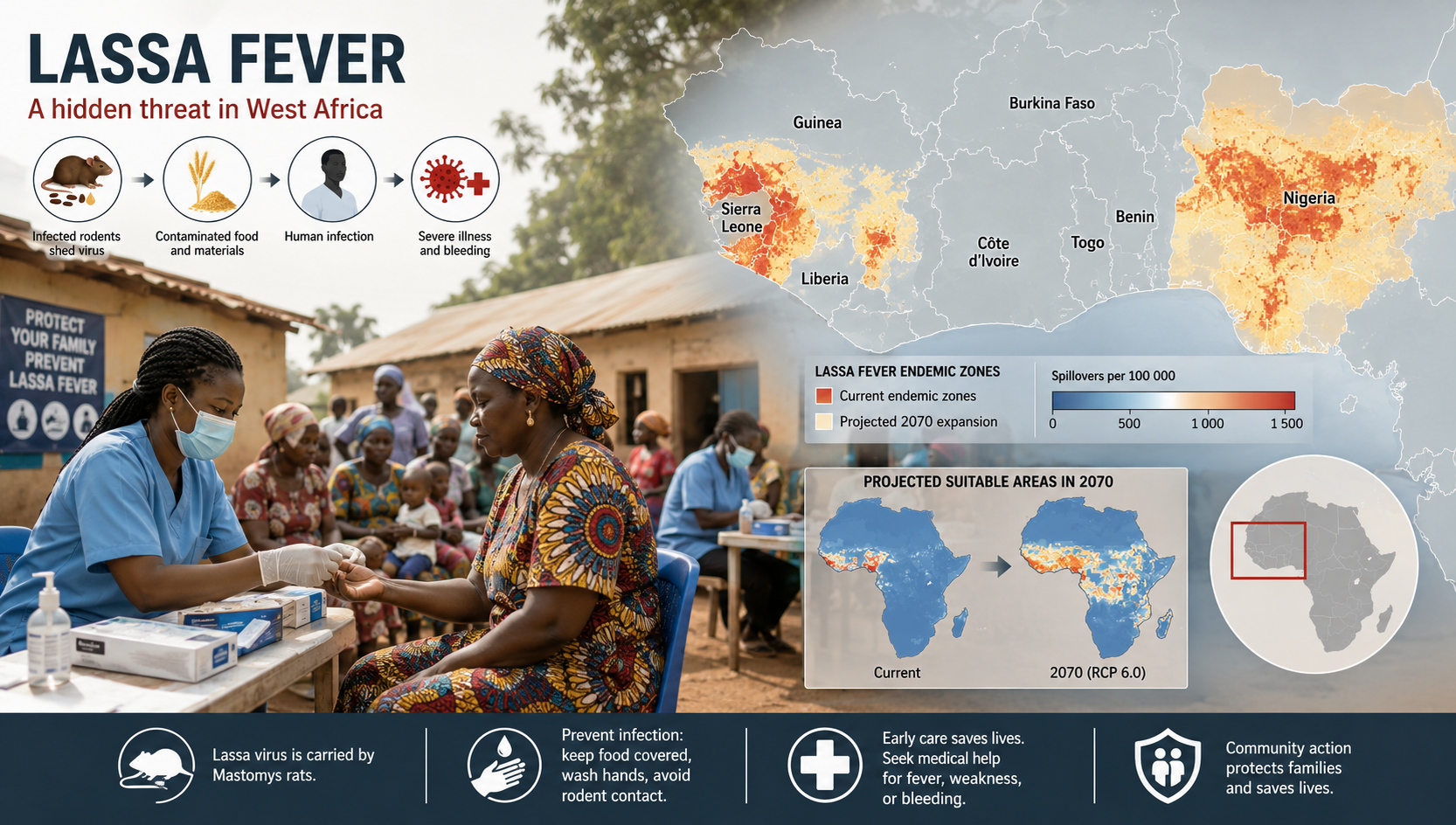
Each year, Lassa virus infects roughly 300,000 people across West Africa and causes approximately 5,000 deaths — figures that researchers acknowledge are almost certainly undercounts given limited surveillance infrastructure across rural Nigeria, Sierra Leone, Liberia, and Guinea. The virus spreads primarily through contact with the droppings, urine, or blood of the multimammate rat (Mastomys natalensis), a rodent so abundant across sub-Saharan Africa that community exposure is nearly impossible to prevent without a vaccine.

The human toll is not abstract. In healthcare settings within Lassa-endemic regions, the mortality rate for severely ill patients can reach 80 percent. Pregnant women face even worse odds: more than 80 percent of late-term infections result in the death of the mother, the fetus, or both. The virus also damages communities in ways beyond mortality — infected families are sometimes ostracized, and in extreme cases, entire villages have been effectively abandoned following deadly outbreaks.

"Environmental shifts are causing Lassa fever to extend its reach far beyond its Nigerian and West African origins, putting an estimated 700 million people at risk worldwide."

— Mark T. Gladwin, MD, Dean, University of Maryland School of Medicine

Climate modeling published alongside recent vaccine research projects that by 2070, the ecological conditions suitable for Lassa virus transmission could exist across dozens of additional African nations. The window to develop and deploy protective tools — before the disease footprint grows — is genuinely narrow.

What makes this particular trial especially meaningful is not just the Lassa protection — it is the combination strategy. Regions where Lassa circulates also carry one of the highest rabies burdens on earth, a disease that is nearly universally fatal once symptoms emerge. A single vaccine that addresses both threats simultaneously could transform the logistical calculus of immunization programs where funding, cold chain infrastructure, and trained personnel are all in short supply.

Lassa fever 459e9b97 4ef2 4338 8304 2c869a7fdf3f 2

Detailed Viewpoint

The Science Behind LASSARAB — and Why the Platform Matters as Much as the Result

The path to LASSARAB began not in a single laboratory but through a convergence of immunological insights accumulated over more than a decade. Researchers studying survivors of severe Lassa infection observed a consistent pattern: those who recovered tended to mount an early, high-titer IgG antibody response directed at the viral glycoprotein complex (GPC) — the molecular structure the virus uses to attach to and enter human cells. Survivors also generated robust T-cell responses against both GPC and the viral nucleoprotein, all while keeping systemic inflammation comparatively low.

The challenge, however, was translating this observation into a vaccine candidate. Immune correlates of protection for Lassa remain incompletely understood — unlike some other pathogens, scientists cannot yet point to a single biomarker threshold and say definitively: above this level, a person is protected. Convalescent serum transferred from survivors to infected patients, once a promising therapeutic approach, failed to demonstrate consistent clinical benefit. Vaccine development has therefore required building on incomplete knowledge while simultaneously filling the gaps.

How LASSARAB Works

The Vector

An inactivated rabies virus serves as the delivery platform, carrying a Lassa glycoprotein antigen on its surface — a two-in-one immunological payload.

The Adjuvant

The TLR-4 agonist 3D-6acylPHAD-SE was paired with the vaccine to boost immune activation — a formulation strategy that amplifies the body's response without increasing reactogenicity.

The Cold Chain

LASSARAB can be freeze-dried, making refrigeration-independent storage possible — a defining practical advantage for distribution across rural West Africa where cold chains routinely fail.

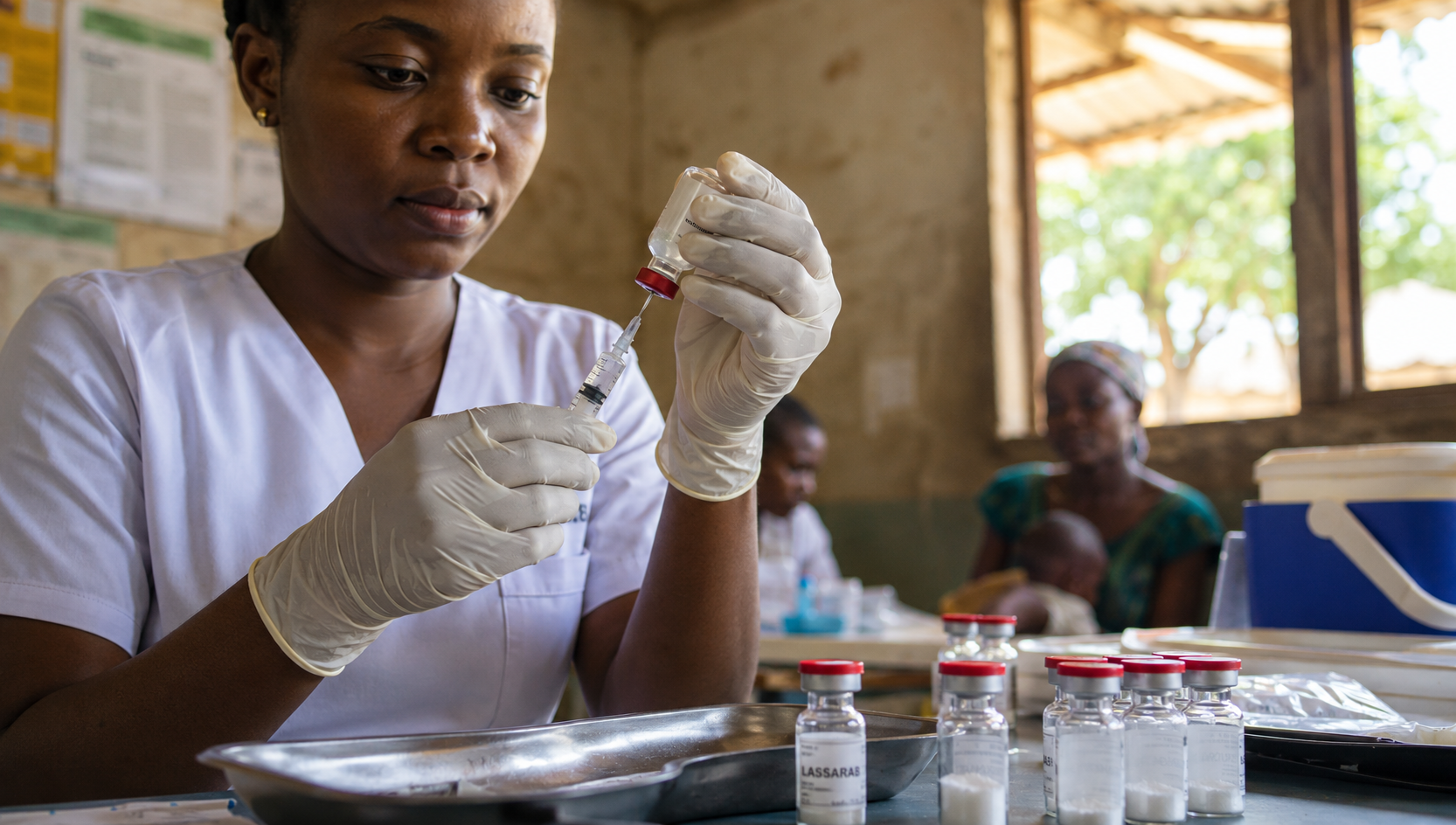
The Phase 1 trial enrolled 54 healthy adults from the Baltimore area who were randomized to receive either two intramuscular doses of LASSARAB — at antigen concentrations of 700, 1,400, or 2,800 relative units — or a licensed rabies vaccine as a control. Doses were given 28 days apart. After both doses, every participant in all three LASSARAB dose groups achieved more than a fourfold increase in IgG antibodies against the Lassa glycoprotein complex, as measured by ELISA. The same recipients also showed the same magnitude of rabies antibody response. The control group, receiving only licensed rabies vaccine, demonstrated rabies-only immune response, as expected.

Adverse events across all groups were reported as predominantly mild and self-limiting — the kind of post-vaccination soreness and transient fatigue that characterizes most vaccine trials at this stage. No serious adverse events were recorded through Day 61, the interim reporting point. The study will continue monitoring participants for 394 days, evaluating both the durability of immune responses and long-term safety — data that will be essential for advancing to Phase 2 trials.

The platform itself — using the rabies virus as a vector — deserves particular attention from a public health strategy standpoint. Rabies kills an estimated 59,000 people annually worldwide, with the overwhelming burden concentrated in Africa and Asia. In the very communities where Lassa fever circulates most intensely, rabies exposure from dog and bat bites is a persistent threat. A vaccine that simultaneously confers protection against both pathogens does not simply double the benefit; it changes the economics and logistics of immunization programs in resource-limited settings. Fewer vaccination campaigns, fewer doses to procure and cold-store, fewer healthcare worker visits required — all meaningful reductions in a setting where each of those factors constrains how many people can actually be reached.

The groundwork for this moment was laid across multiple institutions over many years. At Tulane University, immunologist Robert Garry and his colleagues spent more than a decade mapping how the Lassa glycoprotein complex presents itself to antibodies, identifying which molecular surfaces are most accessible to neutralizing immune responses. Tulane researchers discovered that the virus had existed in Nigeria for roughly a thousand years and in Sierra Leone for around 150, tracing its genetic evolution across four distinct strains. That strain diversity is one reason a broadly effective vaccine has been so difficult to achieve — the target has been moving.

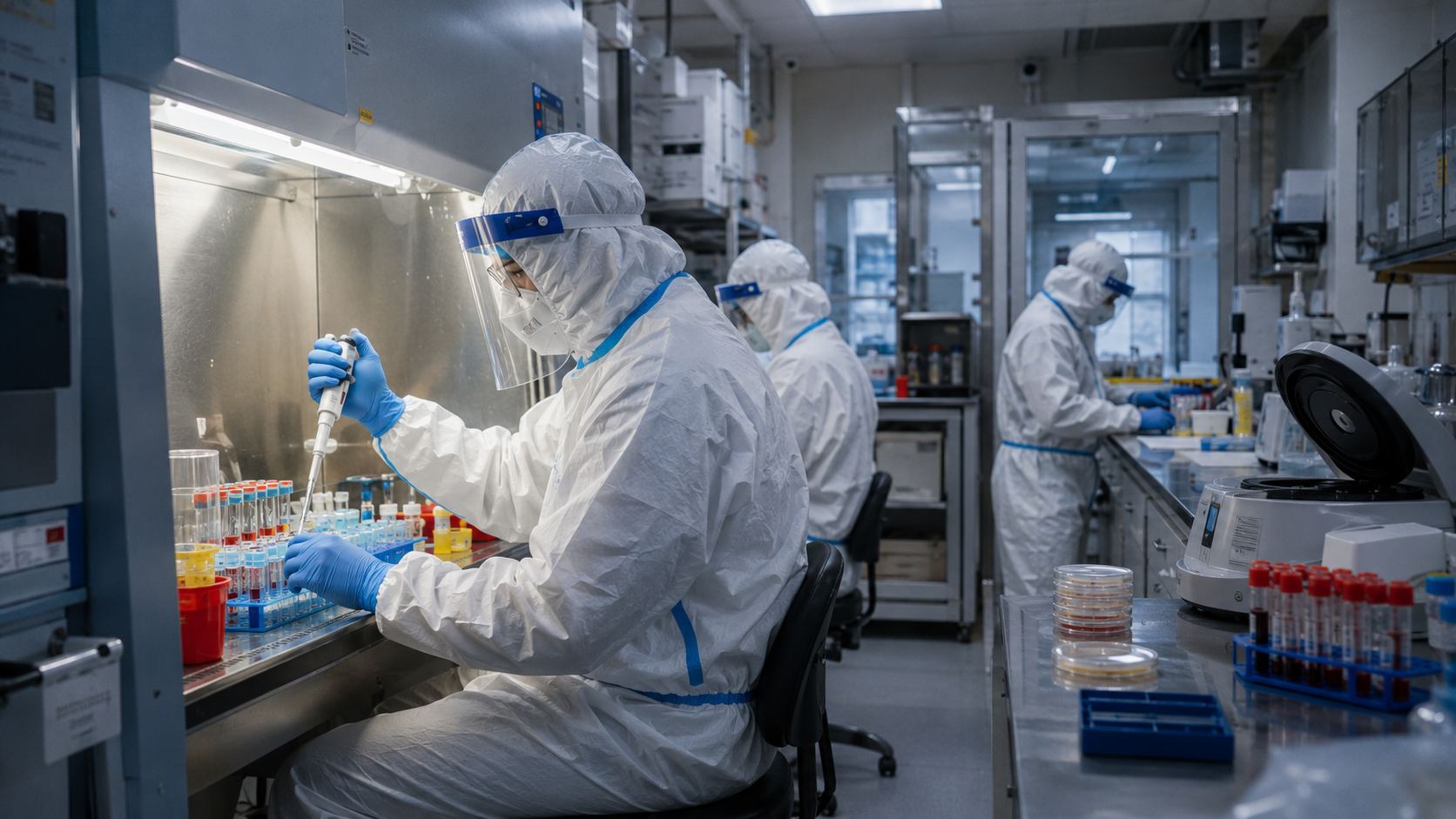
James Robinson, Garry's colleague at Tulane, developed methods to isolate Lassa-specific antibodies from survivor blood samples — screening thousands of B-cell cultures, one color change at a time, to find those rare cells carrying antibodies capable of neutralizing the virus in the lab. That tedious, careful work identified the antibody targets that the LASSARAB vaccine's design would eventually seek to stimulate. The Thomas Jefferson University team, led by Matthias Schnell, then engineered the inactivated rabies vector to display those Lassa antigens on its surface — the technical bridge between survivor immunology and an injectable product.

The first-in-human result does not mark the end of this journey. It marks the moment the scientific hypothesis moved from animal models to verified human biology. What follows will require Phase 2 trials with larger and geographically diverse populations — including, ultimately, participants within Lassa-endemic communities themselves. Regulatory review, manufacturing scale-up, and delivery infrastructure will each present their own obstacles. But for a disease the World Health Organization has prioritized as a global health threat without an approved vaccine, the Phase 1 data from June 2026 represents one of the most consequential early results in infectious disease research this decade.


Lassa fever e38f348c 1ec6 4f44 aa76 15f9367bff38 3
Citations & Source Credibility

Primary Research

Ortiz JR, Kurup D, Kaufman AC, et al. Adjuvanted inactivated rabies virus-vectored Lassa virus vaccine in healthy adults: a phase 1 trial. Nature Medicine, published online June 9, 2026. DOI: 10.1038/s41591-026-04429-z

Institutional Sources

University of Maryland School of Medicine, Center for Vaccine Development and Global Health (CVD). First-in-Human Clinical Trial News Release, June 2026. umaryland.edu

Thomas Jefferson University, Jefferson Center for Vaccines and Pandemic Preparedness — LASSARAB vaccine development team, led by Prof. Matthias Schnell. research.jefferson.edu

Epidemiological Data

Africa Centres for Disease Control and Prevention. Lassa Fever Disease Brief. africacdc.org

Tulane University School of Medicine, Viral Hemorrhagic Fever Consortium — Dr. Robert Garry and Dr. James Robinson. Longitudinal Lassa immunology and antibody research, 2005–present. news.tulane.edu

Funding Disclosure

This research was funded by the National Institute of Allergy and Infectious Diseases (NIAID), National Institutes of Health, under contract HHSN272201800082C, awarded to Thomas Jefferson University with the University of Maryland CVD as a subcontractor. Content represents the views of the authors and does not necessarily reflect NIH positions.

Topics

Lassa Fever Vaccine Development Infectious Disease Clinical Trials Global Health West Africa Viral Hemorrhagic Fever Zoonotic Diseases Nature Medicine Rabies Vaccine Phase 1 Trial Climate and Disease
United States Lassa fever vaccine research United Kingdom infectious disease clinical trial 2026 Australia global health vaccine news Canada hemorrhagic fever prevention United States West Africa zoonotic disease United Kingdom rabies and Lassa dual vaccine Australia NIAID funded vaccine study Canada Nature Medicine infectious disease 2026 United States University of Maryland vaccine development

Editorial Note

This article draws on peer-reviewed data published in Nature Medicine (June 2026), institutional releases from the University of Maryland School of Medicine, and background research from Tulane University's Viral Hemorrhagic Fever Consortium. All statistics reflect data available as of the article's publication date. Phase 1 interim results cover observations through Day 61; the trial continues through Day 394.

This article is intended for general informational purposes. It does not constitute medical advice. Readers with clinical or research inquiries are encouraged to consult the primary literature and relevant public health authorities.

MedBary Team

Written by

MedBary Team

Comments

Log in to join the conversation.

Loading comments…

Lassa Fever Vaccine: First Human Trial Shows Promise — Bloorian