


Gout Awareness: Why the Most Treatable Arthritis Remains One of the Most Misunderstood
Gout is the most common form of inflammatory arthritis, affecting more than 12 million Americans — yet it is routinely dismissed as a lifestyle problem of the past. New patient surveys, clinical research, and advocacy voices reveal a different reality: gout is a serious systemic disease, it is rising in prevalence, and the gap between what medicine can offer and what patients actually receive has never been more urgent to close.

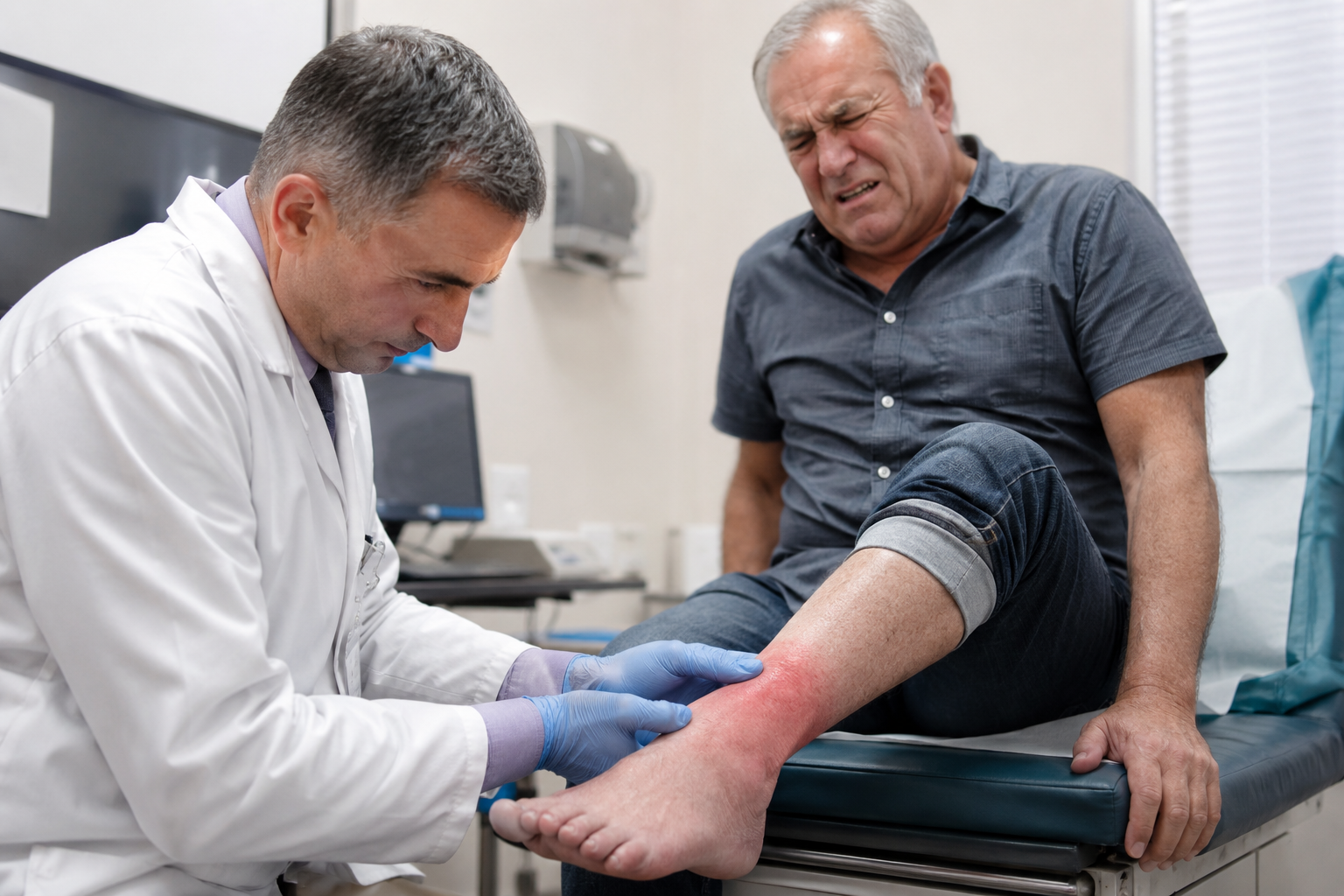
Why It Matters: Gout Is Not a Lifestyle Joke
Few conditions carry more undeserved stigma than gout. Popularly reduced to a "rich man's disease" caused by overindulgence in port wine and rich food, gout is in reality a complex inflammatory condition with deep roots in genetics, kidney function, and systemic metabolism. Olivia Perry, coalition director for the Alliance for Patient Access (AfPA), has stated plainly that gout is the most common type of inflammatory arthritis, affecting over 12 million people in the U.S. alone — and that the push to correct stigma and misinformation is ongoing work that directly affects patients' willingness to seek help.
The disease occurs when uric acid accumulates in the blood and crystallizes in joints, triggering intensely painful flares. These crystals, known as monosodium urate (MSU) deposits, form when genetic, metabolic, and immune processes interact — meaning diet is only one piece of a far larger picture. In chronic stages, the crystals contribute to bone erosion, joint degradation, and tophi (hard lumps beneath the skin), all while uric acid may simultaneously damage kidney tissue independent of stone formation.
Global epidemiological evidence underscores the stakes. Gout prevalence in Canada rose from 3% in 2003 to 3.8% in 2012, while cases in North America and Scandinavia have grown by more than 1.5 to 2.0 times over recent decades. In the United States, gout-related emergency room visits reached 2.1 million in a single year, with opioids prescribed during 28% of those visits — a signal of both inadequate long-term management and the profound pain burden these patients carry.
"We all have a role to play in raising awareness and reducing the stigma around gout. Improving education can empower patients to understand the disease's impact and seek the treatment they need."
— Olivia Perry, Coalition Director, Alliance for Patient Access (AfPA)
The Patient Reality: What the Data Reveals
The Arthritis Foundation's recent patient experience report, which surveyed more than 400 people living with gout, produced findings that were difficult to ignore. Nearly three-quarters of respondents described themselves as moderately or extremely concerned about the disease. More than half said it had a moderate or severe impact on their daily lives, and nearly half reported meaningful effects on their emotional well-being. During flares, patients described being unable to move, sleep, work, or engage in daily life.
Despite this burden, Ashia Lee, Director of Patient Education at the Arthritis Foundation, notes that roughly half of survey participants had never discussed urate-lowering therapy with a healthcare provider, and more than a third had been living with gout for over a decade without reaching treatment targets. The conclusion drawn by Lee and her colleagues is not simply a gap in care — it represents preventable suffering on a large scale.
A peer-reviewed study published in Medicine (Alzain et al., 2025) assessed gout awareness among 509 adults in Jeddah, Saudi Arabia and found that while 79.8% had heard of gout, a striking 83.7% scored poorly on a structured knowledge assessment. Only one-third correctly identified the connection between gout and kidney complications — a critical link given that uric acid crystals can form not only in joints but also in kidney tissue, potentially progressing to kidney stones, chronic kidney disease, or even kidney failure.
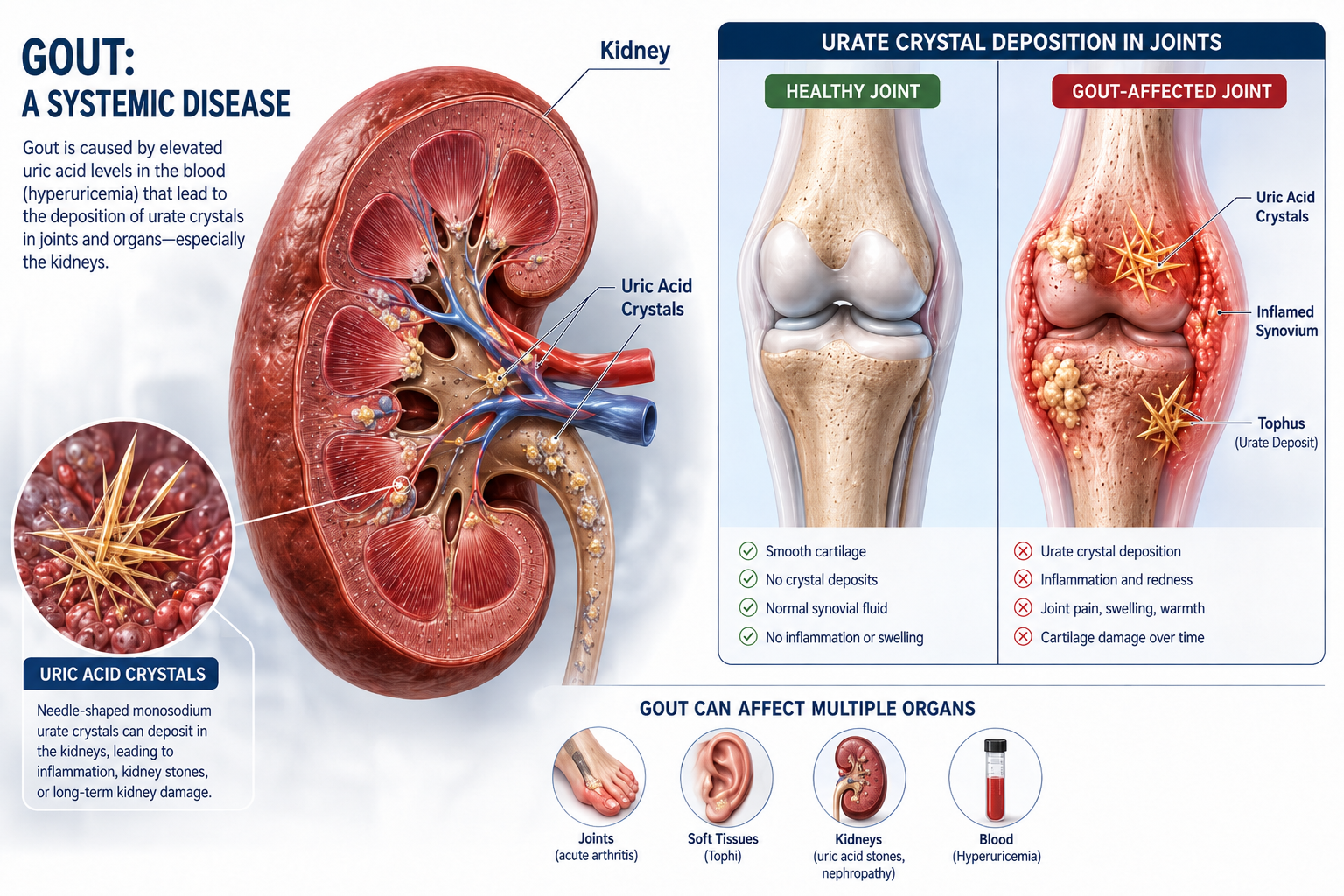
Detailed Viewpoint: The Systemic Cascade and the Research Closing the Gap
One of the most consequential — and least understood — aspects of gout is its bidirectional relationship with kidney disease. The American Association of Kidney Patients (AAKP) notes that up to 20% of people with gout have mild to moderate kidney disease, while kidney disease itself is the third most common risk factor for developing gout. When gout goes untreated, continued uric acid crystal build-up increases both the frequency and severity of flares, accelerates joint damage, and simultaneously raises the risk of heart attack, stroke, and chronic kidney disease.
Gout's comorbidity burden is wide. Research links hyperuricemia to hypertension, obesity, dyslipidemia, and diabetes mellitus — conditions that affect tens of millions of Americans independently. A 2022 case-control study found patients with gout had a significantly higher prevalence of dyslipidemia compared to controls. These overlapping conditions mean gout is rarely a standalone diagnosis, and managing it in isolation misses the broader picture of a patient's cardiovascular and metabolic health.
Despite abundant FDA-approved treatment options — including colchicine, NSAIDs, corticosteroids, allopurinol, febuxostat, probenecid, and the advanced biologic pegloticase — access and adherence remain stubbornly low. In one U.S.-based review, 64% of kidney patients with gout were not being treated for the condition at all, and approximately 80% of those untreated patients had uncontrolled disease. The American College of Rheumatology and European League Against Rheumatism both emphasize that treatment success requires combining pharmacological intervention with patient education and lifestyle guidance — neither alone is sufficient.
Knowledge gaps compound the problem. The Jeddah cross-sectional study found that the vast majority of participants — regardless of age, education, or whether they themselves had gout — could not correctly identify gout's relationship to kidney complications, and only 57% even knew the condition was preventable. When the primary sources of health information are social media and word-of-mouth (identified by over 75% of respondents), the quality and completeness of that information is inevitably inconsistent.

Detailed Viewpoint: What Patients Can Do Right Now
Patient advocates emphasize that the single biggest mistake gout patients make is accepting preventable suffering as inevitable. AfPA's Perry notes that a denial from an insurer is not a dead end — over 80% of prior authorization appeals succeed, and finding a provider with genuine gout expertise dramatically improves outcomes. For someone newly diagnosed, the steps are clear: seek a specialist, learn from credible patient organizations, and understand that lifestyle modification and medication are partners, not competitors.
Editorial Note: This article is produced for informational and educational purposes. It does not constitute medical advice. Patients should consult a qualified healthcare provider for diagnosis and treatment guidance. All statistics cited are sourced from peer-reviewed literature or named patient advocacy organizations as referenced above.

Written by
MedBary Team
Comments
Log in to join the conversation.
Loading comments…