

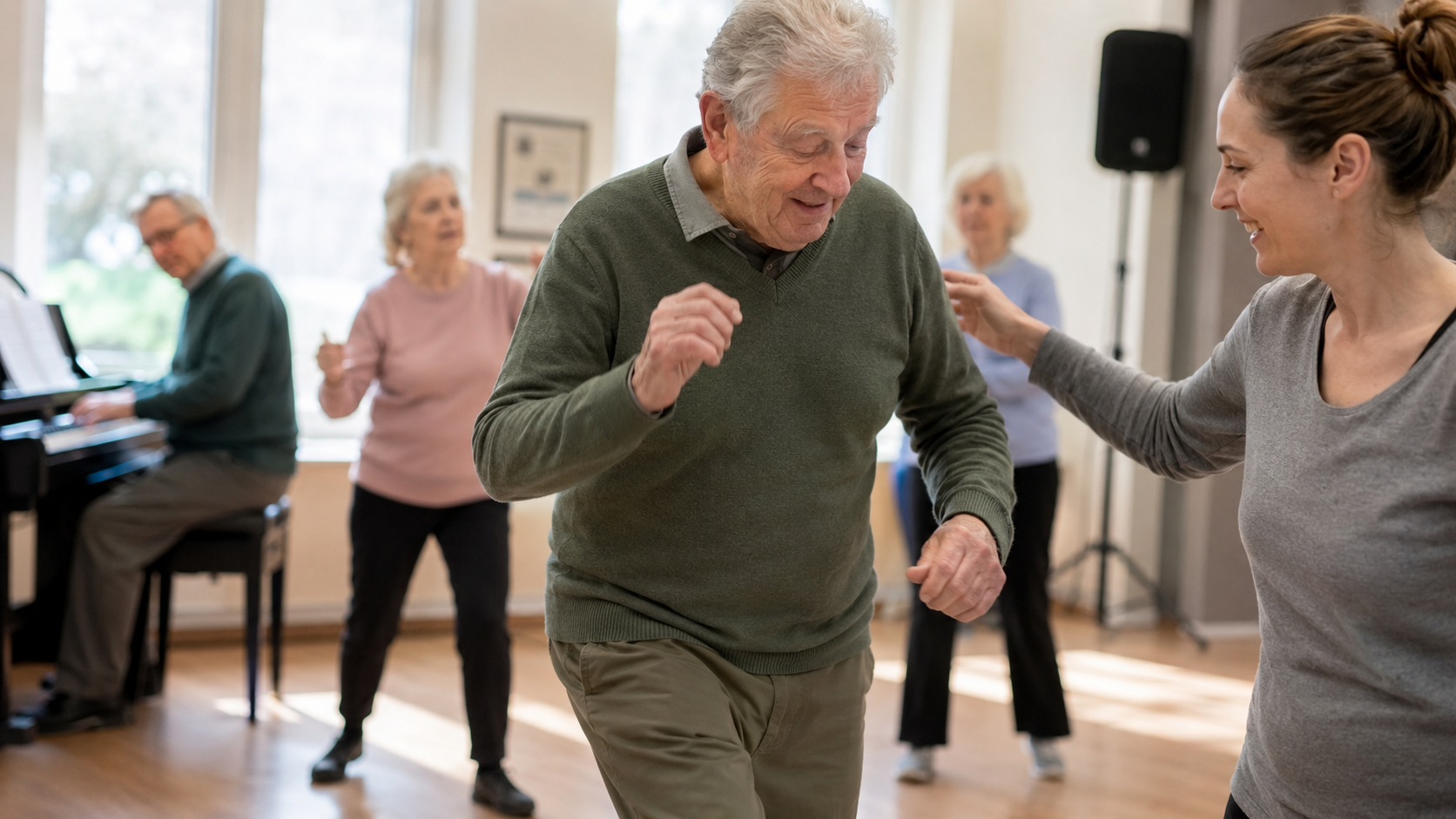
When Music Moves You Back: The Science of Sound and Parkinson's
"More than 10 million people worldwide live with Parkinson's disease. For many of them, a simple beat — a rhythm, a melody, a familiar song — can unlock movement that medication alone cannot reliably restore."

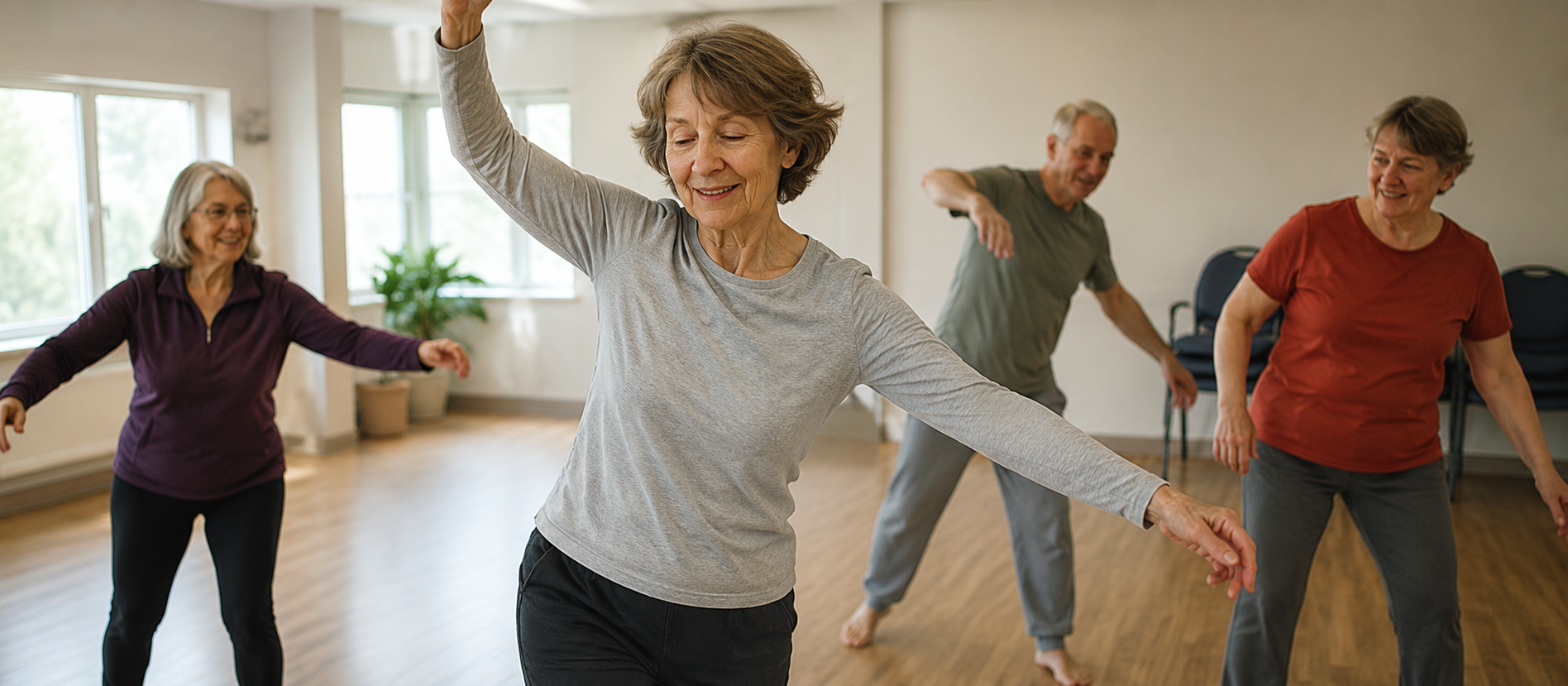
Key Highlights
Rhythm Bypasses Damage
Rhythmic auditory stimulation recruits intact neural networks that route around Parkinson's-damaged basal ganglia, enabling more fluid walking.
Measurable Gait Gains
Studies show significant improvements in walking speed and stride length after rhythmic auditory stimulation — even without explicit gait training.
Dance as Medicine
Argentine Tango has emerged as particularly effective — improving balance, reducing fall risk, and addressing the freezing of gait that defines late-stage Parkinson's.
Voice & Cognition Gains
Singing programmes improve vocal volume, clarity, and emotional expressiveness — while also strengthening confidence and social connection.
New Tech, New Answers
Wearable brain-imaging tools (fNIRS) now let scientists study auditory-motor connections while patients actually walk — a breakthrough over earlier fMRI constraints.
Zero Side Effects
Unlike many pharmacological options, music-based therapy is safe, low-cost, accessible, and carries social and psychological benefits alongside any motor improvements.
Detailed Viewpoint
The Biology of Beat: How Rhythm Reaches the Motor System
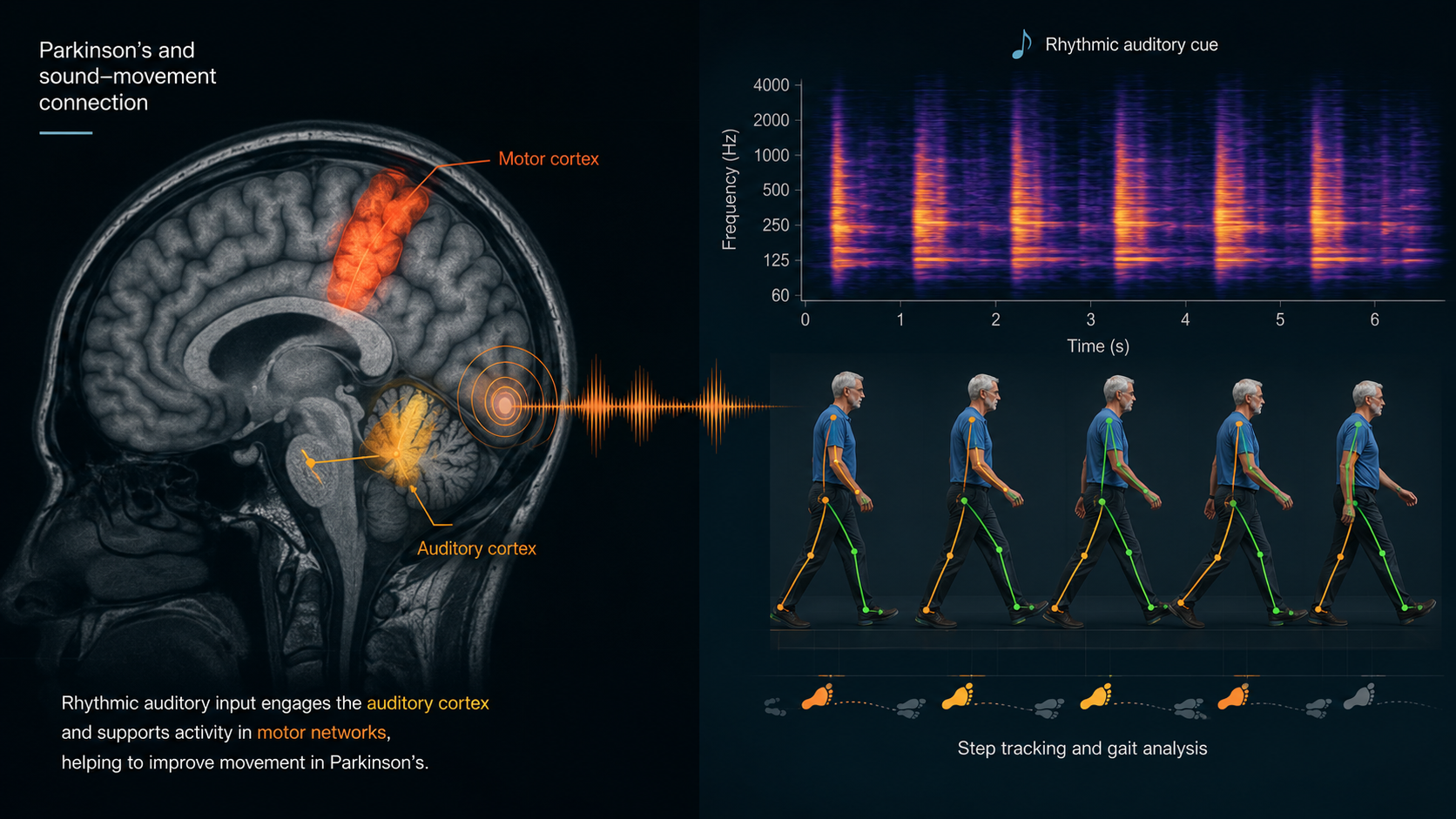
The connection between music and movement runs deep in the brain's architecture. When we hear a rhythmic beat, it does far more than register in the auditory cortex — it simultaneously activates motor planning regions, including the supplementary motor area and the cerebellum. This cross-talk between hearing and moving is so fundamental that even listening to music, without any physical response, generates measurable activity in the brain's motor networks.
In Parkinson's disease, the basal ganglia — a cluster of structures critical to initiating and sustaining smooth, automatic movement — are progressively damaged by dopamine loss. This damage disrupts the brain's internal metronome, producing the characteristic shuffling gait, freezing episodes, and difficulty starting movement. But the auditory-motor pathways that music activates are distinct from these damaged circuits. Research published in Frontiers in Neurology in 2024 confirms that rhythmic stimulation provides an external metronome that recruits intact networks, allowing the brain to bypass the malfunctioning basal ganglia and synchronise movement to an outside cue.
This is the neurological foundation of Rhythmic Auditory Stimulation (RAS) — the most clinically studied form of music therapy for Parkinson's. One foundational study found that patients who simply listened to rhythmically embedded music at home for one hour a day over three to four weeks — without any formal gait training — showed statistically significant improvements in both walking speed and stride length.
Gait, Balance, and the Tango Factor
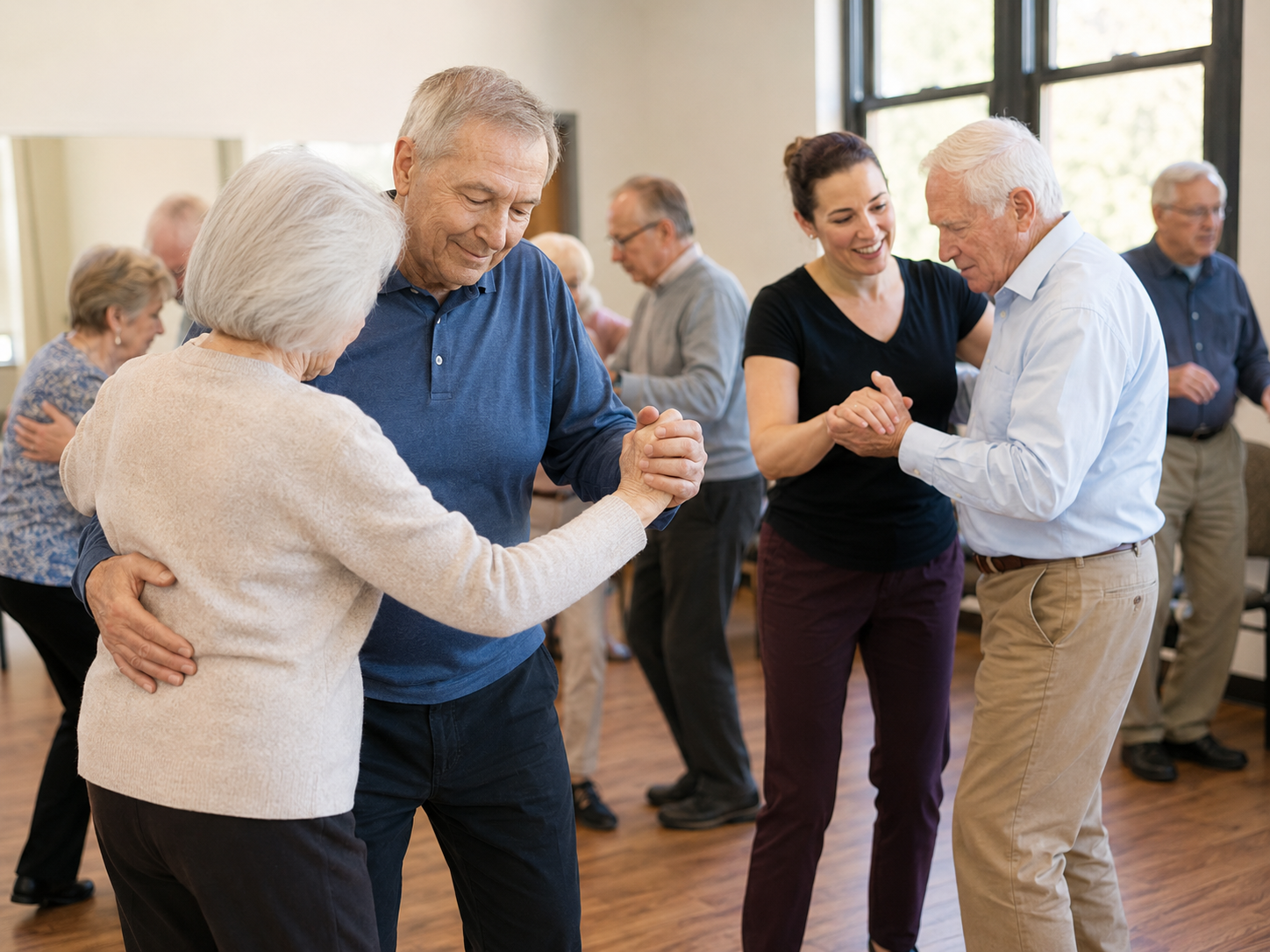
Among the many dance forms studied for Parkinson's therapy, Argentine Tango has attracted the most rigorous scientific attention — and has repeatedly outperformed conventional exercise programmes in improving balance and functional mobility. A systematic review of randomised controlled trials published in 2024 found that Tango significantly improved scores on established balance assessments, enhanced performance in walking tests, and reduced fall risk compared to usual care.
The reasons are neurologically grounded. Tango requires constant initiation and cessation of movement, direction changes, weight shifts, and synchronisation with a partner — all within a rhythmically anchored musical framework. This targets the precise motor deficits that Parkinson's produces: difficulty starting movement, turning, and propelling steps forward. Crucially, Tango's step patterns closely resemble rehabilitation exercises specifically designed to address freezing of gait — the sudden, involuntary stops that are among the most distressing and dangerous symptoms of the disease.
A positron emission tomography (PET) study has demonstrated increased activity in the basal ganglia during Tango movements performed with a metered, predictable beat, suggesting the dance actively stimulates even damaged neural circuits. Balance improvement appears consistently across different dance styles — waltz, foxtrot, Irish step dancing, and mixed-genre therapeutic dance have all shown benefits — but Tango's combination of backward walking, spontaneous multidirectional perturbations, and the cognitive demand of partner work makes it uniquely comprehensive as a therapeutic intervention.
Singing, Voice, and the Unexpected Benefits
Parkinson's doesn't only affect the limbs. The disease gradually diminishes vocal volume, clarity, and the ability to express emotion vocally. Singing therapy is emerging as a direct antidote. A study conducted at Johns Hopkins found that group singing improved both the quality of life and the voice strength and clarity of patients with Parkinson's. The Hopkins ParkinSonics programme reports that participants experience increased vocal volume, improved rhythmic movement, and greater confidence in emotional expression.
At Parkinson Canada, PhD candidate Esztella Vezer ran a choir as part of her master's research and documented a striking secondary effect: participants didn't just develop stronger voices — they developed stronger social bonds. The sense of community that emerged from singing together translated into measurable improvements in mood, confidence, and self-reported quality of life. This points to an often-overlooked dimension of music therapy: it is inherently social, activating neurological reward systems and building the kind of community support that independently predicts better health outcomes.
What the Brain Reveals: The Research Frontier
Despite the promising clinical picture, fundamental questions remain. Researchers, including Dr. Jessica Grahn, a cognitive neuroscientist at Western University's Brain and Mind Institute, have noted that the mechanisms by which music transforms movement are still not fully understood. Why do some patients respond dramatically to rhythmic auditory stimulation while others show little benefit? Does musical familiarity matter? Is beat perception ability alone sufficient, or does emotional response to music amplify the motor effect?
What is emerging is that a patient's innate ability to perceive and synchronise with a beat may predict responsiveness to music-based therapy. A study tracking individual differences in RAS response found that positive outcomes could be predicted by how well a patient performed on basic synchronisation tasks like tapping in time to a beat — opening the door to personalised music therapy matched to each patient's individual neural profile.
The technological breakthrough that may unlock these answers is portable brain imaging. Until recently, most brain imaging during movement was limited by the constraints of functional MRI — which requires patients to lie still in a loud, enclosed scanner. The introduction of functional near-infrared spectroscopy (fNIRS), a wearable cap-based system, now allows researchers to measure auditory and motor brain activity while patients are actually walking and responding to music in real-world conditions. Dr. Grahn's lab recently acquired this technology and expects it to provide the clearest picture yet of exactly what happens — and for which patients — when music meets a Parkinson's-affected brain.
10M+
People worldwide living with Parkinson's today
112%
Projected global case increase by 2050 (BMJ, 2025)
↑ Gait
Walking speed & stride length significantly improved with RAS
5 RCTs
Randomised trials confirm Argentine Tango improves balance & mobility
1 hr/day
Home RAS listening that improved gait speed & lifted depression scores
$0
Side-effect cost — music therapy carries no adverse pharmacological effects
Sources: BMJ 2025;388:e080952 · Frontiers in Neurology 2024 · Parkinsonism & Related Disorders 2006 · PMC11941221
Citations & Credibility
8 Sources — All Verifiable
Frontiers in Neurology
2024 Open AccessHuang & Qi. Neurobiological mechanism of music improving gait disorder in patients with Parkinson's disease: a mini review.
DOI: 10.3389/fneur.2024.1502561 · Xiamen University, China
Int. J. Environmental Research & Public Health
2022 Open AccessWu, Kong & Zhang. Research Progress of Music Therapy on Gait Intervention in Patients with Parkinson's Disease.
DOI: 10.3390/ijerph19159568 · Soochow University · PMC9368619
PMC Mini-Review (MDPI)
2023 Open AccessMusic Therapy for Gait and Speech Deficits in Parkinson's Disease: A Mini-Review. Examines RAS and auditory-motor cortex connectivity via neuroimaging and fMRI.
PMC10377381 · CC BY 4.0
Johns Hopkins Center for Music & Medicine
2024 InstitutionalDr. Alexander Pantelyat, Director. ParkinSonics singing therapy and virtual group drumming programmes. Programme outcomes and clinical documentation.
hopkinsmedicine.org/center-for-music-and-medicine
Parkinson Canada — Dr. Jessica Grahn, Western University
2022 InstitutionalCognitive neuroscientist & associate professor, Brain and Mind Institute. Parkinson Canada National Research Program–funded expert interview on music, beat perception, and Parkinson's movement.
parkinson.ca/researching-the-connection-between-music-and-movement
The BMJ — Modelling Study
2025 Peer-ReviewedProjections for prevalence of Parkinson's disease and its driving factors in 195 countries and territories to 2050. Global Burden of Disease Study 2021 data.
BMJ 2025;388:e080952 · DOI: 10.1136/bmj-2024-080952
BMC Neurology — Systematic Review
2024 Open AccessDancing Towards Stability: The Therapeutic Potential of Argentine Tango for Balance and Mobility in Parkinson's Disease. Five RCTs; 10-week to 24-month intervention durations.
PMC11941221 · RoB 2 bias assessment
Parkinsonism & Related Disorders — Foundational RAS Study
2006 Peer-Reviewed25 outpatients with idiopathic PD. Home RAS 1 hr/day for 3–4 weeks, no gait training. Gait speed improved (p<0.0001); stride length improved (p<0.001); depression scale improved (p<0.05).
ScienceDirect: S1353802006001155 · Elsevier
Editorial Note
This article was prepared by the Bloorian Health Editorial team and draws on peer-reviewed research, institutional programme documentation, and expert interviews published by Parkinson Canada and Johns Hopkins Medicine. All sources are listed in the Citations section above.
This content is for general health information purposes only and does not constitute medical advice. Readers with Parkinson's disease or those caring for someone with the condition should consult a qualified neurologist, movement disorder specialist, or certified music therapist before beginning any new therapeutic programme.
Bloorian does not accept payment for editorial coverage. No commercial relationship with any cited institution or researcher exists in connection with this article.

Written by
MedBary Team
Comments
Log in to join the conversation.
Loading comments…